Articles
Nation First, Politics Later: PM Hamza Appeals to Youth Amid Growing Political Tensions
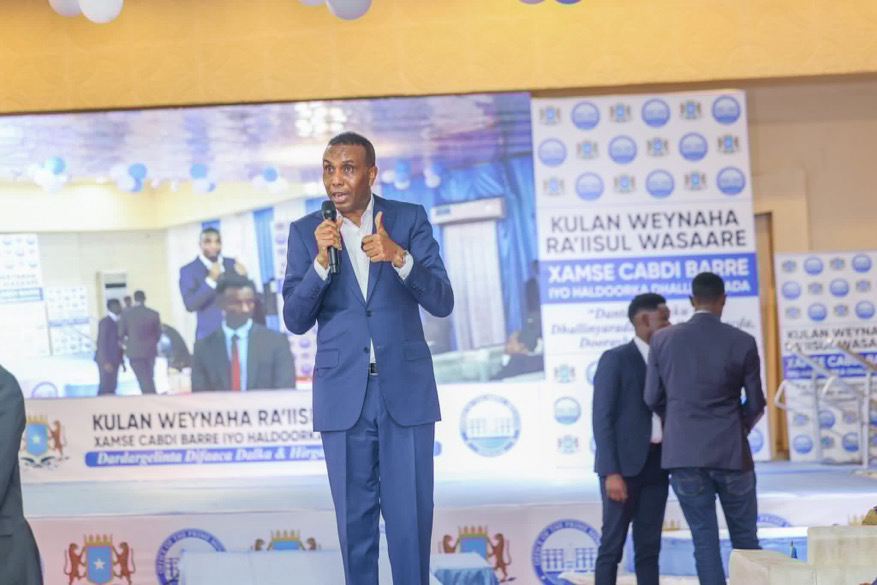
In a firm and timely release, Somali Prime Minister Hamza Abdi Barre made an inspiring call to action to the country's youth, urging them to be the very core of national defense and democratic construction. While meeting with young leaders in Mogadishu, the Prime Minister drove home the message that the path toward recovery and progress by Somalia is not only underway but also needs the active engagement of its younger generation.
Barre's address is at a pivotal moment in the history of Somalia, a country that has endured decades of instability but is now experiencing economic rebirth and national progress. With the nation working towards cementing its gains and forging a future based on peace and prosperity, the youth, who are in the majority, cannot be ignored.
"Somali youth, I invited you today to deliver a message of protecting our country," the Prime Minister said during the meeting. "This is something we can't leave to a handful — we must face it head-on together."
A Dual Message: Duty and Patriotism
Barre's announcement was not a call to arms in the strictest sense but a general call to patriotism and civic participation. By framing national defense as a religious obligation as well as a patriotic one, the Prime Minister appealed to deeply rooted values in Somali society. His message was that the protection of Somalia is a communal responsibility—a responsibility that transcends self-interest and must be borne by all people, particularly the young who are the future of the nation.
Where terrorism of other types still poses threat to the region, particularly from groups such as al-Shabaab and ISIS, Barre's approach underscores the strength of ideologies. By presenting national defense as religiously and morally just cause, he is attempting to reclaim that which had previously been a source of narratives used by extremist forces for the purpose of radicalizing youngsters. Anything but turning to militancy, he is calling on Somali youngsters to channel their energy, their religion, and their commitment toward forging a better, united country.
Progress on the Horizon
The Prime Minister's words also suggest a broader mood of optimism about the future of Somalia. Economic development and national growth are not rhetoric—these are concrete aims that his administration is seriously striving toward. Infrastructure projects, governance improvements, and foreign friendships have already begun to rewrite the narrative about Somalia from one of perpetual crisis to one of hopeful but gradual movement.
 But Barre was careful not to use those achievements as a rationale for complacency. Rather, he employed them as a launching pad from which even greater achievements can take off—provided the youth lives up to their challenges. His speech, therefore, was as much an ode to where Somalia has come as a strong reminder of what still needs to be done.
Youth: The Driving Force
In so many ways, the youth of Somalia are both the most vulnerable and the most influential section of society. The most vulnerable through economic hardship, restricted education and employment opportunities, and radical ideologies. And the most powerful because of the sheer numbers, energy, and potential yet to be unleashed to innovate, lead, and transform.
Barre's appeal to young leaders is an acknowledgment of this two-facedness. He is not only cautioning them against the dangers of withdrawal but urging them to seize initiative as drivers of change. The message is clear: the destiny of Somalia is not something that will be achieved for its young—it is something they must achieve.
A Shared National Duty
The Prime Minister's plan for national defense and development through cooperation is different from those that rely solely on government or military action. It hinges on collective responsibility where protecting national sovereignty, strengthening democracy, and advancing economic prosperity are all obligations shared by all Somalis.
 This is something that can be applied in order to foster togetherness and common cause, moving beyond tribal, geographical, and age differences. In a country still healing from years of conflict and disintegration, these are messages of utmost importance in forging a united and lasting nation.
Conclusion
Prime Minister Hamza Abdi Barre's recent address to Somali youth is not an address, exactly—it's a blueprint for national renewal. By placing the emphasis on economic progress, civic duty, and country-first obligation, he's laying the groundwork for a new chapter in Somalia's history—a youth-driven one dedicated not only to their own futures, but to the future of their nation.
At the intersection where Somalia stands, the message is opportune and freeing: national development and defense are not the monopoly of an elite group, but a collective duty that requires the vigor, the guts, and the commitment of an entire generation. If the youth respond to this invitation, Somalia's path to peace and prosperity may be closer than ever before.
Roble Idle – Think Tank, Upeace Alum
Email: [email protected]
Tell: +252618114575