Articles
Shenzhen Began With Sheds, and So Should Somalia
China’s towers, bridges and solar fields are the most visible part of its achievement. They are not the most useful part. For a country rebuilding itself, the transferable lesson is the order in which China did things.
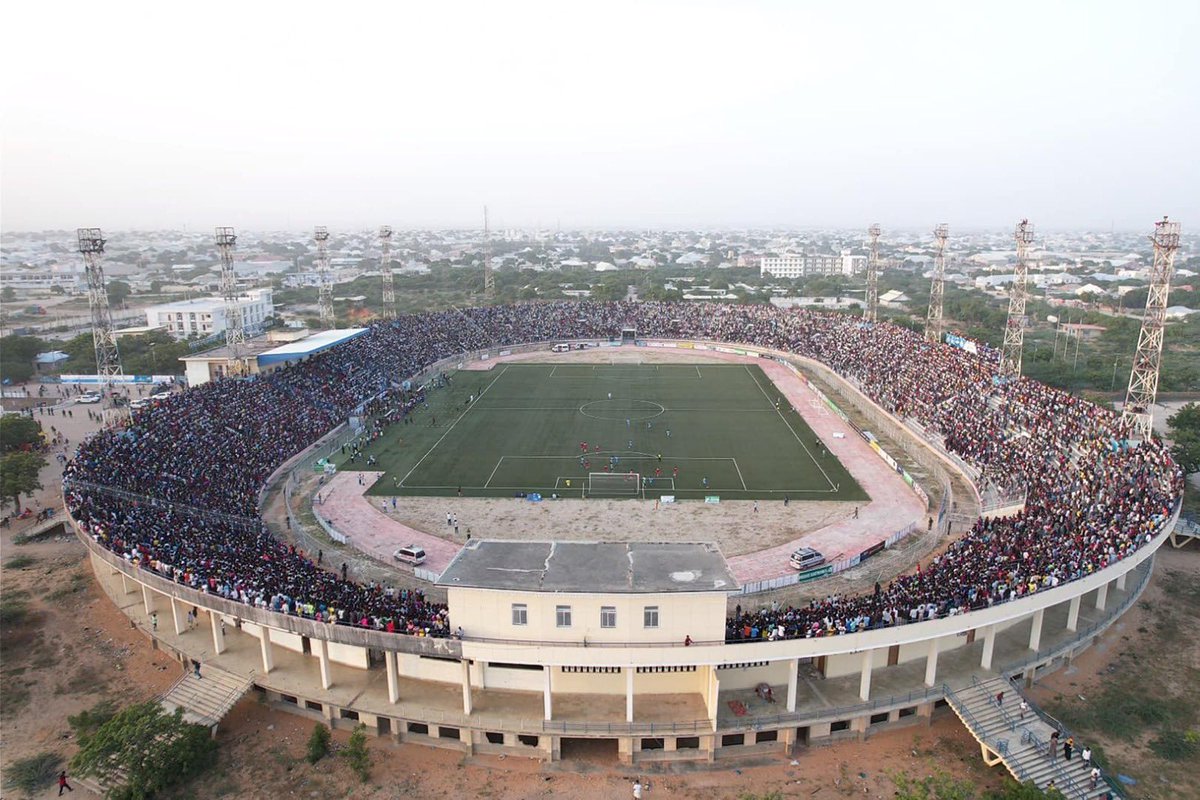
Somalia and China established diplomatic relations in 1960, in the first months of our independence, and the friendship has outlasted almost everything else in our national life. In 1971 Somalia was among the twenty-three states that co-sponsored United Nations General Assembly Resolution 2758, and we have held that position without wavering for more than five decades. Through the 1970s Chinese engineers and doctors worked across our country, building hospitals, roads, factories and the national stadium in Mogadishu, a structure that generations of Somalis grew up regarding simply as part of the city rather than as a foreign gift.
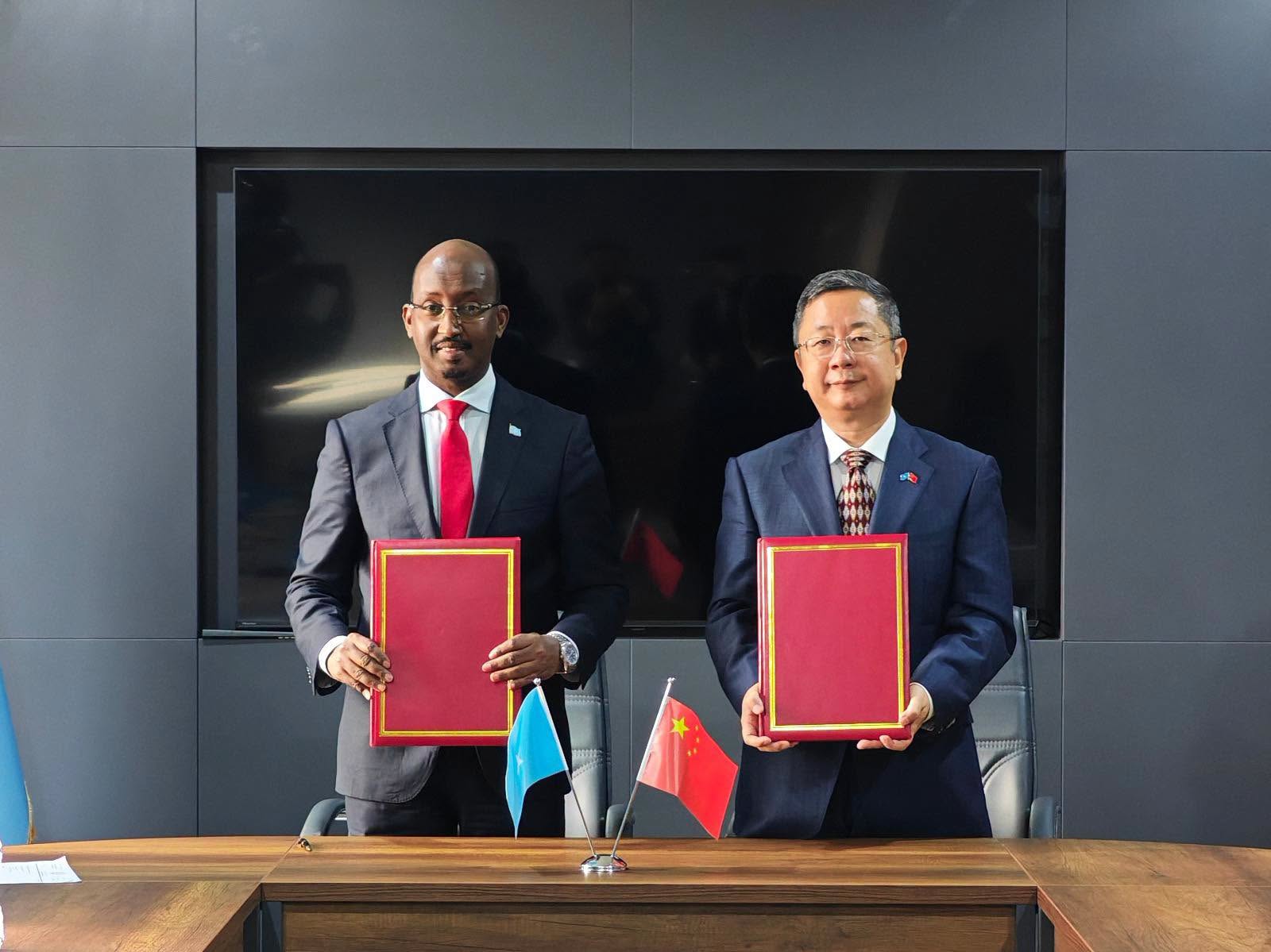
When the Somali state collapsed in 1991, that cooperation was interrupted by circumstance rather than by any disagreement between us. Chinese projects were left unfinished. What is remarkable, and what Somalis notice, is that the relationship resumed without recrimination when conditions allowed. At the Forum on China-Africa Cooperation summit in Beijing in 2024, the two countries elevated their ties to a strategic partnership. In April 2026 our Department of Space and Satellite signed a cooperation agreement with China’s Land Satellite Remote Sensing Application Center on the application of satellite imagery to national development. In July 2026 our Ministry of Fisheries and Blue Economy signed a protocol with Ambassador Wang Yu opening the Chinese market to Somali wild aquatic products on duty-free terms.
Sixty-six years in, Somalia is finally in a position to be a partner rather than a recipient. That is a genuinely new situation, and it deserves a serious answer to a serious question: of everything China has achieved, what exactly should we be trying to learn? The answer, I would argue, begins in a place that in 1980 had no skyline at all.
The lesson is the order, not the objects
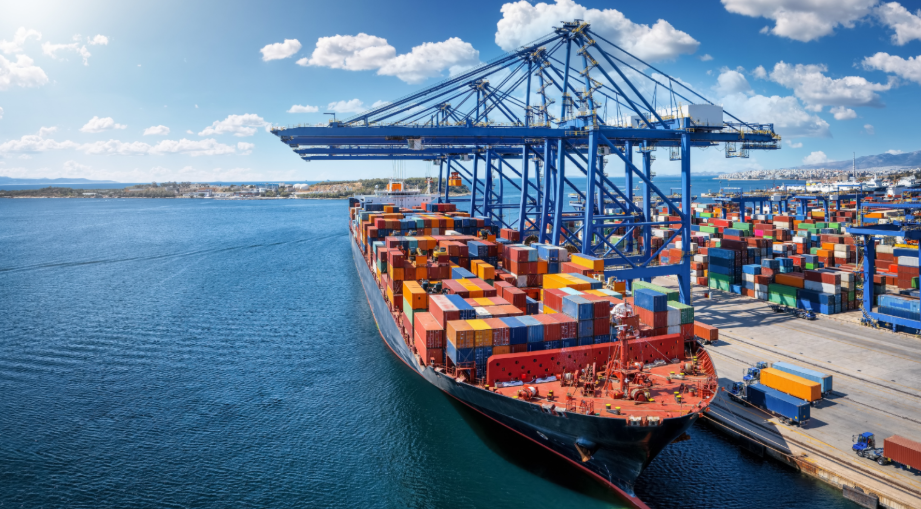
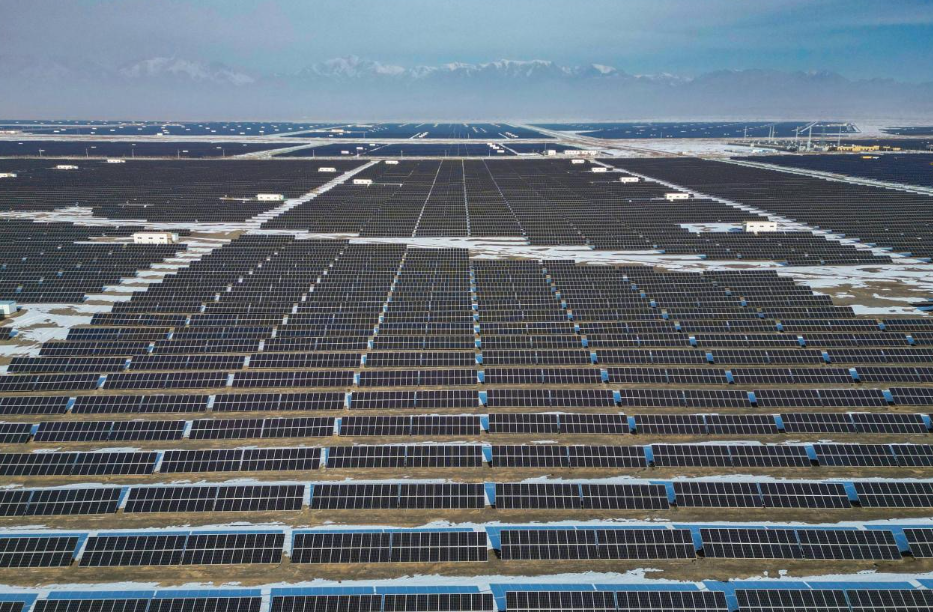
The images of Chinese modernisation are known everywhere. The Shanghai Tower turning through 120 degrees as it rises 128 floors. An expressway in Guizhou crossing a canyon more than 2,000 feet above the water. Photovoltaic arrays laid across the Gobi near Jiuquan, where the sun delivers over 3,000 hours a year. A rail network exceeding 28,000 kilometres. Yangshan Deep Water Port, first in the world since 2010, moving more than 47 million containers annually with automated vehicles and cranes coordinated to the second.
It would be easy, and mistaken, to treat that list as a catalogue of things to acquire. None of it was the plan. All of it was the result. When Shenzhen was designated in 1980 it was a modest settlement near the border, and what went up first was not a tower. It was reliable power, a customs procedure investors could predict, a defined legal perimeter, and simple export processing sheds. The Ping An Finance Center, almost 2,000 feet over 115 floors, was completed in 2017, thirty-seven years later. It came last because it could only come last. Every landmark in China today is a receipt for something unglamorous that was built decades earlier.
This is the most valuable thing China possesses that Somalia can actually import, and it is not made of steel. It is the sequence, and the institutions that hold a country to a sequence when the temptation to skip ahead is overwhelming. China is the only nation in modern history to have run this process at speed, at continental scale, and to have documented every stage of it. The design of a special economic zone, the regulatory model behind it, and the experience of the people who have built dozens of them are worth more to Somalia than any single structure that could be placed on our coastline.
Somalia starts with advantages worth naming
There is a habit of describing Somalia only through what it lacks. The honest picture is more interesting, and in several respects our starting position is stronger than the one China set out from.
We have the longest coastline in mainland Africa, more than 3,300 kilometres, with an exclusive economic zone exceeding 800,000 square kilometres sitting directly on the Indian Ocean shipping lane between Asia and the Gulf. Estimates put our sustainable seafood potential at up to 800,000 tonnes a year. Around 73 percent of Somali adults use mobile money, among the highest rates anywhere on earth, and our data prices are among the cheapest in the world. Five submarine cables land on our coast, fifth-generation networks operate in our major cities, and the Somalia Instant Payment System gives our Central Bank a settlement rail that many larger African economies still do not possess. Roughly 75 percent of our population is under the age of 35. Our diaspora sends home around two billion dollars every year.
That digital and financial base was built almost entirely by private Somali capital during a period when the state was absent. It is worth pausing on what that means. Somali entrepreneurs constructed a functioning payments economy without a functioning government to protect it. Whatever else may be said about our country, that is not the profile of a people waiting to be developed. It is the profile of a people waiting for the conditions in which their own capacity compounds.
The first chapter is the sea
The fisheries protocol signed in Mogadishu in July 2026 may prove the most consequential document of this decade in our relationship, and it is worth understanding why. It opens one of the world’s largest consumer markets to Somali producers, and it adds nothing whatsoever to our national debt. That combination is rare and it should set the pattern for what follows.
What now stands between the protocol and real export earnings is not diplomacy. It is cold storage, ice, certified processing plants, landing sites, and a licensing and monitoring regime for our waters that foreign vessels cannot ignore. These are engineering and administration problems, solvable within three years, and they are precisely the category where Chinese joint venture capital and Chinese construction speed are strongest. Structured as shared equity with Somali partners rather than as contracts executed and departed, this single sector could become the first substantial stream of national revenue that depends on nothing being discovered and nobody’s permission.
The same logic applies underground. Somalia holds substantial limestone, gypsum, salt and iron ore, and the most valuable of these in the near term is the least glamorous. A country in a construction boom that imports nearly all its cement while sitting on abundant limestone has already been told what its first heavy industry should be. China is the largest cement producer on earth. A joint venture with Somali equity and a contracted training obligation would cut the cost of every road, port, school and housing block we build for the next thirty years, and would create the industrial workforce that everything afterwards requires.
The barrel that does not pass Hormuz
In April 2026 the ultra-deepwater drillship Çağrı Bey began drilling Curad-1, roughly 372 kilometres northeast of Mogadishu, the first offshore well officially drilled in Somali history and one of the deepest exploration wells ever attempted anywhere. Türkiye’s Petroleum Corporation is carrying the exploration risk, results are expected around the turn of the year, and Somalis are following it with justified interest. Our sedimentary basins have drawn geological attention since the 1950s, and this is the first time in more than three decades that the question is being tested rather than debated.
For a Chinese reader the significance is geographic before it is geological. China is the world’s largest importer of crude oil. Somali production would sit on the western edge of the Arabian Sea, which means a cargo loaded off our coast reaches Asian refineries without passing through the Strait of Hormuz. In a decade when chokepoint exposure has become the dominant variable in energy security, a supply source that avoids one is worth considerably more than its volume alone would suggest. Somalia’s eventual contribution to Asian energy security may prove to be less about how much we produce than about the route our production never has to take.
Upstream exploration in the blocks currently under test belongs to Türkiye, and Somalia values that partnership and the risk Ankara has been willing to absorb. But an oil province is never only its wells. Export terminals, storage, midstream infrastructure, refining capacity and the port works that serve all of them remain entirely open, as do further offshore and onshore blocks beyond those three. Should our basin prove productive, Chinese firms bring deepwater engineering, downstream construction at scale, and, in the event of a gas discovery, the floating liquefaction capability that a country with no domestic gas market and no pipeline network would necessarily require. China is the largest importer of liquefied natural gas in the world as well as of crude.
Timing is the discipline here, and it is a gift rather than a delay. Deepwater development and cost recovery mean petroleum revenue arrives later in the decade rather than next year, which leaves Somalia time to build the institutions that will handle it. The 2020 Petroleum Law already establishes the Somali Petroleum Authority and a sharing formula allocating 55 percent federally, 25 percent regionally, 10 percent to the producing locality and 10 percent to states without production. Adding a stabilisation fund with a legislated deposit rule while the accounts are still empty is a far easier act of politics than adding one afterwards. Here too the Chinese instinct applies. Build the institution before the flow, not after it.
The Jiuquan lesson
If Somalia were to ask Beijing for one thing above all others, it should not be a landmark. It should be megawatts and the lines to move them.
Around half our population currently has access to electricity, and Somali tariffs remain among the highest in the world. No processing plant, no data centre, no cold chain and no competitive manufacturer can operate at those prices. Every other ambition in this article is downstream of that single number.
The Gobi installations near Jiuquan work because of a specific combination: exceptional solar irradiation, cheap unused terrain, and ultra-high-voltage transmission carrying the power hundreds of kilometres to industrial demand centres. Somalia has among the strongest solar resources measured anywhere on earth and no shortage of land. What we lack is generation at scale, transmission, and a regulated tariff that assures a generator it will be paid. Generation, transmission and grid regulation are what Chinese firms build faster and more cheaply than anyone in the world. There is no other partner for whom this ask is so precisely matched to proven capability.
Zones, cities and the technology worth choosing
The case for building new urban centres in Somalia is strong, though not for the reason usually offered. The value of a greenfield city is not its skyline. It is clean land title. Contested and undocumented land ownership is the deepest constraint on investment in our established cities, and a new coastal economic zone built on state land with a digital cadastre from the first day solves that problem by avoiding it. Three or four such zones, anchored on ports rather than on prestige, each with guaranteed power, a customs single window, fibre and cold chain, would give Somalia a coastal industrial spine. Fish processing, cement, light manufacturing and logistics come first, exactly as processing sheds came before towers in Shenzhen.
The cities we already have need the opposite treatment. Not new construction, but the invisible systems that make construction worth anything. Drainage before towers, since every rainy season currently closes the roads our economy runs on. A street addressing system, which sounds trivial and is not, because without addresses there is no logistics industry, no consumer credit, no property tax base and no emergency response. A digitised land registry. These projects photograph badly, and they are the difference between a city that grows and a city that merely gets taller.
On technology, our existing base points clearly to what to choose. A national digital identity linked to the payment system would allow the state to collect revenue, pay salaries and deliver support without leakage. The satellite cooperation agreement signed in April 2026 can serve three national purposes simultaneously: maintaining the land registry, monitoring drought and flood, and tracking vessels inside our exclusive economic zone, which turns fisheries licensing from a piece of paper into an enforceable revenue stream. Port community systems cut clearance times, the single number by which traders judge any country.
What makes a partnership durable
Two features of how this relationship is already being conducted deserve recognition, because they are the reason it can last.
The first is the choice of instruments. In December 2023 Somalia completed the Heavily Indebted Poor Countries process, reducing external debt from about 5.3 billion dollars to roughly 600 million, an achievement that took a decade and three administrations to secure. The cooperation now being built with China is not rebuilding that burden. Market access protocols, technical cooperation agreements, joint ventures and shared-equity arrangements deliver capability without liability. The fisheries protocol is the clearest example: an entire export market opened, and not one dollar added to what Somalia owes. That is a more sophisticated form of partnership than the one usually assumed, and it should be said plainly.
The second is transfer. China’s own opening was governed by a discipline that Somalis should study closely and then apply: foreign partners were expected to transfer technology, and Chinese institutions were built to absorb it. We should write the same expectation into every agreement we sign, with named Somali counterpart engineers, contracted training hours, minimum local employment and open-book handover of operating systems. This is not a demand made against China. It is a lesson learned from China, and Beijing of all capitals will recognise it as their own.
There is a further dimension that will matter more each year. Somalia acceded to the East African Community in 2024, joining a market of more than three hundred million people, and our coastline is the shortest maritime route between that market and Asia. A Somalia with working ports, reliable power and industrial zones is not only a partner to China. It is a gateway. That is a subject large enough for its own article, and it is where this series will go next.
Chinese planners in 1979 could not have described the Shanghai Tower. What they could describe was an order of operations, and they held to it for forty years. Somalia now has the peace, the partners and the young population to attempt something similar. Earn from the sea and the ground. Build power before towers. Create zones on clean land. Fix drainage, addresses and registries in the cities we already have. Insist on the transfer in every contract. Do that patiently, and the skyline will arrive on its own, as it did in Shanghai, as proof of something that was already true.

Abdiqani Abdullahi Ahmed is a geopolitical analyst and the Senior Strategic Consultant for the Somali National News Agency (SONNA). Serving as a Senior Advisor on Communication and International Relations since 2017, he directs state-level media strategy for the Federal Government. He is Somalia's lead representative to the East African Community's Kiswahili Commission (EAKC), serves on the jury for the IGAD Media Awards, and is an expert in global energy markets, regional economic integration, and digital governance.