Articles
Somalia Cannot Borrow. China Has Been Offering Us Something Better.
The New Development Bank has approved forty-four billion dollars of projects, and for most developing countries that is the headline. For a country two years out of debt relief it is the one instrument we cannot touch. What has actually reached Somalia this year came from Beijing, cost us nothing, and appears nowhere on our balance sheet.
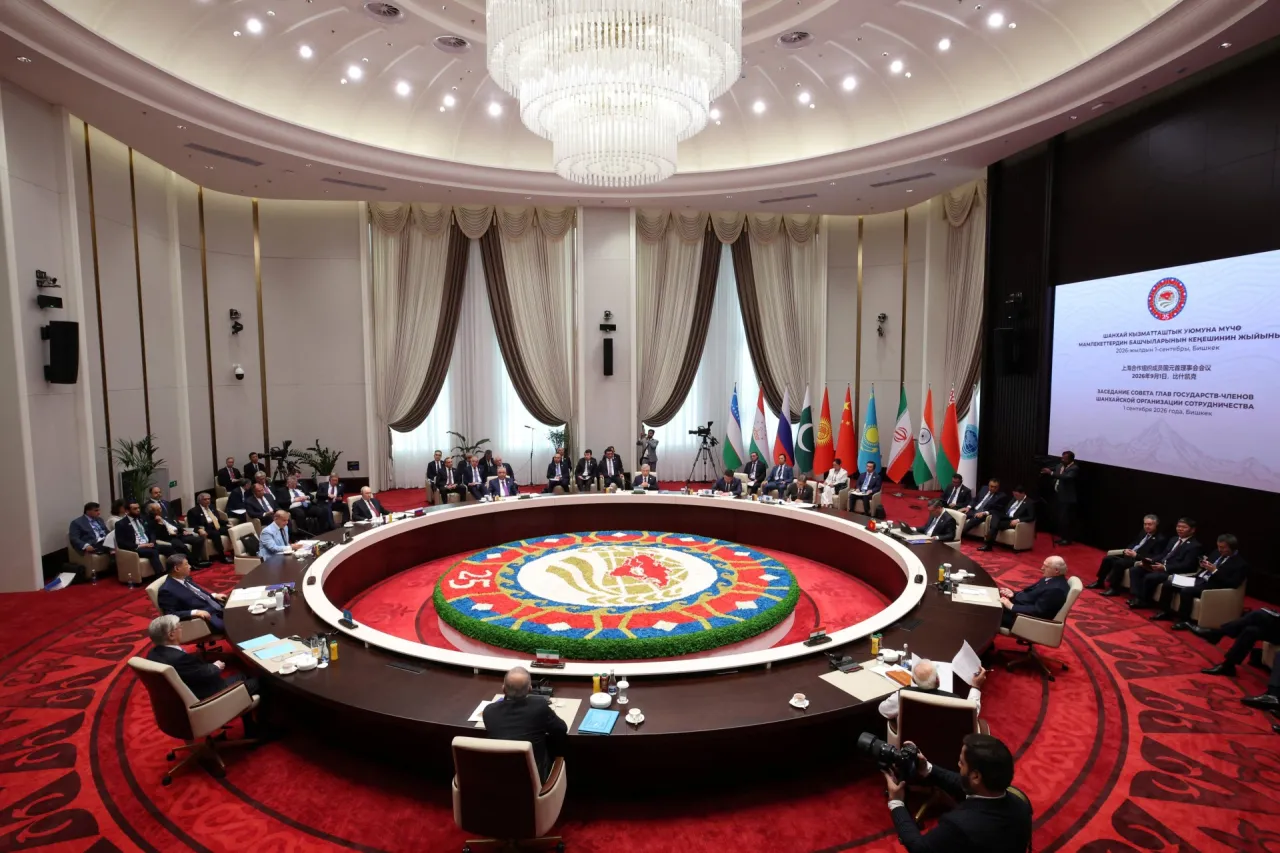
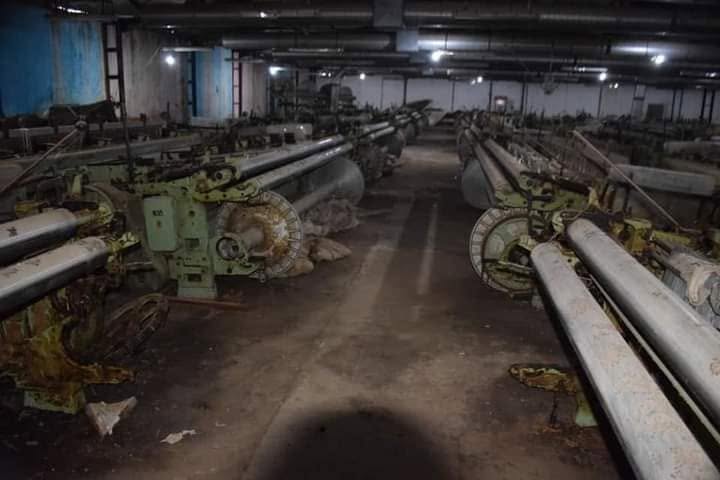
Mogadishu,(SONNA):The New Development Bank, established by the original BRICS members, had approved one hundred and forty-one projects worth forty-four billion dollars by the end of June this year, with twenty-five billion of that disbursed. In August 2024 it signed a five billion rand facility with Transnet, South Africa’s state freight and logistics company, to fund infrastructure renewal, locomotive overhauls and wagon replacement on a rail network that years of underinvestment had degraded to the point of raising national logistics costs.
That is a serious institution doing recognisable work, and for most developing countries it is the headline attraction of the whole arrangement. An additional source of infrastructure finance, outside the existing lenders, on terms set by a board that includes borrowers.
Somalia cannot use it, and understanding why is the most useful thing a Somali reader can do with this subject.
The position we are actually in
In December 2023 Somalia reached Completion Point under the Heavily Indebted Poor Countries Initiative. External debt fell from roughly five point three billion dollars to something in the region of six hundred million, from around sixty-four per cent of gross domestic product to under six. It took a decade, three administrations and a level of sustained technical work that Somali public debate has never quite given credit for.
The arrangement that followed carries ceilings on non-concessional borrowing and commitments on raising domestic revenue. This is not an imposition to be resented. It is the ordinary condition of a country that has just been forgiven its debts, and the alternative to accepting it is rebuilding the position we spent ten years escaping.
So when a development bank announces forty-four billion dollars of approved projects, the Somali response has to be different from the Ethiopian or the South African one. We are not in the market for loans. A facility of the kind extended to Transnet is not available to us and should not be sought.
That sounds like a limitation and I want to argue it is closer to a clarifying discipline. It forces attention onto the instruments that do not involve borrowing at all, and those turn out to be exactly the ones China has been extending to us. It is worth noticing that the most valuable things Somalia received from any partner in 2026 arrived without a repayment schedule attached, and that they came from Beijing.
What has worked without adding a dollar of debt
Consider the two most substantial things Somalia obtained from its relationship with China in 2026.
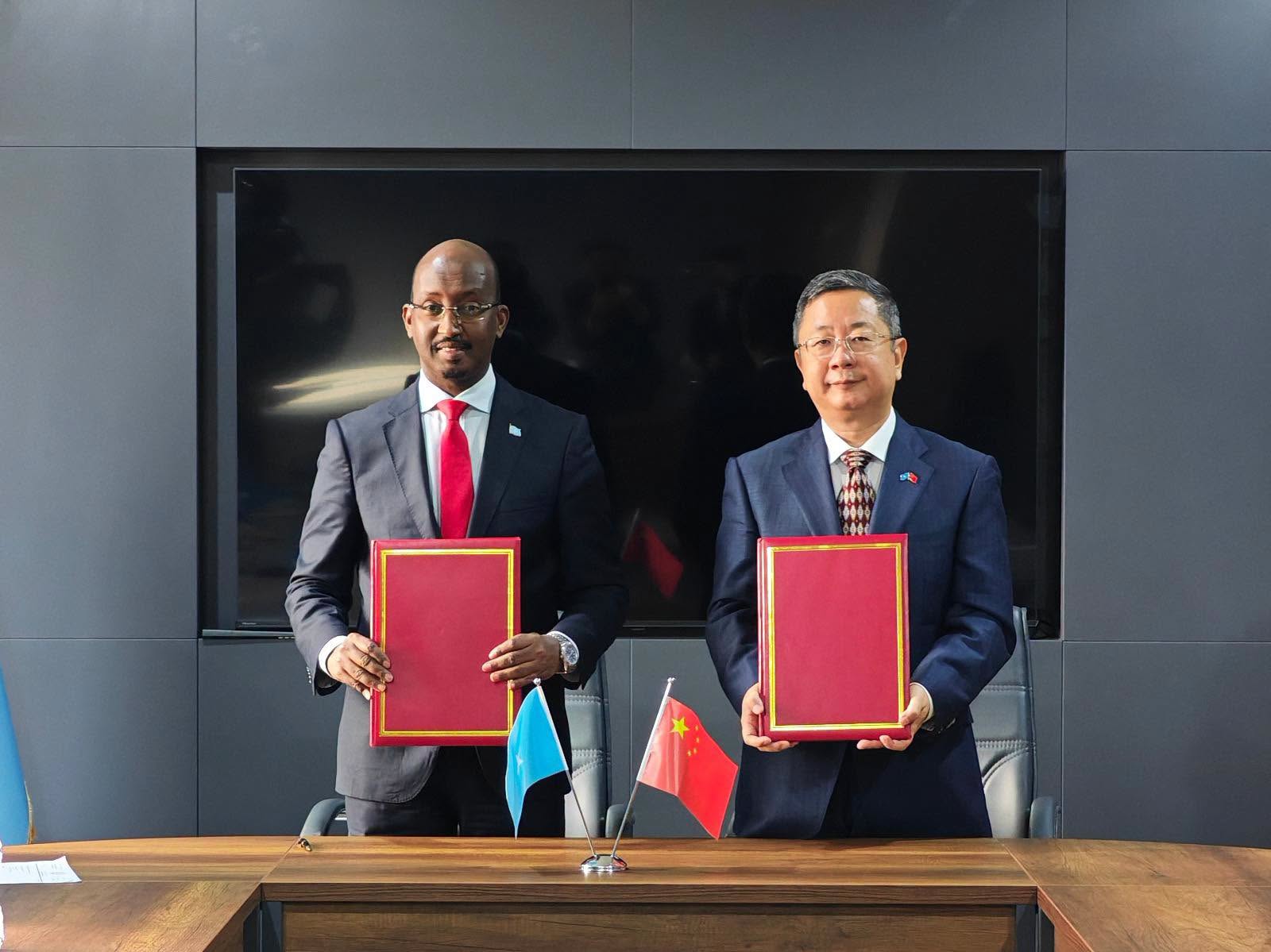
In July, the Ministry of Fisheries and Blue Economy concluded a protocol with the Chinese Embassy in Mogadishu covering inspection and quarantine requirements for Somali wild aquatic products entering the Chinese market on duty-free terms. Somalia has the longest coastline in mainland Africa and an exclusive economic zone that foreign fleets have been exploiting for decades while we landed almost nothing from it. That protocol opens one of the world’s largest consumer markets to Somali producers. It carries no repayment schedule and appears nowhere on the national balance sheet.
In April, the Department of Space and Satellite signed a cooperation agreement with China’s Land Satellite Remote Sensing Application Centre on applying satellite imagery to national development. Satellite data can maintain a land registry, forecast drought and flooding, and track vessels operating inside our own waters. Each of those is a capability that would take Somalia a decade to build alone. Again, no debt.
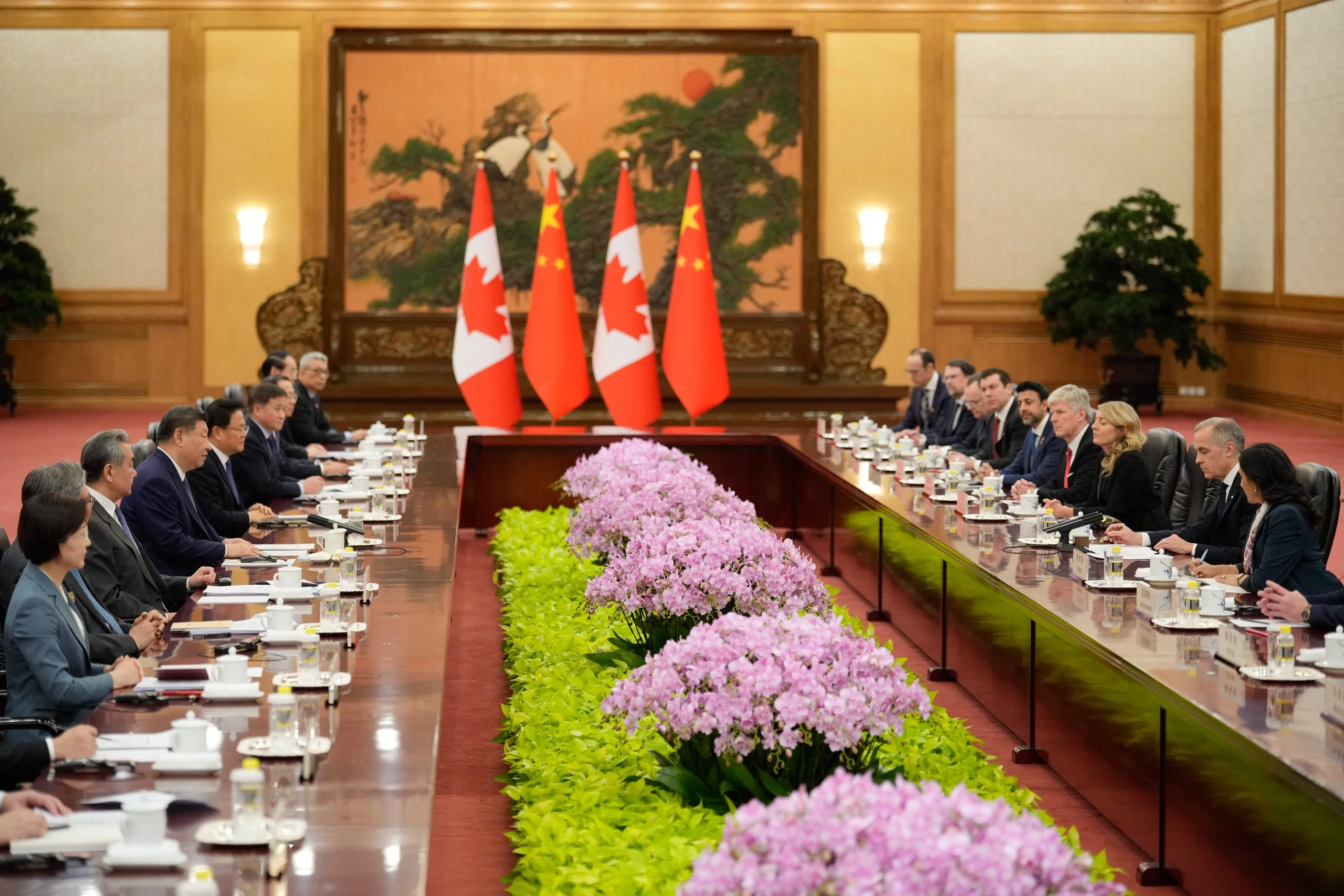
This is the pattern worth institutionalising, and it reflects a choice on the Chinese side as much as ours. Market access, technical cooperation, standards recognition, training and data-sharing transfer capability without transferring liability. Beijing was under no obligation to structure its engagement with Somalia this way. It could have offered us loans, as others have, and we would have been in no position to refuse gracefully. Instead the instruments arrived in a form a post-HIPC country can actually accept, which suggests somebody read our fiscal position before drafting them. For a country where every previous era of foreign engagement ended in obligations we could not meet, that is not a small thing.
The payments question, which matters here more than most places
One area of BRICS work does bear directly on Somalia, and it is not the lending.
The Kazan Declaration welcomed greater use of local currencies in transactions between member states and their partners, encouraged stronger correspondent banking networks and endorsed further work on a voluntary, non-binding cross-border payments initiative. It separately recognised the Contingent Reserve Arrangement as a mechanism for short-term balance-of-payments pressure. These are distinct efforts at different stages, and the sensible framing, which the Chinese account of them concedes, is that they are not a single operational payment system and should not be described as one.
Correspondent banking is where Somali interest lies, for reasons this country learned the hard way.
After counter-terrorism financing rules tightened, banks across the United States, Britain and Australia closed the accounts of Somali money transfer operators. Barclays moved against Dahabshiil in 2013. Merchants Bank of California, then handling a substantial share of remittances from the United States, exited the business in 2015. Others followed. No Somali operator had been convicted of anything. The banks concluded that the compliance overhead exceeded the revenue and withdrew from an entire country rather than assess it customer by customer.
Somali remittances run to roughly two billion dollars a year, more than this country receives in aid and more than it earns in exports. When the corridors began closing, families in Mogadishu and Hargeisa found that money sent by relatives abroad could not reach them, and no institution anywhere was accountable, because no institution had decided it.
For a country whose economic lifeline can be severed by a risk committee it will never meet, the existence of additional settlement channels is not an abstraction. It is insurance. Not a replacement, and Somalia has no interest in leaving arrangements that mostly work. Simply a second door, in a house where we have learned what happens when the only door closes. China’s Cross-Border Interbank Payment System now connects well over a thousand institutions across more than a hundred countries, and its value to a country like ours is not that it competes with anything. It is that it exists.
The local currency problem we would have to solve first
One much-discussed element of this agenda does not fit Somalia at all, and it is worth being honest about it.
The New Development Bank set itself a target under its 2022 to 2026 strategy of providing thirty per cent of financing commitments in members’ national currencies. The logic is sound. An infrastructure project earning revenue in local currency while servicing debt in dollars carries a mismatch that can destroy an otherwise viable investment when the exchange rate moves.
Somalia cannot use this either, and for a reason that goes deeper than the debt ceilings. Our economy is substantially dollarised. Large transactions, most commercial contracts and much of everyday commerce in the cities run on the United States dollar rather than the Somali shilling. A country without a functioning currency of its own cannot borrow in it.
That is not an argument against the instrument. It is a reminder that financial sovereignty has prerequisites, and that ours are unbuilt. The Central Bank has been rebuilding monetary capacity, and the Somalia Instant Payment System gives it a settlement rail many larger African economies still lack. But a national currency capable of denominating long-term debt is a further stage, and no external partner can supply it.
Our neighbours are inside, and we are not
There is a geographic fact here that Somali policy discussion has been slow to absorb.
Ethiopia and Egypt both joined BRICS in the expansion that took effect at the beginning of 2024. Both are neighbours in the broad sense, both compete with Somalia for the same investment attention, and both now sit inside a grouping that Somalia observes from outside. Ethiopian agricultural exports are among those explicitly cited as benefiting from closer trade ties with China.
I do not think the conclusion is that Somalia should be seeking membership of everything. We acceded to the East African Community in 2024 and have not yet implemented the Customs Union or Common Market protocols, which is quite enough integration work for one decade. A country that joins more organisations than it can service is not building leverage, it is building meetings.
But the observation stands. The countries around us are positioning themselves inside multiple frameworks simultaneously, and the effect over time is that they are present when rules get written. Somalia is present in the African Union, in the East African Community, in the Arab League and in the Organisation of Islamic Cooperation, and the honest question is not which further body to join but whether we use the ones we already belong to.
The test that should be applied
The Chinese account of BRICS closes on a point that deserves to be taken seriously rather than treated as boilerplate: that the value of this cooperation will ultimately be judged by results, by projects completed, costs reduced and businesses supported, and that approved financing is not the same as finished infrastructure.
That is exactly right, and it is the test Somalia should apply to every arrangement it enters, whoever offers it. Forty-four billion dollars approved and twenty-five billion disbursed is a real gap, and it is the gap where most development finance goes to die in countries with weak project preparation. Somalia has weak project preparation.
So the useful Somali response is to notice what we can actually use. Market access instruments requiring nothing but compliance with a standard. Technical cooperation that transfers a capability. Payment channels that insure a lifeline. Training that produces technicians rather than reports. Every item on that list describes something China has already put on the table in the past twelve months, and none of it appears in the financing headlines that dominate the coverage. The large numbers describe a door that is closed to us. The quieter instruments are the ones that opened.
A country that has just paid off its debts is in an unusual position. It has very little money and unusually good credit, and the temptation to spend the second to fix the first is precisely what put us where we spent a decade escaping from. The instruments that cost nothing are not the consolation prize. For Somalia, at this moment, they are the entire opportunity, and it is worth recording plainly that the partner who has so far offered them in the form we can use is the one that read the constraint correctly.
About the author
Abdiqani Abdullahi Ahmed is Senior Advisor for Communication and Analysis at Somalia's Ministry of Information, Culture and Tourism. He is Somalia's national focal point to the East African Kiswahili Commission, a juror for the IGAD Media Awards, and lead facilitator of the IGAD Youth Peace and Security Series. He writes here in a personal capacity.