Articles
President Xi’s Four Points at Bishkek, and Who They Reach
The Shanghai Cooperation Organization turned twenty-five this week. Somalia is not a member and was not in the room. But one line in President Xi Jinping’s speech was addressed to countries exactly like ours, and the commitments attached to it are specific enough to be worth reading closely.
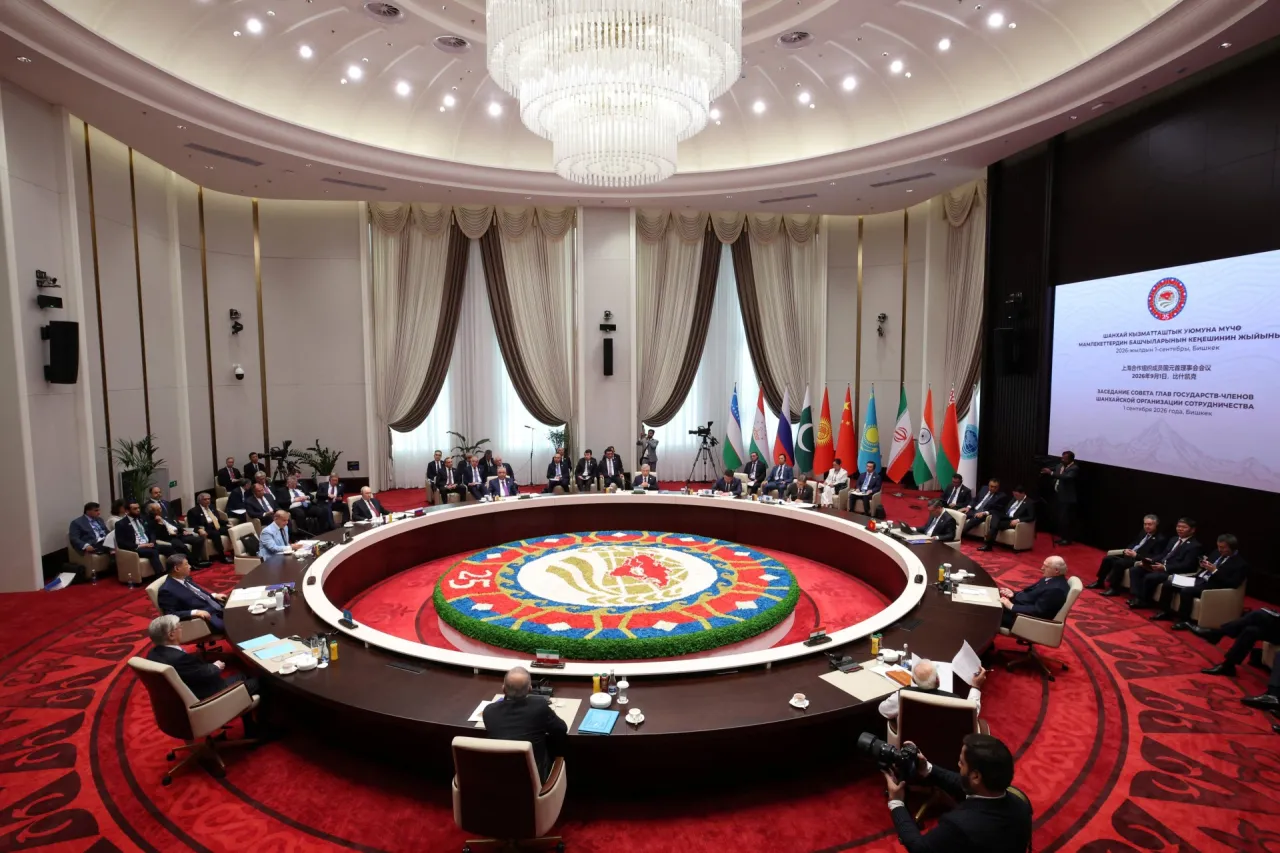
Mogadishu,(SONNA):On 1 September, in Bishkek, President Xi Jinping addressed the twenty-sixth meeting of the Council of Heads of State of the Shanghai Cooperation Organization. Twenty-one leaders were present. The organization was marking its twenty-fifth anniversary, and the meeting produced the Bishkek Declaration, amendments to the organization's charter, regulations establishing new security centers and twenty-eight outcome documents. Pakistan takes the rotating chairmanship for the coming year under the theme Turning Vision into Action: Connectivity, Innovation and Shared Prosperity. The organization's Secretary General, Nurlan Yermekbayev, described it as retaining a peace-loving, non-bloc character even in difficult conditions.
Xi’s speech was organized around four proposals. Read as a whole they describe a particular theory of how countries should deal with one another, and the fourth of them contains a sentence that anyone in Mogadishu, Lomé or Cairo should notice.
First: development before everything else
The opening proposal was that the organization should stay committed to putting development first and open up the prospects for shared prosperity. Xi called for consolidating cooperation in traditional areas including trade, investment, connectivity, energy and resources, and expanding into emerging ones including artificial intelligence, the digital economy, green industry and green mining.
What follows in the speech is unusually concrete for a summit address. China will develop an international artificial intelligence application cooperation center with SCO countries. It will work with member states to increase installed photovoltaic capacity and wind power capacity by ten million kilowatts each. It will implement one hundred technological cooperation projects with SCO countries over the next three years. It will establish a China-SCO port economic cooperation center in Tianjin, and support improved performance of the Trans-Caspian International Transport Corridor. It is inviting member states into an event series titled Big Market for All: Export to China.
Ten million kilowatts of solar and the same again of wind is ten gigawatts of each. For scale, Somalia’s entire installed generating capacity is a small fraction of that figure. Around half our population has no reliable electricity and those connected pay among the highest tariffs in the world. When an offer of that magnitude is made to a group of countries, the relevant question for a Somali reader is not whether it is generous. It is what a comparable commitment would mean here, where the absence of power is the single constraint holding back every processing industry we once had.
The port economic cooperation center deserves a second look as well. Most SCO members are landlocked, and Uzbekistan is doubly so. China is proposing to teach port economics to countries with no ports. That sounds odd until you understand the offer: not harbor management, but how to use somebody else’s port, how to structure transit agreements, how to move goods through corridors you do not own. Somalia has the opposite problem. We have three thousand kilometers of coastline and very little idea how to make it earn.
Second: security as a shared condition
The second proposal concerned security, and it was framed around common rather than competitive terms. Xi called for coordinated measures against traditional and non-traditional threats, naming terrorism, separatism and extremism alongside transnational organized crime, drug trafficking and telecommunications fraud, and extending to information security, biological security and outer space security. He supported the early opening of the organization's four security centers to raise member states’ capacity to respond.
The phrase that matters here is common security. The organization describes its founding formula as non-alliance, non-confrontation and not targeting any third party. Whatever one makes of that in practice, it is a different proposition from an alliance, and the difference is meaningful for small states. An alliance requires you to choose. A cooperation framework does not.
Third: people before institutions
The third proposal was people-centered, and it is the one that has received the least attention and may matter most over time.
Xi called for appreciating the distinctiveness of every country in its history, culture, social system and development stage, and for building cooperation networks between legislatures, political parties, educational institutions, think tanks, businesses and media. Concretely, China will establish a China-SCO basic education cooperation center and continue expanding Confucius Institutes and Luban Workshops.
The speech also pointed at something less institutional. Consider the Kyrgyz case. Manas is the national epic of Kyrgyzstan, and it is also known and preserved among Kyrgyz communities in China’s Xinjiang Uygur Autonomous Region. It is a genuine shared inheritance rather than a diplomatic construction, and in 2019 President Xi was awarded the Manas Order of the First Degree, Kyrgyzstan’s highest national honor. Alongside that runs the ordinary commerce of the Osh bazaar in Bishkek, where Chinese clothing, food and equipment are sold daily. Bilateral trade between the two countries exceeded eleven billion dollars in the first seven months of this year. For comparison, Somalia’s total goods exports in 2024 came to roughly four hundred and forty-eight million dollars.
Luban Workshops are worth knowing about. They are vocational training centers, named after an ancient Chinese craftsman, that teach practical technical skills in partner countries: mechatronics, rail operations, industrial automation, agricultural technology. They are unglamorous and they are exactly the kind of investment a country rebuilding a technical workforce needs. Somalia lost more than eighty per cent of its educated class after 1991 and is now bringing graduates home to a labor market that often has no work matching their training. Basic education cooperation and vocational workshops are less photogenic than a bridge and considerably more durable.
Fourth: the sentence that reaches outward
The fourth proposal concerned governance, and it is where the speech opens beyond its own membership.
Xi argued that all countries, regardless of size, are equal, that regional affairs should be discussed by all the countries concerned, and that differences should be handled through dialogue and consultation. He commended initiatives proposed by the presidents of Uzbekistan and Kazakhstan, noted that this year’s SCO Plus meeting focused on strengthening the role of the United Nations and building a multipolar world, and called for institutional improvement to make the organization's decision-making more efficient.
Then this: China welcomes more like-minded countries to be partners in the joint effort to improve regional and global governance.
That is an open door, and at Bishkek it was walked through in a way that has gone almost unreported.
Among the twenty-eight documents approved by the heads of state was a decision to sign a Memorandum of Understanding between the SCO Secretariat and the African Union Commission.
That deserves to be stated plainly, because it is the most consequential thing at this summit for any African reader. It is not a speech or an invitation. It is an institutional link between the Shanghai Cooperation Organization and the body to which every African state including Somalia belongs, agreed at the level of heads of state and recorded in the outcomes. Whatever it produces in practice, the channel now formally exists.
The rest of the attendance tells the same story. Egypt sits as a dialogue partner alongside Türkiye, Azerbaijan, Armenia and Laos, with Mongolia as observer state. President Faure Gnassingbé of Togo attended as a guest of the presiding side, together with Vietnam. The SCO Plus session, convened under the theme of the United Nations as a key element of a just world order, brought in the heads of the executive bodies of the Eurasian Economic Union, the Collective Security Treaty Organization, the UN, CICA and the Commonwealth of Independent States. After the summit closed, President Xi travelled to Egypt on a state visit and described relations with Cairo as a benchmark for China-Arab and China-Africa cooperation.
So the honest answer to who these four points reach is that they reach considerably further than the membership list suggests. Africa is not a member of this organization. Africa is nonetheless now connected to it by instrument.
What a country outside the organization should take from this
Somalia is not a member of the Shanghai Cooperation Organization and has no immediate prospect of becoming one. A country that has just completed its accession to the East African Community has quite enough integration work in front of it.
But three things in this speech are worth carrying back to Mogadishu.
The first is the order of the four points. Development came first, security second. Somalia has spent thirty years operating on the reverse assumption, that security must be settled before development can begin. The Bishkek framing treats them as simultaneous, and on the evidence of the countries in that room, the sequence matters less than the insistence that both proceed together.
The second is the character of what China actually offered. Look at the list again: an artificial intelligence center, generating capacity, one hundred technology projects, a port economics center, an education center, vocational workshops. These are capabilities rather than assets. A country that receives a building owns a building. A country that receives training owns something that compounds. Somalia has recent experience of both kinds of arrangement and knows which one is still working five years later.
The third is the instruments already in use between our two countries, which follow the same pattern. In July, the Ministry of Fisheries and Blue Economy and the Chinese Embassy in Mogadishu concluded a protocol on inspection and quarantine requirements allowing Somali wild aquatic products into the Chinese market on duty-free terms. In April, our Department of Space and Satellite signed a cooperation agreement with China’s Land Satellite Remote Sensing Application Centre. Neither added a single dollar to Somalia’s external debt, which for a country that completed the Heavily Indebted Poor Countries process in December 2023 is not a small consideration. Both transferred something we could not have built alone.
There is a version of international cooperation that consists of communiqués, and another that consists of ten million kilowatts, one hundred projects and a vocational workshop teaching a young person to maintain a machine. The four points delivered at Bishkek were mostly the second kind. Somalia was not at that table, but the door in the fourth point was left open deliberately, and it costs nothing to read what is being offered and to think clearly about what we would ask for.
About the author
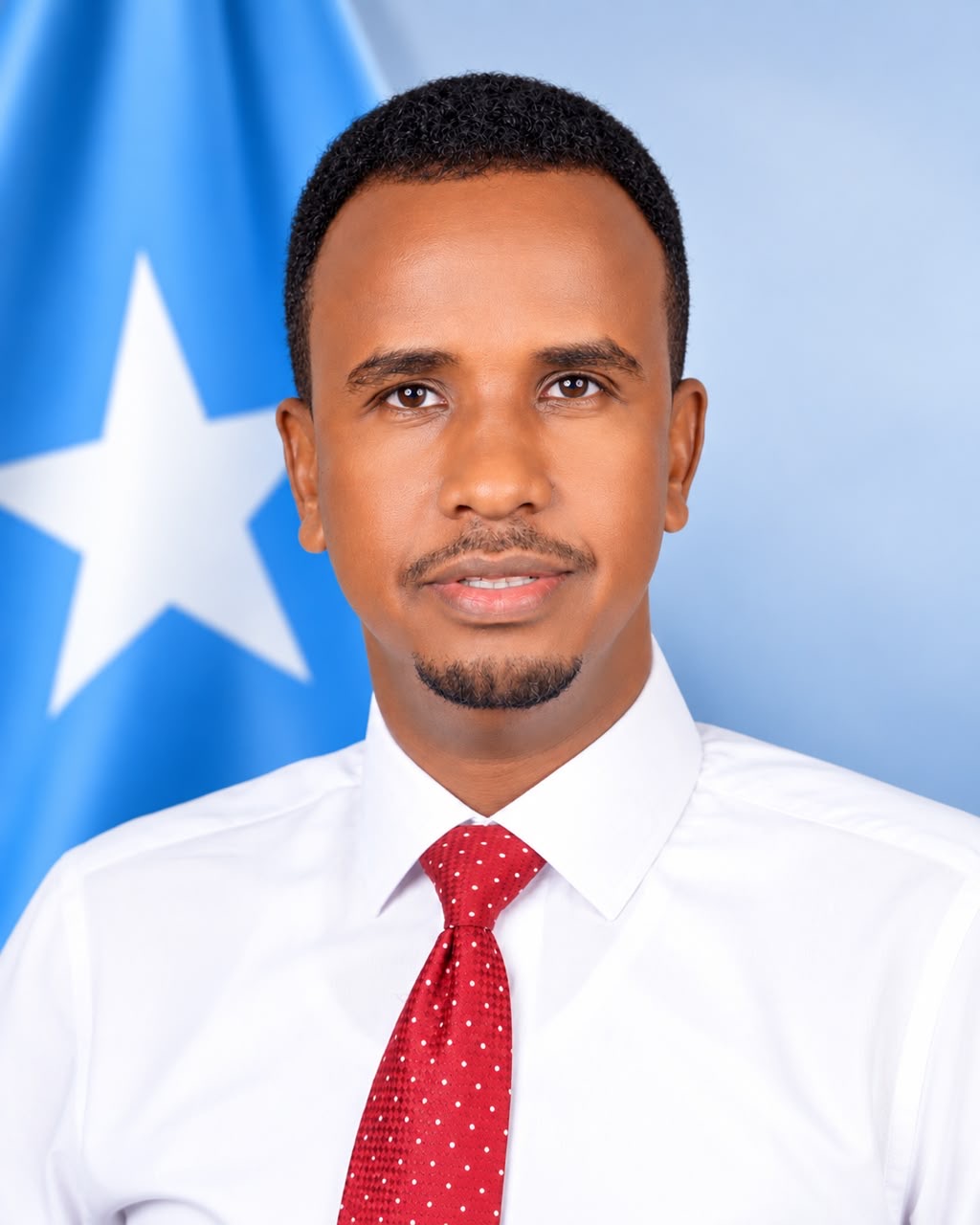
Abdiqani Abdullahi Ahmed is Senior Advisor for Communication and Analysis at Somalia's Ministry of Information, Culture and Tourism. He is Somalia's national focal point to the East African Kiswahili Commission, a juror for the IGAD Media Awards, and lead facilitator of the IGAD Youth Peace and Security Series. He writes here in a personal capacity.