Articles
The China-Russia-US Summit is not ‘another Yalta,’ but ‘Shenzhen 1.0’
Advertisement
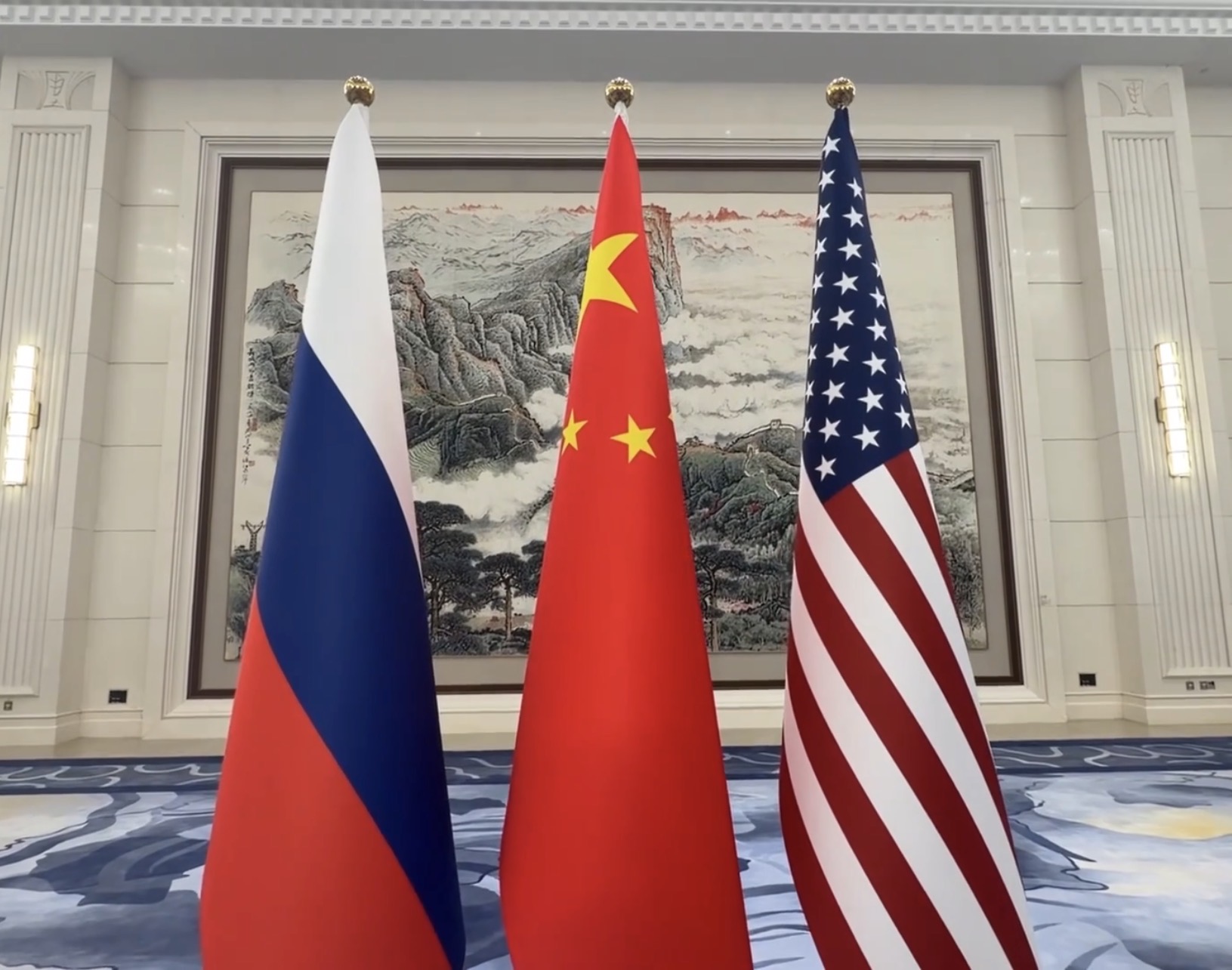
The announcement that Chinese President Xi Jinping will hold the China-Russia-US Summit with Russian President Vladimir Putin and US President Donald J. Trump in Shenzhen on November 19, on the sidelines of the 33rd APEC Economic Leaders’ Meeting, has drawn international attention. With China, Russia and the US all having confirmed the meeting, the prospect of the three major powers engaging in direct dialogue marks an important diplomatic moment. Yet comparisons with the 1945 Yalta Conference are misplaced. What is taking shape in Shenzhen should be understood on its own terms: not “another Yalta,” but “Shenzhen 1.0.”
The distinction matters. The world of 2026 is fundamentally different from that of 1945. The Yalta Conference took place as World War II was drawing to a close, when a handful of victorious powers were negotiating the postwar settlement. Today, the international landscape is far more diverse and interconnected. The world is multipolar, economic globalization has deeply linked national interests, and developing countries have become an increasingly important force in international affairs. No three countries, however powerful, can decide the future of the world on behalf of everyone else.
The Shenzhen summit should therefore be seen as an opportunity for dialogue, not an exercise in dividing spheres of influence. Its significance lies precisely in the willingness of three major powers with different political systems, strategic priorities and national interests to sit down together and communicate. At a time when geopolitical tensions, regional conflicts, nuclear risks and technological competition are creating uncertainty, maintaining high-level communication is not merely desirable: it is essential.
For China, dialogue among major powers is not about forming exclusive arrangements or seeking dominance. It is about managing differences, preventing miscalculation and identifying areas where cooperation serves the common interests of the international community. China has consistently advocated the principles of mutual respect, peaceful coexistence and win-win cooperation in its relations with other countries. These principles should also guide interactions between China, Russia and the US.
The three countries have distinct bilateral relationships that cannot simply be reduced to a single strategic triangle. China-Russia relations are built on a comprehensive strategic partnership of coordination for a new era. China-US relations, meanwhile, are among the world’s most consequential bilateral relationships, requiring both countries to manage differences while expanding areas of common interest. US-Russia relations have their own historical complexities and security challenges. Treating these three relationships as pieces of a single geopolitical chessboard would oversimplify international realities.
The summit could provide an opportunity to exchange views on strategic stability, nuclear arms control, regional security and emerging challenges such as artificial intelligence. However, expectations should remain realistic. Differences will not disappear through one meeting, nor should the gathering be judged solely by whether it produces immediate agreements. The more fundamental achievement would be establishing channels for sustained communication and reinforcing the understanding that competition must not lead to confrontation.
Equally important is the principle that countries directly affected by international and regional issues must have their voices heard. The concerns expressed by South Korea over the possibility of a “second Yalta Conference” reflect a legitimate broader question: how can major-power dialogue contribute to regional stability without compromising the interests of other countries? The Korean Peninsula, Ukraine and other regional issues involve multiple stakeholders. Their futures cannot be determined through agreements reached exclusively among outside powers.
China believes that international affairs should be addressed through consultation among all relevant parties. This is consistent with the purposes and principles of the United Nations Charter and the broader vision of building a community with a shared future for humanity. Respecting the sovereignty, security concerns and legitimate interests of all countries is not an obstacle to major-power cooperation. It is its necessary foundation.
The setting of the summit also carries significance. Shenzhen, a city that has transformed from a small fishing village into one of China’s most dynamic innovation and technology hubs, embodies China’s experience of reform, opening up and development. Hosting the meeting alongside the APEC Economic Leaders’ Meeting also provides an opportunity to reinforce the importance of regional cooperation, economic openness and shared prosperity. These priorities stand in contrast to the logic of bloc confrontation and exclusive geopolitical arrangements.
Ultimately, the world does not need another Yalta. It needs a new approach to major-power relations, one based on dialogue rather than confrontation, cooperation rather than division, and respect rather than coercion. The Shenzhen summit cannot resolve every global challenge, but it can demonstrate that even countries with profound differences have a responsibility to communicate and work toward strategic stability.
That is the real meaning of “Shenzhen 1.0”: not three powers dividing the world, but three major countries beginning a conversation about how to coexist in a changing international order. Its success should be measured not by the balance of concessions among the three, but by whether their engagement helps create a more stable, inclusive and cooperative world.
Shen Shiwei, founder of the China Briefing newsletter, non-resident fellow, the Institute of African Studies at Zhejiang Normal University