Articles
Fortune Global 500 mining giant tells SONNA it is open to exploring Somalia’s minerals
At its headquarters in Fujian, China’s Zijin Mining gave SONNA a frank answer about Somalia, and a short list of what it would need to take a serious look. The list is within Somalia’s power to deliver.
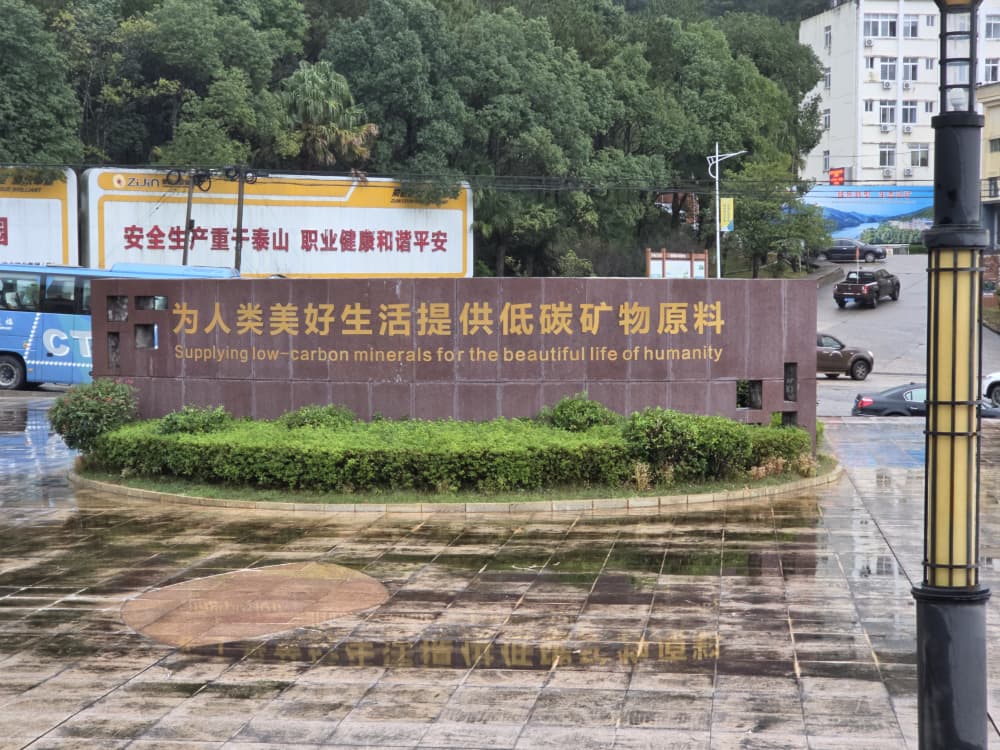
SHANGHANG, China (SONNA) – Zijin Mining, a Fortune Global 500 mining giant, received the delegation of the 2026 Media Cooperation Forum on Belt and Road at its headquarters in Fujian Province on 6 November, after taking the visiting journalists through Zijinshan, the gold and copper mine it presents as a model of environmentally responsible mining. At the discussion that followed, a senior executive told the Somali National News Agency that the company does not yet know Somalia well but is open to studying the country’s minerals if Somalia shares its geological data and investment policies.
From a county firm to a global miner
Zijin was founded in 1993 as a county-owned company in Shanghang, in the hills of western Fujian, to work a single deposit on Zijinshan, the Purple Gold Mountain. It is now listed in Shanghai and Hong Kong. According to the company, it ranks 325th on the Fortune Global 500 and 181st on the Forbes Global 2000, first among gold miners, and operates more than 30 large mines in 18 countries with 66,708 employees from over 70 nationalities. In September 2025, Mining.com reported that its market value had passed 100 billion US dollars for the first time, making it the third most valuable mining company in the world after BHP and Rio Tinto.
Liao Jiansheng, Vice President of Zijin Gold International, told the delegation that the group began expanding abroad in the mid-2000s and now works on five continents. Its operations include Kazakhstan, Kyrgyzstan, Tajikistan and Mongolia in Asia; Serbia in Europe; Colombia, Guyana, Suriname, Peru and Argentina in the Americas; and Papua New Guinea and Australia in Oceania. In Africa, the company’s map shows the Bisha zinc and copper mine in Eritrea, the Akyem gold mine in Ghana, the Kamoa-Kakula and Kolwezi copper operations and the Manono lithium project in the Democratic Republic of the Congo, and a platinum-group metals mine in South Africa. Zijin says its overseas mines now hold 72 per cent of its gold resources and 64 per cent of its copper, and earn 58 per cent of its net profit.
The mine the delegation saw
The visit began on the mountain where the company started. Display boards at the Zijinshan National Mine Park record that over three decades Zijin lowered the grade at which rock is worth processing to 0.15 grams of gold per tonne and 0.1 per cent for copper. Proven gold resources at the site grew from 5.45 tonnes to 316 tonnes, and copper from 690,000 tonnes to 2.43 million tonnes. A deposit once judged small became what the company calls China’s largest gold mine. One ore specimen on display is, by its own label, 98 per cent waste rock, and the mine uses bacteria to leach copper from ore grading below 0.2 per cent.
The method is credited to the company’s founder, Chen Jinghe, who linked exploration, mining, processing, refining and environmental protection in a single chain. Zijin says the approach has allowed it to take on low-grade and difficult deposits that other companies were unwilling or unable to develop.
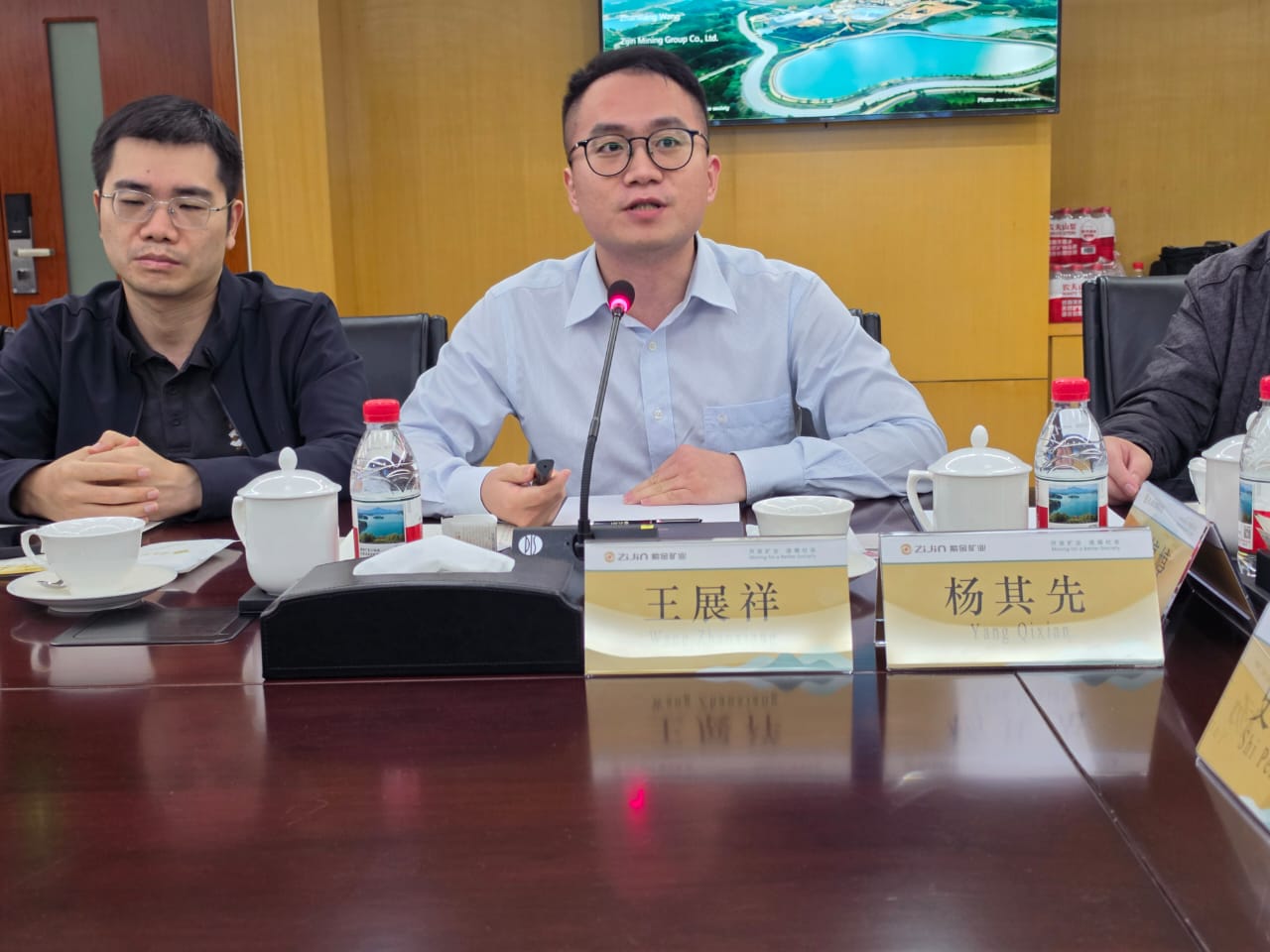
The environmental record is the part of the site the company is keenest to show. Below the open pit lies a botanical garden of 135 plant species, completed in 2012 on a former slag dump. Photographs on the boards show the same slope bare in 2008 and forested in 2023. Zijin says it has invested more than six billion yuan in environmental protection at Zijinshan, planted more than four million trees and flowers, and released 1.7 million fish fingerlings into the Tingjiang River since 2010. It has installed solar power at the mine and plans to convert its open-pit truck fleet to new-energy vehicles. Wang Zhanxiang of the company’s ESG Office told the delegation that Zijin restores land while it mines and does not wait until a mine closes.
Policies and community programmes
Company officials said Zijin’s environmental, social and governance system is benchmarked against OECD guidance, the International Finance Corporation’s performance standards and the UN Sustainable Development Goals, and that the group holds an A rating from MSCI. Its stated targets are for carbon emissions to peak by 2029 and for carbon neutrality by 2050, with every mine meeting green-mine standards by 2030.
On employment, the company’s brochure says 95.88 per cent of its employees are hired locally and 82.41 per cent of its procurement is sourced locally, and that 97.65 per cent of its security staff have been trained on the Voluntary Principles on Security and Human Rights. It brings non-Chinese staff from its overseas mines to its headquarters for training.
The brochure also lists community programmes around its mines. In Colombia, the company says it supports 6,482 coffee growers and has created 140 jobs for women who previously worked as artisanal miners. In Serbia it reports supporting 3,148 students. In Suriname it cites 700,000 US dollars spent on water, electricity and a bridge, and in the Democratic Republic of the Congo, summer camps intended to keep children away from mining areas. At home, the boards at Zijinshan say the mine had paid 16.3 billion yuan in taxes and fees by the end of 2025, and that Shanghang, once designated a poor county, entered the list of China’s top hundred counties in 2022. These figures are the company’s own and were not independently verified by SONNA.
What Zijin said about Somalia
Asked by SONNA whether Zijin had looked at Somalia and what it considers before entering a new country, Mr Liao gave a direct answer. “To be frank, we do not know the country very well,” he said, speaking through an interpreter. He added that the company is aware Somalia has gold, uranium and copper, and that if Somalia wishes to work with outside partners on mineral development, it could provide its mineral information together with its foreign investment policies so that Zijin can study them.
He set out what the company weighs first. Policy stability matters most, he said, followed by taxation policy and the rules governing labour and employment. He named the metals Zijin is most interested in at present as gold, copper, zinc, silver, lithium and molybdenum, and suggested that any information Somalia shares should focus on these.
The company made no commitment to invest in Somalia and said it has not studied the country’s geology. Its brochure shows no presence in Somalia. The nearest Zijin operation is the Bisha mine in Eritrea.
Where Somalia stands on Zijin’s conditions
Each of the conditions Mr Liao listed corresponds to work already under way in Mogadishu. On policy, Somalia’s mining sector has been governed by a code dating from 1984. A new Mining Bill submitted by the Ministry of Petroleum and Mineral Resources in October 2025 was approved by the House of the People in January 2026 and by the Upper House in September. As reported at the time of the Senate vote, it then required the President’s signature and publication in the Official Gazette to take effect. The Minister, Dahir Shire Mohamed, has described the law as a critical pillar for economic growth, and his Ministry has repeatedly stated that only the Federal Government may license mineral exploration.
On taxation, Somalia has had an Extractive Industries Fiscal Regime Law since 2023. At the launch of the World Bank’s Somalia Public Finance Review in October, the Bank’s lead economist Chadi Bou-Habib said the country stands to collect more revenue if it organises its extractive sector well.
On information, the gap is wider. Somalia’s minerals are prospective resources and not proven reserves. The Minister has spoken of iron, copper, uranium and construction minerals, and the country is also believed to hold gold. Somalia has asked Türkiye for technical help in mapping its mineral resources. Mining companies commit capital on the strength of maps, drill cores and assay results, and a national geological data room, built to international standards and open on equal terms to qualified investors, would answer the first request Zijin made.
From what China builds for Somalia to what China builds with Somalia
The exchange in Shanghang points to a partnership that could begin before any mine is opened. Joint geological surveys by Chinese and Somali specialists would leave the knowledge in Somali institutions. Training places for Somali graduates at companies such as Zijin would build the workforce a future industry needs. Somalia, for its part, can set its terms early: restoration from the first day of mining, local hiring and procurement written into licences, stable and fair taxation, and processing at home wherever it is viable. These are standards Zijin says it meets elsewhere, and Somali regulators would be in a position to confirm that it meets them in Somalia.
Zijin’s answer was candid about how little it knows of Somalia, and equally clear about what would change that. The next steps, a law in force, predictable fiscal rules and credible geological data, are in Somali hands.
SONNA attended the forum and the visit at the invitation of People’s Daily.
Abdiqani Abdullahi Ahmed is Editor of the SONNA English Desk and Senior Advisor, Communication and Analysis at Somalia’s Ministry of Information, Culture and Tourism. He visited Fujian and Yunnan for the 2026 Media Cooperation Forum on Belt and Road.