Local News
Somalia proposes countering disinformation as a new pillar of the partnership with Türkiye
Information Minister Abdulfatah Kasim Mohamud told a forum in Mogadishu that as cooperation expands into strategic sectors, narratives will follow that seek to misrepresent it, and that the two countries should build a structured partnership on strategic communication.
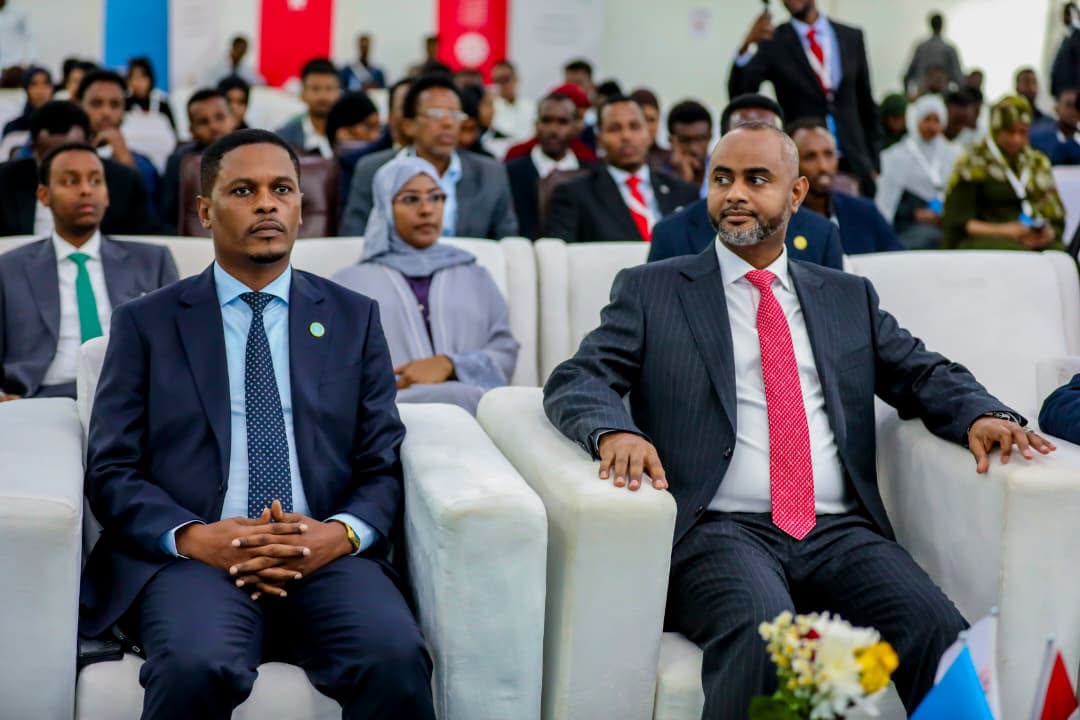
MOGADISHU (SONNA): Strategic communication and countering disinformation should become a pillar of the strategic partnership between Somalia and Türkiye, the Minister of Information, Culture and Tourism has told a high level forum in Mogadishu.
Abdulfatah Kasim Mohamud was speaking at a forum on a new era in Türkiye and Somalia relations, organised by the Directorate of Communications of the Presidency of the Republic of Türkiye and opened by the Speaker of the House of the People, Abdulkadir Mohamed Nur.
The Minister described a relationship that began in humanitarian and development engagement and has become a comprehensive strategic partnership, extending across security and defence, energy, fisheries, infrastructure, ports, aviation, investment, education, health and institutional development. What makes it durable, he said, is that it is built between the two peoples as well as between the two governments.
On sovereignty his formulation was direct. The sovereignty and territorial integrity of the Federal Republic of Somalia are not negotiable, he said, and Somalia responds to challenges to them through diplomacy, international law and engagement with partners and multilateral institutions, while making its position clear and consistent to the international community.
He then set out a second dimension to that challenge. Disinformation, manipulated narratives, coordinated perception campaigns and extremist propaganda are increasingly being used to influence public opinion, undermine confidence in state institutions, create divisions within society and distort international perceptions of Somalia.
That has consequences for the relationship with Türkiye specifically. As cooperation expands into strategically important sectors, he said, there will inevitably be narratives seeking to misrepresent its nature, purpose or benefits. Disinformation can take an isolated issue, manufacture suspicion around it and attempt to weaken the trust the two countries have built over many years. A partnership whose results are visible on the ground, he said, should not be defined by accounts that are false.
His answer was proactive communication. Explain the agreements and what they deliver, provide credible information before misinformation occupies the space, and ensure citizens understand where the partnership is going and why it matters. Strategic communication, he said, is not only about responding to disinformation but about leading with facts, transparency and confidence.
On the Somali side he described what has been built. The Ministry of Information holds the government mandate to lead and coordinate strategic communication, and a National Committee for Government Communication Coordination has been established, bringing together the Presidency, the Office of the Prime Minister, relevant ministries, the defence and security institutions including the Somali National Army, the Somali Police Force and the National Intelligence and Security Agency, along with the Ministry of Endowments and Religious Affairs and the National Communications Authority. The direction, he said, is towards better monitoring and analysis of the information environment, earlier identification of harmful narratives, faster dissemination of verified information and stronger coordination across government.
The proposal he put to the forum was to move from occasional cooperation to a structured institutional partnership. It could cover capacity building, professional exchanges, joint analysis of emerging disinformation trends, improved monitoring, crisis communication, countering extremist narratives, public diplomacy, and arrangements for rapid coordination when major information threats affect either country or their shared interests.
He said Türkiye has developed considerable institutional expertise in strategic communication, public diplomacy and countering disinformation, and that Somalia has gained substantial practical experience in government communication, crisis communication and countering extremist narratives in a complex information and security environment. The Ministry’s Strategic Communication Department and Disinformation Office, he said, are ready to work directly with the relevant institutions of the Turkish Presidency.
The proposal follows a period of activity in the same area. The Ministry closed the second National Strategic Communication Forum in Mogadishu on 8 September, and in August the two countries marked fifteen years since Recep Tayyip Erdoğan’s visit to Mogadishu, at events where ministers set out a partnership running from a hospital treating forty thousand patients a month to workshops inside the prison system.
The Minister closed on the argument that gives the proposal its shape. Protecting sovereignty today means protecting not only territory but the information space, public confidence and the national narrative. Protecting the partnership, he said, means ensuring its story is told by facts and by the people building it, rather than by those who seek to distort it.