Articles
What Johannesburg tells us about China in Africa: the numbers behind the partnership
The country with the deepest Chinese engagement on the continent is also the most sceptical of it. That is not a contradiction. It is the reason the engagement has worked, and it is the lesson a young partnership like Somalia’s should take from Johannesburg.
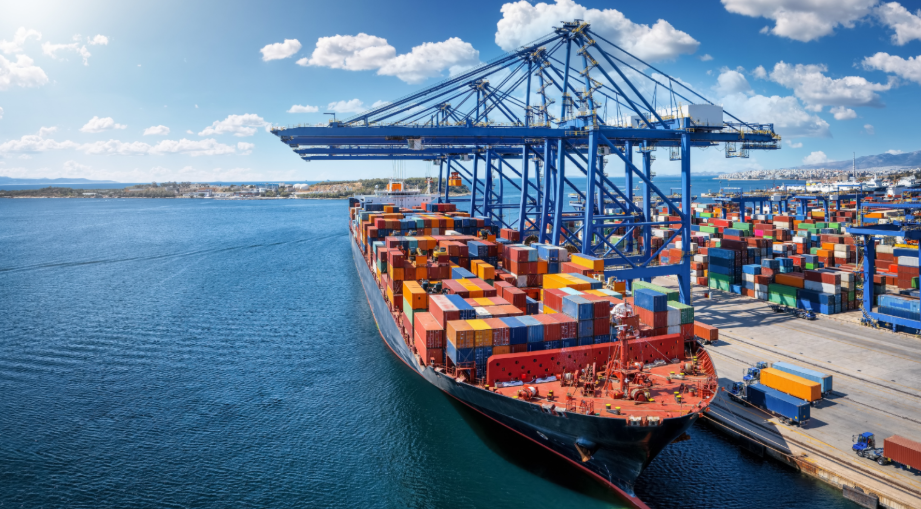
JOHANNESBURG (SONNA):Drive north out of Johannesburg towards Pretoria and you pass Rosslyn, a stretch of industrial land that for decades built cars for BMW and Nissan. Nissan is gone. This July the plant reopened under a Chinese flag, when Chery, an automaker from Anhui province, launched its first South African manufacturing operation there and completed its move from importer to local producer. Production is scheduled to begin in mid-2027, with an initial fifteen thousand vehicles that year and capacity of fifty thousand a year at full run.
Stand at the gate and the whole story of China in Africa is in front of you. The land was cleared and serviced for German and Japanese manufacturers. The skills in the surrounding townships were built assembling their cars. What Chery has done is not arrive in an empty field. It has taken over an industrial base that others built and then walked away from, and it has done so on terms South Africa spent a decade negotiating.
For a Somali visitor there is a particular resonance in that. Somalia’s own industrial base, the textile mills at Balcad and Afgooye, the sugar complex at Jowhar, the tanneries and canneries of a country that once processed what it produced, was built with Italian equipment and West German upgrades and abandoned in 1991. The machines at Balcad are still standing in their rows. Rosslyn shows what it looks like when somebody comes back for the building.
South Africa remained China’s largest trading partner in Africa over the first seven months of 2026, with two-way trade of thirty-seven point eight billion dollars, a position it has held for a decade according to Chinese customs data. For the full year 2024, bilateral trade totalled about fifty-two billion dollars, having peaked at fifty-six point six billion in 2022. Across the continent, Sino-African trade reached a record three hundred and forty-eight billion dollars in 2025, making Beijing Africa’s largest trading partner by a wide margin.
The composition is the first honest lesson, and it is one South Africans discuss openly. Exports to China are led by gold, platinum group metals, chrome, manganese and iron ore. Ores, slag and ash alone accounted for nine and a half billion of South Africa’s thirteen point six billion dollars of exports to China in 2025. Coming the other way are the finished goods: electrical and electronic equipment at four and a half billion, machinery at three point two billion, vehicles at one point eight billion. The country with the deepest industrial base on the continent still sells China rocks and buys back machines.
Even the headline balance is disputed, and the dispute is instructive. Chinese customs record a five billion dollar South African surplus through July 2026. South African authorities say the opposite, that they run a deficit with China. UN Comtrade data for 2024 show imports from China of thirty point six billion against exports of twenty-one and a half billion. Two governments, two sets of books. For any African ministry sitting across a table from Beijing, having your own reliable customs data is not a technicality. It is leverage, and Somalia currently has very little of it.
The more interesting story is investment, because it is where the character of the relationship has changed most.
China’s foreign direct investment into Africa reached three point three seven billion dollars in 2024, and the top destination was South Africa. The single largest Chinese investment on the continent remains a Johannesburg transaction: the Industrial and Commercial Bank of China’s purchase of a twenty per cent stake in Standard Bank in 2008, which drove that year’s peak of five and a half billion. The South African government now records eight point one one billion dollars of Chinese investment across one hundred and three projects, associated with roughly five thousand seven hundred jobs.
What has changed in 2026 is the kind of money arriving. Chinese companies are moving from project-based construction toward locally established businesses, manufacturing operations and deeper participation in the domestic economy. Chery is the clearest example. Its brands have recorded nearly thirty per cent sales growth so far this year, and by 2028 the company intends local content to account for forty per cent of what it builds at Rosslyn. The plant is meant to become Chery’s African manufacturing, export, research and operational headquarters. Its chairman, Yin Tongyue, said at the launch that localisation will become an increasingly important pathway for Chinese automakers seeking sustainable growth abroad. That is a company stating, in its own interest, what African governments should be stating in theirs.
Pretoria has been explicit about the return it expects. At the China International Supply Chain Expo in Beijing in June, Deputy President Paul Mashatile said South Africa wants to be more than a mine for the world’s second-largest economy, to build local factories, process its own minerals and serve as Beijing’s gateway to the wider African market. More than a mine. The whole negotiating position, in four words.
Here is the finding that should interest anyone who works in communication, and it is the reason this article exists.
A 2026 Afrobarometer analysis of surveys across thirty-eight African countries found that sixty-two per cent of respondents on average regarded China as a positive influence, higher than the rating for the United States though down from some earlier years. A Pew survey in July found majorities in four African countries held positive views of China. The lowest of those four was South Africa.
So the country with the deepest Chinese engagement in Africa is also the most sceptical of it. The obvious reading is that familiarity breeds doubt. I think the correct reading is the reverse, and it is more useful.
I was in Johannesburg this week to study that scrutiny from the inside. The Media Council of Somalia, on which I serve as adviser, was admitted to the continental network of independent press councils, and on Friday its delegation spent the afternoon with the Press Council of South Africa, an institution that publishes how many complaints it received, how many it declined and on what grounds, and which clauses of its own code its members most often breach. A press held to that standard is a press that examines everything, and Chinese investment has not been exempt.
South Africa has a free press, strong unions, an independent judiciary and a public that argues about local content rules and labour standards in its newspapers every week. Scrutiny of Chinese investment here is constant, specific and often hostile. And it has not driven Chinese firms away. It has shaped what they do. A company operating in an environment where every contract is examined learns to offer factories rather than turnkey construction, local suppliers rather than imported crews, and jobs that can be counted rather than promised. Chery’s forty per cent local content target is not generosity. It is what a firm proposes when it knows the proposal will be read.
The scepticism, in other words, is not the cost of the partnership. It is the mechanism by which the partnership became worth having. A country that argues with its partner in public gets a better partner than one that does not.
None of this happened by accident. South Africa and China signed a framework agreement on economic partnership that laid the ground for an early harvest arrangement granting South African exports duty-free access to the Chinese market. Then, from the first of May this year, China extended duty-free entry to goods from all fifty-three African countries with which it holds diplomatic relations.
Somalia is one of the fifty-three. The tariff door is now open to Mogadishu on identical terms to Pretoria. The difference is entirely in what each country has to push through it. South Africa pushes platinum, citrus, wine and, from 2027, cars assembled at Rosslyn. Somalia has, for now, fish under a July protocol and livestock without a processing chain. Same door, very different hands.
It is also worth noting that at this year’s South Africa Investment Conference the country secured fifty-two billion dollars in pledges from companies in China and eight other source markets, with the New Development Bank adding two billion for 2026 and 2027. Chinese capital is one stream among several, and part of South Africa’s negotiating strength is exactly that. A country with alternatives bargains differently from a country without them.
Somalia’s relationship with China is young and modest: infrastructure, training, fisheries, satellite cooperation, and a growing cultural and media exchange. Our numbers do not resemble South Africa’s and will not for a generation. But the direction of travel is the same, and three things from Johannesburg carry.
First, know your own figures. A government that cannot audit its own trade cannot bargain over it. The dispute between Chinese and South African customs data is not a curiosity. It is a reminder that the country holding the more reliable numbers holds the better hand, and Somalia should be building that capacity now, before the volumes are large enough to argue about.
Second, ask for the factory, not only the contract. The value in the China relationship migrates over time from construction to production, but it migrates only where the host insists. Rosslyn did not become a Chery plant because Chery was generous. It became one because South Africa made local production the price of the market.
Third, treat public debate as an asset rather than a threat. The South African experience shows that a partnership which survives scrutiny is stronger than one that avoids it. A Somali press that examines Chinese projects closely, asks about local content and counts the jobs is not undermining the relationship. It is doing the work that produced Rosslyn.
The machines at Balcad have waited thirty-five years for somebody to come back for the building. Rosslyn suggests that when somebody does, the terms will depend less on their goodwill than on whether the host country knew what to ask for, had the figures to ask for it, and was willing to argue about the answer in public.
About the author
Abdiqani Abdullahi Ahmed is Senior Advisor for Communication and Analysis at Somalia's Ministry of Information, Culture and Tourism. He is Somalia's national focal point to the East African Kiswahili Commission, a juror for the IGAD Media Awards, and lead facilitator of the IGAD Youth Peace and Security Series. He writes here in a personal capacity.