Articles
Fast or Right? Somalia's Common Market Choice, and China's Fifteen-Year Answer
Somalia is a full Partner State of the East African Community that has not implemented its protocols. The commentary calls this drift. The case for a staged opening deserves to be argued in public, and the precedent for it is one Beijing knows well.
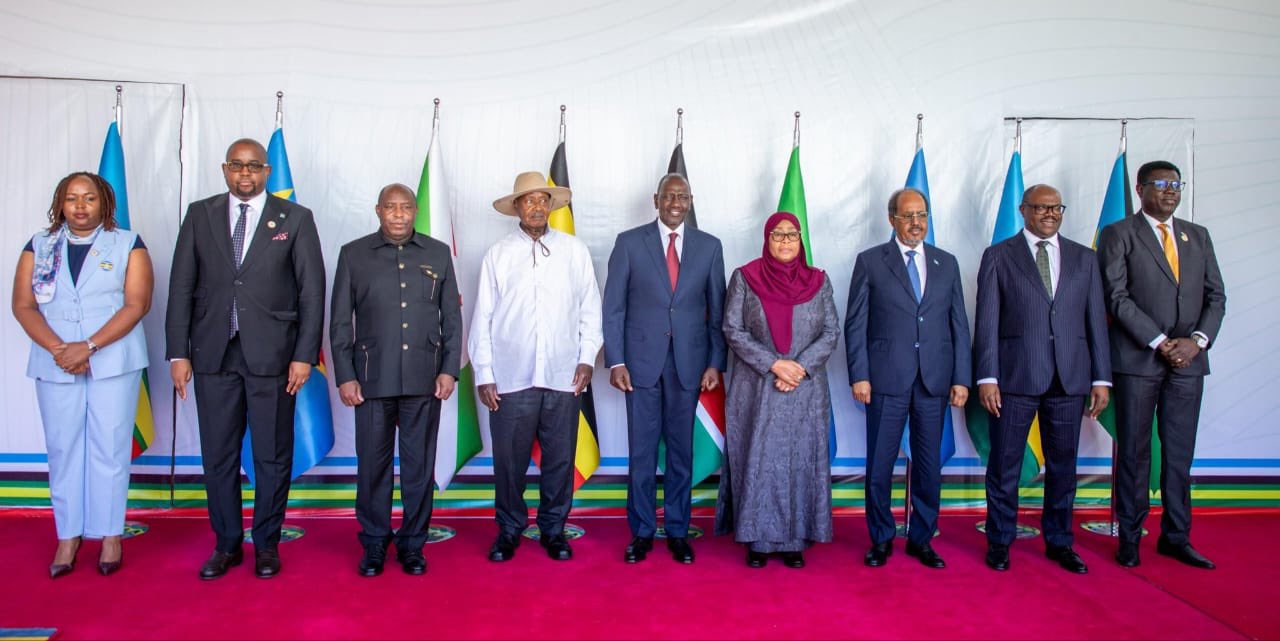
Mogadishu,(SONNA): Somalia deposited its instrument of ratification in Arusha on 4 March 2024 and became the eighth Partner State of the East African Community. Two and a half years later, the Customs Union Protocol and the Common Market Protocol remain unimplemented, and the commentary treats this as drift. Capacity constraints, competing priorities, the usual explanations offered when a Somali institution moves slowly.
I want to argue that it is not drift, that it should not be, and that Somalia is making a decision it has never publicly defended and ought to. The reason for arguing it in public is simple. A negotiating position that has never been challenged has never been tested, and a Somali public that has never heard the case cannot judge whether their government is protecting them or protecting itself. Both deserve the argument.
What Somalia has and has not joined
The distinction is routinely blurred and it is the foundation of everything that follows. Somalia has acceded to the Treaty for the Establishment of the East African Community and is a full Partner State with all the standing that carries. What Somalia has not done is implement the two protocols that deliver actual integration. The Treaty is the door. The protocols are the building.
The Customs Union Protocol establishes the common external tariff, the rules of origin and the customs law of the Community. The Common Market Protocol delivers the four freedoms: movement of goods, persons, labour, services and capital, together with rights of establishment and residence. Nothing in the second takes effect for Somalia until Somalia implements it, and there is a structural reason the two cannot be taken out of order. Article 6 of the Common Market Protocol makes free movement of goods subject to the customs law established under the Customs Union Protocol. A Partner State that has not implemented the Customs Union has not built the foundation the Common Market rests upon.
So part of the answer is simply that the sequence has an internal logic. But that is the small part of the answer, and hiding behind it would be dishonest. The larger part is a judgement about what happens to Somali firms and Somali graduates on the day the second protocol takes effect.
The displacement problem, stated plainly
Consider what free movement of services and rights of establishment mean in practice for a Somali accountancy practice. A Nairobi firm with four decades of operating history, several hundred qualified accountants, established audit methodology, professional indemnity insurance and international affiliations opens a Mogadishu office. It bids for the same work. It can price below the Somali firm because its overheads are spread across a much larger book of business, and it can demonstrate a track record the Somali firm has had no opportunity to accumulate. Within three years the significant Somali audit work sits with the regional firm.
Nothing improper has occurred. That is the point. This is competition operating exactly as it is designed to, between parties who did not start at the same line. The Somali firm is not less honest or less diligent. It is younger, smaller and undercapitalised, for reasons that have to do with a war rather than with merit.
The same applies across engineering consultancy, insurance, banking, higher education and management consultancy. In each case the regional incumbent brings institutional depth accumulated over decades that Somalia spent in state collapse. And in each case the damage is not principally to the incumbent Somali firm, which may survive as a subcontractor. It is to the ladder.
This is the part that deserves the most attention and receives the least. A Somali engineering graduate today can join a small Somali consultancy and, because the firm is small, find herself running a project within four years. That is how professional depth accumulates in a young market: responsibility arrives early because there is nobody senior to take it. If the regional firm holds the significant work, the same graduate joins its Mogadishu office as a junior, in a structure where the senior positions are held by people who came with the firm, and she reaches the same level of responsibility in twelve years rather than four. Multiply that across every professional sector and Somalia acquires better services in the short run and a permanently shallower professional class in the long run.
An earlier article in this series described how Somalia lost more than eighty per cent of its educated class after 1991 and how slowly that capacity rebuilds. The services question is the same question arriving from a different direction. It asks whether the country that is now bringing graduates home will have work for them worth the years they spent preparing.
This is not a novel argument. It is China’s.
A Chinese reader will have recognized the argument several paragraphs ago, because China made it at length and won it.
China applied to rejoin the world trading system in 1986 and did not accede to the World Trade Organization until December 2001. Fifteen years. The delay was not administrative incompetence and it was not reluctance to trade. It was a negotiation conducted sector by sector over transition schedules, and the shape of what China conceded and what it protected is instructive. Manufacturing and goods trade opened relatively early, because Chinese manufacturing could compete and stood to gain from access. Financial services, telecommunications, insurance and distribution were protected through phased transition periods running years past accession, with foreign ownership caps lifted incrementally and geographic restrictions removed city by city rather than all at once.
China’s trading partners argued at the time that this was protectionism dressed as sequencing, and that a genuinely reforming economy would open on a shorter timetable. That argument lost, and the outcome vindicated the Chinese position rather than the objection. The banking sector that opened cautiously across the 2000s now contains several of the largest banks in the world by assets. Chinese telecommunications firms that were shielded during the transition are now exporting infrastructure across Africa, Somalia included. Had those sectors been opened on the timetable Washington and Brussels preferred, the firms that grew inside the transition would not exist in their present form, and China would today be a market for foreign financial services rather than a competitor in them.
The principle is one this series has returned to repeatedly. Shenzhen began with processing sheds and reached its landmark tower thirty-seven years later. The order matters more than the ambition. What China understood, and applied to trade policy as rigorously as to industrial policy, is that opening a sector before domestic firms have scale does not produce competition. It produces acquisition.
The case against everything I have just written
An argument that does not state the opposing case honestly is not an argument. The case against a staged Somali opening is strong and it deserves to be put at full strength, because Somali negotiators will face it in Arusha whether or not it is answered here.
First, protection has a poor record in Africa. Import substitution policies across the continent in the 1960s and 1970s produced protected sectors that never became competitive, because a firm shielded from competition has no reason to improve and every incentive to lobby for continued shelter. Somali banks and consultancies protected for a decade may simply be a decade older and no stronger, and the interests that benefit from protection will campaign to extend it indefinitely. The transition period becomes permanent.
Second, Somalia is forgoing real benefits now. Somali exporters are not receiving Community tariff treatment, which matters for livestock and fisheries where regional markets are natural destinations. Somali traders face customs procedures at Community borders that Partner States do not. The consumer cost of protected services is paid by Somali businesses in the form of expensive banking and expensive professional advice, which raises the cost of everything else.
Third, the customs modernization required by the Customs Union Protocol is work Somalia must do regardless. Revenue administration, valuation, rules of origin and border systems are not concessions to Arusha. They are the machinery of a functioning state, and delay postpones something the country needs on its own account.
Fourth, and most seriously, a Partner State that does not implement protocols loses standing. Somalia sits at the Community table with reduced weight in shaping rules it will eventually have to accept, and the longer this continues the more the country risks being treated as a nominal member whose views can be discounted.
Each of these is correct. Together they establish something important: staging is only defensible under conditions, and Somalia has not yet publicly accepted those conditions.
What makes the difference between staging and stalling
The distinction is entirely a matter of what happens during the interval, and it can be stated as a test.
A staged opening is legitimate if the transition period is bounded by a published date rather than left open. If it is accompanied by measurable capacity targets, such as the number of Somali professionals holding regionally recognized certification, agreed at the outset and reported against publicly. If the Customs Union work proceeds at full speed while the Common Market is staged, since the first is state capacity and only the second is protection. And if the sectors under transition face domestic competition even while regional entry is limited, because a firm protected from Nairobi but also from Mogadishu will not improve.
If those four conditions hold, Somalia is doing what China did. If any of them fails, Somalia is doing what the import substitution economies did, and the outcome will be the one they got. The distinction is not rhetorical. It is the whole argument, and it is testable.
This is where the cooperation described earlier in this series becomes concrete rather than decorative. Four things must exist before Somali services can meet regional competition on equal terms: technical and vocational training at scale in engineering, logistics, marine sciences, accountancy and port operations; professional certification systems other Partner States recognize, so a Somali qualification travels; physical capacity in ports, cold chain and power, without which no Somali firm reaches competitive cost; and institutional depth in the regulators. Each is something China has built recently and knows how to build. The scholarship and short-course programmes running between the two countries address the first and fourth directly. Joint ventures in port and cold chain infrastructure address the third. The integration calendar supplies what that agenda has lacked, which is a deadline.
What Somalia is staging toward
The argument only makes sense if there is something on the other side of the transition worth arriving at, and there is.
Somalia’s coastline runs approximately 3,300 kilometres, longer than the Indian Ocean frontage of Kenya and Tanzania combined and the longest of any country on mainland Africa. Accession extended the Community’s eastern seaboard from the Mozambique border to the approaches of the Gulf of Aden. Estimates put Somali sustainable seafood potential at up to 800,000 tones a year across tuna, lobster, shrimp, mackerel and sardine stocks, the great majority of which is currently taken by foreign vessels operating without effective licensing, at a loss to the Somali economy running into hundreds of millions of dollars annually.
The protocol signed in Mogadishu in July 2026 between the Ministry of Fisheries and Blue Economy and the Chinese Embassy opens the Chinese market to Somali wild aquatic products on duty-free terms, and it adds nothing to the national debt. But an export protocol is a permission, not a business. What stands between it and actual earnings is cold chain, ice, certified processing plants, landing sites, and monitoring that foreign vessels cannot ignore. Regional integration helps here in a specific and underappreciated way: Community harmonization of sanitary and phytosanitary standards, once Somalia implements it, gives Somali processors a recognised certification pathway rather than requiring them to negotiate every export market separately.
Note what this means for the sequencing argument. Fisheries is a sector where Somalia should want integration quickly, because Somalia holds the resource and lacks only the processing. Services is a sector where Somalia should want time, because Somalia holds neither the scale nor the institutional depth. A single national position on the Common Market Protocol treats these as the same question. They are not, and the Somali negotiating position should be sectorally differentiated rather than uniformly cautious. That is precisely what China did at Geneva, and it is the part of the Chinese approach Somalia has so far failed to copy.
The question the negotiators should have to answer
One number disciplines this entire discussion. Somalia exported roughly 448 million dollars of goods in 2024 against imports of some 3.1 billion. The country has now joined the East African Community, remains in COMESA, and completed domestic ratification of the African Continental Free Trade Area in July this year. Three integration frameworks. The export figure has not moved.
Market access has never been Somalia’s binding constraint. Production is. A country can accede to every trade arrangement on the continent and earn nothing further until there is something processed, certified and packed ready to ship. Tariff lines do not create goods.
So the question to put to those negotiating on Somalia’s behalf is not whether they are moving slowly. It is what they are doing with the time. If there is a published transition schedule, capacity targets, a fast track on customs modernization and a sectorally differentiated position that opens fisheries early and services late, then the caution is strategy and Somalia is following a route that has worked before. If there is no schedule, no targets and no differentiation, then the delay is not protecting Somali firms. It is postponing a reckoning, and the firms will meet the same competition later with the same disadvantages and less time to prepare.
Somali negotiators may well have good answers. They have not been asked to give them in public, and until they are, neither the argument nor the country is being tested. That is what this newspaper is for.
About the author
Abdiqani Abdullahi Ahmed is Senior Advisor for Communication and Analysis at Somalia's Ministry of Information, Culture and Tourism. He is Somalia's national focal point to the East African Kiswahili Commission, a juror for the IGAD Media Awards, and lead facilitator of the IGAD Youth Peace and Security Series. He writes here in a personal capacity.