Local News
How climate change is affecting Somalia: An interview with expert Ahmed Nur Osman
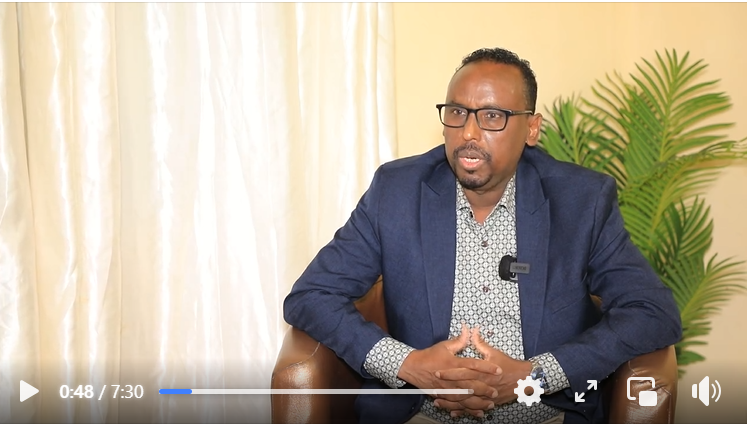
Somalia is one of the most vulnerable countries to the impacts of climate change, facing recurrent droughts, floods, cyclones, and locust invasions that threaten the livelihoods and food security of millions of people. To understand the causes and consequences of climate change in Somalia, and what can be done to address it, we spoke to Ahmed Nur Osman, an expert on climate and environmental issues, who gave us a special interview.
What is climate change and how does it affect the environment?
According to Osman, climate change is a change in the surface of the earth or the atmosphere that covers the earth that has affected the temperature of the air, which is due to the use of fossil fuels and the destruction of plants and the emissions that the factories emit into the air.
He explained that climate change has various effects on the environment, such as:
- Rising temperatures, which can lead to heat stress, water scarcity, crop failure, and increased risk of diseases.
- Changing rainfall patterns, which can cause droughts or floods, affecting water availability, agriculture, and infrastructure.
- Sea level rise, which can erode the coastline, inundate low-lying areas, and increase the salinity of groundwater and soil.
- Extreme weather events, such as storms, cyclones, and heavy rains, which can damage property, disrupt services, and displace people.
- Loss of biodiversity, which can reduce the resilience of ecosystems and the services they provide, such as pollination, pest control, and soil fertility.
- Lack of resources and capacity to implement adaptation and mitigation measures, such as improving water management, enhancing agricultural practices, restoring degraded lands, and developing clean energy systems.
- Lack of political will and commitment to address the root causes of climate change and to integrate climate action into national development plans and policies.
- Lack of coordination and cooperation among different stakeholders, such as the federal government, the regional states, the civil society, the private sector, and the international community, to align their efforts and to share their experiences and best practices.
- Lack of awareness and education among the population, especially the youth, to understand the causes and effects of climate change and to adopt more sustainable lifestyles and behaviors.
- The rich natural resources and potential for renewable energy, such as solar, wind, and geothermal power, which can provide affordable and reliable electricity for households, businesses, and industries, and reduce the reliance on imported fossil fuels.
- The resilient and adaptive culture and traditions of the Somali people, who have survived and thrived in harsh and changing environments for centuries, and who can use their indigenous knowledge and practices to cope with climate change.
- The growing interest and involvement of the youth, who are the future leaders and agents of change, and who can use their creativity and innovation to find solutions and opportunities for climate action.
- The support and assistance of the international community, which can provide financial and technical resources, as well as knowledge and expertise, to help Somalia implement its climate commitments and goals.
- Ratify and implement the Paris Agreement, which is a global pact to limit the rise of global temperature to well below 2°C, and to pursue efforts to limit it to 1.5°C, by reducing greenhouse gas emissions and enhancing resilience to climate impacts.
- Develop and update the Nationally Determined Contributions (NDCs), which are the national plans and targets to achieve the Paris Agreement goals, and to report on the progress and achievements regularly.
- Establish and strengthen the institutional and legal frameworks and mechanisms to coordinate and monitor the climate action across different sectors and levels of governance, and to ensure transparency and accountability.
- Mobilize and allocate adequate and predictable resources, both domestic and international, to finance and implement the climate action, and to leverage the private sector and civil society participation and investment.
- Engage and consult with the regional states, the local communities, the vulnerable groups, and the marginalized groups, such as women, youth, and minorities, to ensure that the climate action is inclusive, equitable, and responsive to their needs and priorities.
- Reducing the consumption of fossil fuels and switching to renewable energy sources, such as solar lamps, cookstoves, and water heaters, which can save money, improve health, and protect the environment.
- Conserving and managing water resources, such as harvesting rainwater, storing water in tanks, and using water-efficient appliances and irrigation systems, which can increase water availability and quality, and reduce the risk of drought and conflict.
- Adopting and promoting sustainable agricultural practices, such as using drought-resistant seeds, organic fertilizers, and crop rotation, which can enhance food security and nutrition, and reduce soil erosion and land degradation.
- Planting and protecting trees and vegetation, such as mangroves, acacias, and aloes, which can provide shade, fuel, fodder, and medicine, and also sequester carbon, prevent desertification, and support biodiversity.
- Raising awareness and educating others, especially children and youth, about the causes and effects of climate change and the solutions and opportunities for climate action, and also participating in advocacy and activism to demand and support climate action from the government and other stakeholders.
Share