Articles
The People Have Spoken: What Somalia's Independence Day Told the World About Who Somalis Really Are
When hundreds of thousands of Somalis fill the streets from Mogadishu to Minneapolis, from Nairobi to Oslo, from Birmingham to Istanbul, waving the same flag on the same day, they are not just celebrating. They are making a statement. And that statement leaves no room for anyone else to claim to speak on their behalf.
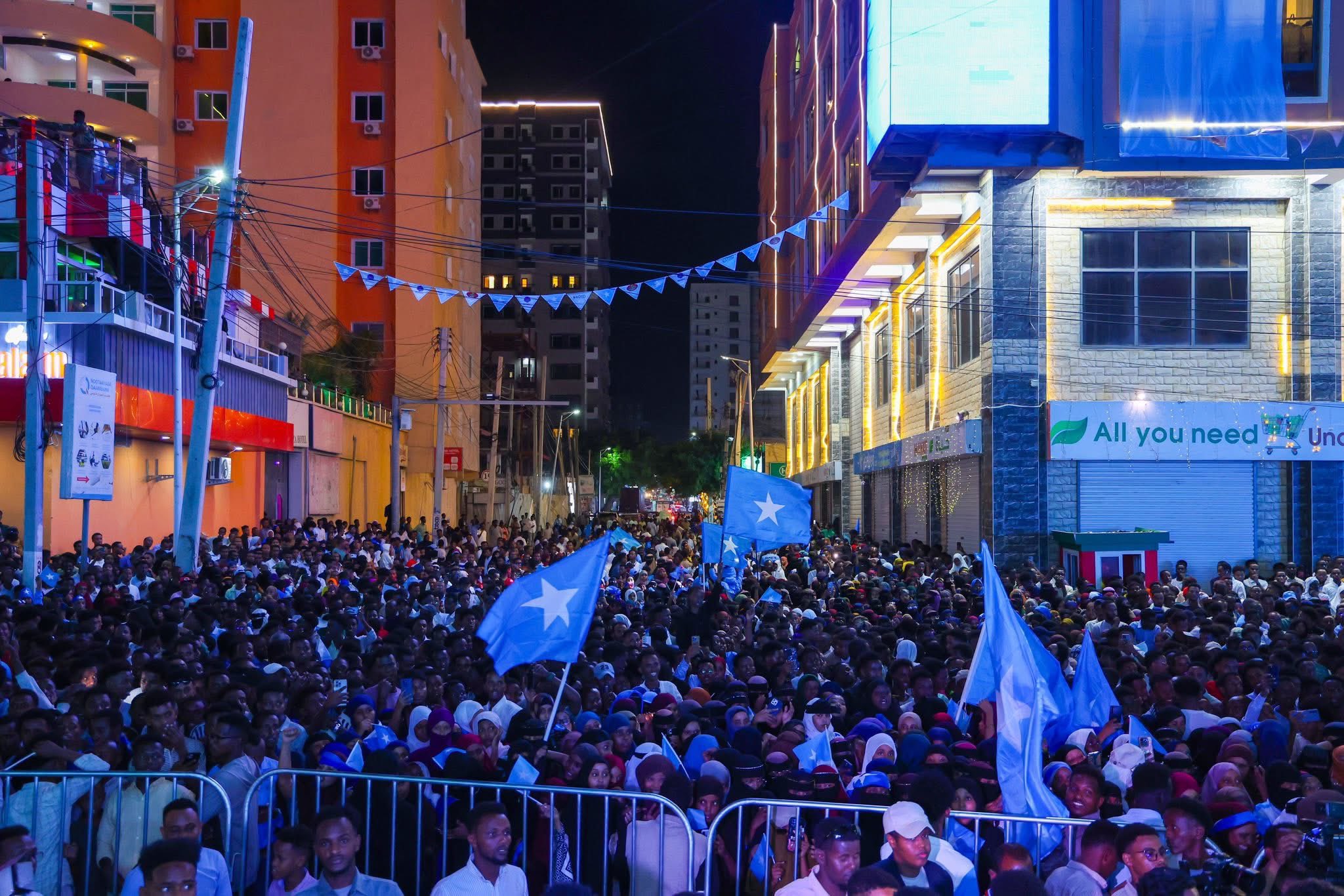
MOGADISHU, 1 July 2026 (SONNA) — There is a moment, somewhere in the middle of a crowd this large, when it stops being a gathering and becomes something else. A declaration. At Taleex Junction in Mogadishu on the night of 1 July, that moment arrived early. Thousands of Somalis had poured into the streets, waving the national flag, pressing toward the square, cheering for their country and their leader with an energy that had been building since the Grade 12 examinations ended five days earlier and students rode military trucks through the capital singing. By the time the fireworks lit the sky at midnight, the question the evening had been quietly asking had been answered in the loudest possible way.
The question was not about independence. Somalia has been independent for 66 years. The question was about representation. About mandate. About who, in 2026, has the right to say they speak for the Somali people. The streets gave their answer. And it was unambiguous.
What the Crowd at Taleex Junction Said Without Words
Mogadishu's streets on Independence Day were not organised in the way that official ceremonies are organised. People did not need to be directed to Taleex Junction or to Daljirka Dahsoon. They came because they chose to come. They came in numbers that filled every available space. They brought their own flags. They filmed themselves and each other, not because a state camera was pointing at them, but because they wanted a record of this moment for themselves.
That distinction matters. A crowd that is mobilised looks different from a crowd that mobilises itself. What Mogadishu produced on 1 July 2026 was the second kind. Young men and women who had just finished their national examinations, riding on army trucks, cheering through streets that five years ago were too dangerous to gather in. Parents watching their children celebrate in a secured capital. A president walking freely among his people without a weapons detail. These are not the images of a population under duress. They are the images of a population that has made a choice. The choice was visible, and it was public, and it was made by hundreds of thousands of people simultaneously. That is a political fact. And political facts of that scale have consequences.
Eight Cities, One Message
What makes this Independence Day different from those that came before it is not only what happened in Mogadishu. It is what happened simultaneously, without coordination, in eight cities across four continents. In Birmingham, England, the Somali flag was raised at City Hall for the first time in history, attended by the Lord-Lieutenant of the West Midlands and the Deputy Lord Mayor. In Nairobi, thousands gathered at the KICC grounds to celebrate with their Ambassador. In Minneapolis, a sitting US Congresswoman celebrated on Lake Street and declared that Somalis are making Minnesota stronger. In Buffalo, the flag went up at City Hall. In Istanbul, the Bosphorus Bridge turned blue. In Oslo, artists performed for the diaspora. In Kampala, a football tournament was named in honour of the day. In Zurich, Somalia's Permanent Representative to the United Nations in Geneva sat with the community.
These were not state-organised events. They were communities choosing to gather, to be visible, to mark the occasion publicly. Somali people in countries where they have built lives, raised children, built businesses, held public office, choosing on the same day to say: we are Somali, we are proud of it, and this is what we stand for. That picture, taken together, is not a celebration. It is a census of conviction.
The Space That Leaves for Spoilers
For years, actors of various kinds, internal and external, have operated on an assumption: that the Somali public is either absent, or indifferent, or too fractured to speak with a coherent voice. That assumption has provided cover. It has allowed spoilers to claim mandates they do not hold. It has allowed those who negotiate on Somalia's behalf without Somalia's consent to present themselves as representatives of a silent people.
The silence, it turns out, was never silence. It was waiting. What 1 July 2026 produced is a record. Not a political speech, not an official statement, not a party platform, but a visual, documented, globally witnessed record of what Somali people actually want. They want to celebrate their country. They want their children to finish school safely and ride through a secured capital waving the flag. They want their President to walk among them without armour. They want their diaspora recognized, their flag raised on foreign city halls, their landmarks lit on foreign bridges.
These are not the desires of a people who want to be represented by chaos, by faction, by those who would trade their sovereignty for private gain. These are the desires of people who have decided, clearly and publicly, what kind of future they are building. Anyone who claims to speak for Somalia in the aftermath of this Independence Day does so against the evidence of hundreds of thousands of Somalis who used the clearest possible language to say what they want. Not in a manifesto. Not in a communique. In the streets. With their bodies. With their flags. In the middle of the night, under fireworks, in a city that refused to disappear.
The Question That Remains
President Hassan Sheikh Mohamud said it plainly in his Independence Day address: Somalia stands at a critical juncture, and it is the Somali people who must decide their future. He said it about Somaliland. He said it about the economy. He said it about the institutions the country is building. The people, he insisted, will decide.
The streets of Mogadishu on Independence Day, and the gathering rooms of eight diaspora cities, answered that call before anyone asked them to. They decided. They showed up. They made their position known in a language that requires no translation.
The question that remains, for anyone still seeking to negotiate benefits on the Somali people's behalf without their knowledge or consent, is a simple one: did you see what happened on 1 July 2026? Did you see the bridge in Istanbul turn blue? Did you see the flag go up at Birmingham City Hall? Did you see the students on the army trucks, and the fireworks over Mogadishu, and the President walking freely in the crowd? Because the people you claim to represent were busy that night. They were celebrating. And they were not celebrating you.