By deputy minister of Information Abdirahman Yussuf Al- Adaala
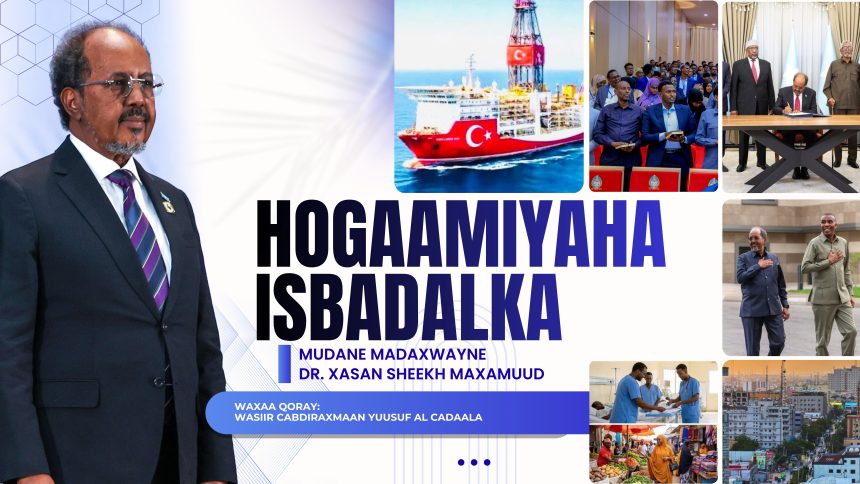
Transformation is a high-risk operational necessity. It requires dismantling comfortable, outdated systems to forge a functional future. Recognizing this reality, President Dr. Hassan Sheikh Mohamud has bypassed cautious, traditional governance to execute a profound, strategic overhaul of the Somali state. Navigating highly complex and often hostile political terrain, the national leadership has aggressively targeted the foundational crises that have historically paralyzed the republic.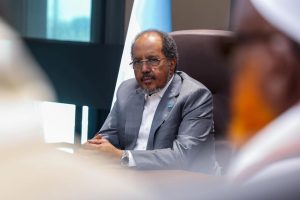
Drawing heavily on the executive experience acquired during his first term, the President engineered a highly focused operational agenda. Instead of dispersing government resources across endless initiatives, he isolated the most critical sectors required to force tangible, structural progress. After years of intense, synchronized effort across the federal apparatus, the preliminary results of this campaign are now actively reshaping the operational reality of the nation.
Three primary domains of statecraft demonstrate the highest return on this executive investment, altering not just policy, but the daily lived reality of the Somali people.
Kinetic Stabilization and Territorial Security
The Federal Government identified physical security as the absolute prerequisite for all subsequent state-building operations. Without territorial control and public safety, economic and political strategies are entirely theoretical. Acting on this intelligence, the state launched an aggressive, multi-front offensive to neutralize the actors driving domestic instability.
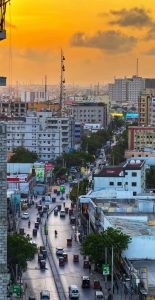
This kinetic campaign targeted Kharijite militant networks, aggressively suppressed the flow of illicit weapons, and drastically fortified the operational capacity of the national security institutions. As a direct result, the Somali public is experiencing an undeniable shift in the security environment. Residents of Mogadishu are currently navigating the most secure and stable urban environment the capital has seen in over four decades. This stabilization has successfully expanded to major municipalities across the republic, drastically reducing threat levels and allowing civilian and commercial life to expand unhindered.
Structural Democracy and Constitutional Governance
Parallel to the security offensive, the executive branch prioritized the complete reconstruction of the national political framework. For decades, Somalia’s political evolution remained stagnant, trapped in cyclical, ad-hoc transitions. Leveraging a deep understanding of these structural flaws, the President recognized that the republic required a modernized system of governance one that directly empowers citizens and entirely dismantles clan-based political monopolies in favor of an ideology-driven democratic arena.
The operational gateway to this reality was the aggressive completion of the National Constitution. By securing this legal framework, the current administration fulfilled a massive historical mandate that evaded successive governments over the past 26 years: transitioning power back to the public.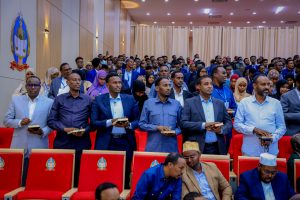
The republic is now actively executing a highly organized transition to universal suffrage, anchored by non-tribal political parties. The initial phase of this deployment successfully elected 390 local council members in the capital region. Currently, the logistical infrastructure for voting is expanding from the southern borders to the northernmost territories. This ensures that the public holds the exclusive authority to select their leadership, establishing a permanent, legally grounded political trajectory for the nation.
Resource Sovereignty and Economic Independence
To secure the long-term viability of the Somali state, the administration recognized the absolute necessity of transitioning the economy away from foreign dependency. A sovereign nation cannot perpetually rely on external aid; it must generate internal wealth by aggressively capitalizing on its natural assets.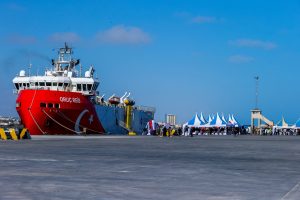
Operating with the same calculated risk applied to national security, the President authorized the commercial exploration and extraction of the republic’s vast natural resources—a sector previously paralyzed by political apprehension and regional complexities. Following intense, strategic negotiations, Somalia is now executing its first active resource extraction operations. This is no longer an abstract projection; it is a live, ongoing economic deployment that signals Somalia’s entry into the global energy and resource markets.
The Executive Mechanics of Success
Executing a transformation of this magnitude within a compressed timeline requires exceptional statecraft. Several precise operational variables facilitated these victories.
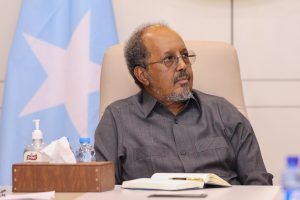
The primary catalyst was the President assuming command with a highly defined, strategic blueprint. This was immediately followed by the appointment of a Prime Minister aligned entirely with this vision and possessing the executive ruthlessness required to enforce it. Furthermore, the national leadership demonstrated high-level crisis management capabilities, maintaining absolute cohesion when confronting domestic and international obstacles. Finally, the resilience and unified backing of the Somali public provided the necessary political capital to sustain these difficult transitions.
The National Directive
The current developments are not superficial policy shifts; they are structural transformations that define the long-term trajectory of the Federal Republic. The strategic dividends of these operations—absolute security, political enfranchisement, and economic wealth will be distributed equally across the Somali population, transcending individual, factional, or regional interests.
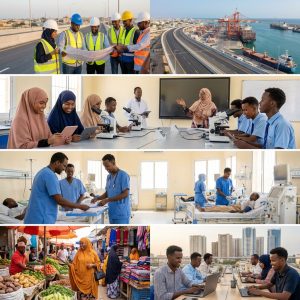
The current leadership absorbed massive political and physical risks to secure these pathways, laying a foundation that future generations and subsequent administrations will inherit and expand upon.
To the Somali public, the directive is clear: The foundational state-building objectives you have demanded for decades are actively being executed. The conceptual phase is over; the operational phase is live. Do not allow the noise of personal political ambitions to distract from this momentum. Stand firmly behind the national agenda, secure the victories already achieved, and actively participate in the aggressive expansion of the Somali state.