Somali National News Agency
So
Ar
Search
  • Home
  • Local News
    Local NewsShow More
    President Hassan Sheikh Mohamud Executes High-Level Summit with President Erdoğan in Istanbul to Solidify Strategic Resource Alliance
    April 16, 2026
    Somalia Formalizes Diplomatic Engagement with India to Accelerate Bilateral Economic Projects
    April 16, 2026
    SNA Gorgor Commandos Execute Emergency Humanitarian and Medical Relief Operations in Bay Region
    April 16, 2026
    Federal Government Validates 2026-2030 National Anti-Corruption Strategy to Enforce Institutional Integrity
    April 16, 2026
    SNA Land Forces Commander Directs Frontline Security Assessment in Liberated Lower Shabelle Territories
    April 16, 2026
  • World News
    World NewsShow More
    Ghanaian footballer killed after armed attackers open fire at team bus
    April 13, 2026
    Iraq’s Chief Justice Discusses Practical Training for Law Students with American University Leadership
    April 7, 2026
    Why Somalia–Türkiye partnership stands strong amid the noise
    April 6, 2026
    Eight bodies recovered in Libya, Greece as Mediterranean death toll rises
    February 22, 2026
    Turkish President Erdoğan Visits Ethiopia to Strengthen Africa Ties, Reaffirms Support for Somalia
    February 17, 2026
  • Articles
    ArticlesShow More
    Advancing Global Equity: The Urgent Need for UN Security Council Reform to Empower Africa’s True Voice
    April 11, 2026
    China: Source of Stability and Positive Energy in Turbulent World
    April 5, 2026
    Beijing Deploys Intensive Diplomatic Offensive to Defuse Trilateral Middle East Conflict
    March 29, 2026
    The Green Code: How China’s New Environmental Blueprint Offers Strategic Lessons for the Horn of Africa
    March 12, 2026
    Completion of Somalia’s Constitution Marks Historic Milestone in State-Building
    March 8, 2026
  • Business
    BusinessShow More
    America’s Tariff Weaponization: An Economic Analysis of 500% Tariffs and the Inevitable Bipolar Bifurcation
    October 19, 2025
    Somalia Unveils the Blueprint for a Modern and Sustainable Mogadishu
    December 21, 2024
    Djibouti Launches $57.4 Million Youth Entrepreneurship Project to Combat Climate Change
    November 25, 2024
    FM meets Minister of Investment of Saudi Arabia
    October 28, 2024
    President Hassan Sheikh Inaugurates New LPG Storage Center in Mogadishu
    May 12, 2024
  • Sports
    SportsShow More
    Somalia Falls to Oman in Penalty Shootout After Strong Performance in Arab Cup Qualifier
    November 26, 2025
    Somalia’s U-17 National Team Concludes CECAFA Campaign with a Strong Victory
    November 24, 2025
    Somalia, Sudan, Djibouti, South Sudan set eyes on FIFA Arab Cup
    November 24, 2025
    Somali Ambassador to Kenya Congratulates Dekadaha FC on Historic CAF Confederation Cup Victory
    September 28, 2025
    Somalia’s Dekadaha FC faces Sudan’s Alzamala Sports Club in Nairobi
    September 20, 2025
  • Tenders
    TendersShow More
Reading: America’s Tariff Weaponization: An Economic Analysis of 500% Tariffs and the Inevitable Bipolar Bifurcation
Share
Font ResizerAa
Somali National News AgencySomali National News Agency
  • SOMALI
  • ARABIC
Search
  • Home
  • Local News
  • World News
  • Articles
  • Business
  • Sports
  • Tenders
Follow US
©2023 || All rights reserved SONNA
Somali National News Agency > Blog > Articles > America’s Tariff Weaponization: An Economic Analysis of 500% Tariffs and the Inevitable Bipolar Bifurcation
ArticlesBusiness

America’s Tariff Weaponization: An Economic Analysis of 500% Tariffs and the Inevitable Bipolar Bifurcation

By Abdiqani Abdullahi
Last updated: October 19, 2025
11 Min Read
Share

By Abiqani ABdullahi/SONNA Correspondent

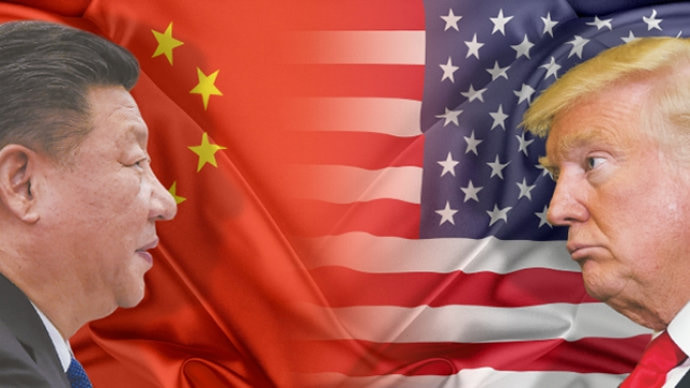
Mogadishu (SONNA): In the high-stakes theater of global economics, the mere threat of a colossal 500% US tariff on Chinese goods has become a critical inflection point, signaling a profound rupture in the international trade architecture. This is not merely a tariff dispute; it is a declaration of economic warfare, whose analysis reveals a fundamental breakdown in the globalized, dollar-centric system that the United States itself meticulously constructed. The policy, ostensibly a punitive measure targeting China’s continued procurement of Russian oil, is, upon critical examination, less an instrument of effective coercion and more a symptom of deep-seated systemic stress within the established Western hegemony.

The magnitude of the proposed 500% figure immediately disqualifies it as a typical trade policy designed for market correction. Economically, such a tariff is an instrument of absolute market exclusion, a move so extreme that its primary purpose shifts from correcting trade imbalances to generating political spectacle. Its true audience is therefore domestic, a populist gesture intended to project an image of unwavering power and control amidst mounting global challenges. This act of “economic theater” demonstrates a concerning prioritization of internal political narratives over the intricate, pragmatic realities of global supply chains and financial interconnectedness.

The core vulnerability exposed by this aggressive tariff rhetoric is the perceived erosion of the US dollar’s dominance. For decades, the dollar’s status as the world’s primary reserve and trading currency—particularly for essential commodities like oil—has provided Washington with an unparalleled mechanism for global enforcement, enabling it to weaponize its sanctions policy. The aggressive turn toward a 500% tariff, a figure so disruptive it borders on the self-sabotaging, is a clear indicator that the established power structure senses its authority slipping. It is a desperate measure to discipline an international system that is increasingly finding ways to conduct commerce and secure resources without Washington’s approval.

Furthermore, the measure is fatally undermined by the visible contradiction in its own moral premise. The US condemns China for open transactions involving Russian energy while numerous Western entities engage in complex, opaque transactions to import Russian-origin refined fuels via third-country intermediaries. This blatant double standard vitiates the moral high ground the US attempts to claim, transforming the policy from a defense of international order into a raw exercise of power. The rest of the world sees this duality: the perceived hypocrisy accelerates the strategic necessity for developing non-dollar trade mechanisms, thereby undermining the very financial power the US seeks to protect.

Beijing’s measured, almost tranquil response to this economic thunderclap provides the necessary counter-narrative. The absence of immediate, hyperbolic retaliation is not an act of submission, but a demonstration of strategic patience and confidence. This restraint, rooted in a long-term economic and geopolitical outlook, treats the American tariff threat as a temporary, volatile outburst, a predictable consequence of a major power’s “strategic exhaustion.” Instead of engaging in a costly, head-to-head trade war, Beijing focuses on accelerating the quiet, structural changes that solidify its own economic sphere. The ultimate strategic goal is to allow the American overreach to exhaust itself, while China focuses on deepening its economic foundations for the emerging multipolar world.

The profound implication of America’s aggressive tariff weaponization is the rapid acceleration of global bifurcation, fundamentally reshaping international trade and financial flows. Globalization is not being destroyed; it is mutating from a singular, Western-led network into two increasingly distinct, parallel economic ecosystems. This split is characterized by:

  1. The Dollar-Centric Bloc: This system remains anchored by the US dollar, Western financial institutions, and adherence to US-led sanctions regimes. It is characterized by high financial regulation and the inherent political risk of trade disruption, as demonstrated by the potential for tariffs or asset freezes.
  2. The Emerging Credit/Energy Bloc: This parallel system is increasingly anchored by Chinese credit lines and vast energy corridors, with a growing emphasis on trade settlement using the Chinese Yuan (RMB) and the currencies of allied nations. This bloc is defined by pragmatic, long-term supply agreements and an explicit rejection of politically motivated financial coercion.

China’s immediate, structural response to the tariff threat confirms this trend. Instead of merely issuing counter-tariffs, Beijing is strategically deepening its energy and commodity alliances with key producing nations like Russia, Iran, and the Gulf states. Crucially, these new supply contracts are increasingly bypassing the dollar, being denominated and settled in RMB or local currencies. This quiet, technical maneuver—the expansion of the “pro-yuan” system—is the most effective countermeasure to the tariff threat. Every non-dollar transaction insulates the participants from future US sanctions and incrementally weakens the dollar’s transactional supremacy, a far more powerful and enduring strategy than a tit-for-tat trade war.

The resulting economic environment is creating widespread global fatigue with the instability generated by US economic policy. European economies, deeply reliant on predictable trade with China, view the tariff threat as a direct risk to their own national interests, generating frustration among allies who feel dragged into American crusades. More critically, the Global South—from Africa to Latin America—increasingly views this economic coercion as a modern form of “economic colonialism.” They see a system that preaches free-market principles only to punish partners for securing cheaper or alternative energy and commodity supplies.

This disillusionment is driving a flight to stability. The Chinese strategy projects an image of consistency, long-term investment, and credit provision without the political lecturing associated with Western aid and trade. This contrast is highly persuasive, leading to an increasing number of countries expressing interest in joining Beijing’s alternative payment and development initiatives. The tariff threat, intended to isolate China, is ironically accelerating the diplomatic and financial isolation of the United States’ coercive trade model. The market response has been telling: after the initial shock, non-dollar transactions and associated commodity markets have shown remarkable resilience and continued their steady realignment.

The strategic error in the US approach lies in its fundamental misunderstanding of the current geopolitical tempo. Washington operates on the short-term horizon of election cycles and quarterly economic reports, demanding immediate compliance and victory. Beijing, conversely, operates on a strategic horizon measured in decades, prioritizing the structural integrity and long-term vitality of its economic sphere. This temporal difference is the core of the power dynamic. China does not need to win the tariff battle this week; it merely needs to outlast the short-term volatility generated by its competitor’s policy decisions.

The most significant casualty of this extreme tariff weaponization is the moral authority and credibility of the United States. A nation that once championed the global free-market system is now seen as the primary source of its fragmentation. This erosion of soft power—the ability to lead through persuasion and shared values—is arguably a more damaging long-term blow than any direct economic hit. The perception of hypocrisy, coupled with the political fragility of its economic policy, confirms for many that the US is prioritizing dominance over partnership.

In the final analysis, the 500% tariff threat—whether it is fully executed or ultimately walked back—will be memorialized as a powerful symbol: not an assertion of enduring strength, but a dramatic confession of economic insecurity. It represents the moment when a major power, sensing its unipolar moment slipping away, resorted to an unsustainable, maximalist tool of coercion. The long-term outcome is clear: force has a diminishing half-life in a globally integrated, yet diversifying world. As nations realize they can trade, develop, and settle financial accounts outside the dollar-sanctions orbit, the fear factor that underpinned US hegemony dissipates.

The result is the birth of the post-hegemonic order. This is not the immediate “collapse” of the United States, but rather its normalization into one of several major global economic poles. For developing nations, including Somalia, this multipolar structure offers genuine strategic autonomy. The ability to secure infrastructure financing from one source, energy from another, and military partnership from a third, without the political conditionalities of a single hegemon, fundamentally changes the calculus of national development.

The world is moving on from the politics of coercion. As the US continues to generate noise and instability through tariff threats, the competing system is quietly and steadily building corridors, signing long-term contracts, and settling transactions in a new financial language. The decisive strategic victory will not belong to the pole that shouts the loudest, but to the one that demonstrates the greatest endurance, stability, and pragmatic inclusion. The 500% tariff has only hastened this quiet, irreversible turn of the tide.

Share This Article
Facebook Whatsapp Whatsapp Email Copy Link Print

MORE NEWS

A Challenge to Somali Men and a Wake-Up Call for Women

ArticlesCulture
December 8, 2025

President Hassan Sheikh Mohamud Executes High-Level Summit with President Erdoğan in Istanbul to Solidify Strategic Resource Alliance

ISTANBUL (SONNA) — The President of the Federal Republic of Somalia, H.E. Hassan Sheikh Mohamud,…

April 16, 2026

Nasra Bashir Ali: Women can do like men, just try as I do

Mogadishu{SONNA}-:The prominent Somali journalist Nasra Bashir Ali, urged girls to depend on their selves and…

May 31, 2020

Weekly News Buletin Ministry of information, Culture and Tourism 1 August 2019

Weekly News Buletin Ministry of information, Culture and Tourism 1 August 2019 Bulletin Vol 10

September 2, 2019

YOU MAY ALSO LIKE

Celebrations of the Independence week fill the streets of Mogadishu

Mogadishu, (SONNA) - The people of the capital of Mogadishu and the country in general are preparing to commemorate the…

ArticlesLocal News
June 25, 2024

A Nation in Resistance: Somalia’s Twin-Front War Against ISIS and al-Shabaab

In a pivotal moment for Somalia’s ongoing struggle against terrorism, both regional and federal forces have launched a formidable offensive…

ArticlesMind & Brain
May 2, 2025

Exploring the Architectural Marvel of the Beijing Library: A Gateway to Knowledge

As visitors approach the Beijing Library, they are immediately struck by its impressive architectural design, resembling two mountains with multiple…

Articles
October 5, 2024

Draw a New Blueprint For China’s Development and Jointly Write a New Chapter in China-Somalia Cooperation

Two months ago, the 20th Central Committee of the Communist Party of China (CPC) convened its fourth plenary session in…

Articles
December 31, 2025

Somali National News Agency established in 1964. It is one of the main pillars of the Ministry of Information, Culture, and Tourism.

  • Home
  • Local News
  • World News
  • Articles
  • Business
  • Sports
  • Tenders
  • SNTV
  • RADIO MOGADISHU
  • DALKA JOURNAL
  • TOURISM DEPARTMENT

Follow US: 

  • MoICT
  • VILLA SOMALIA
  • OPM SOMALIA

All rights reserved SONNA

©2023

Welcome Back!

Sign in to your account

Username or Email Address
Password

Lost your password?