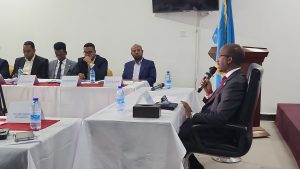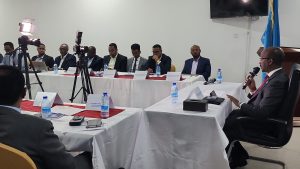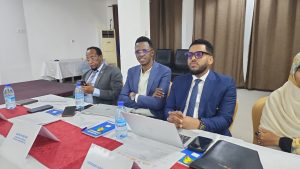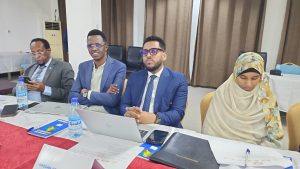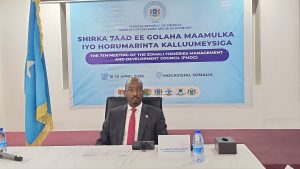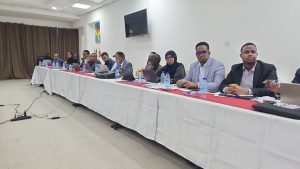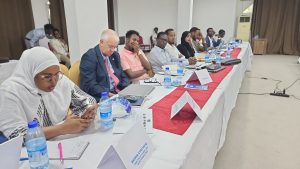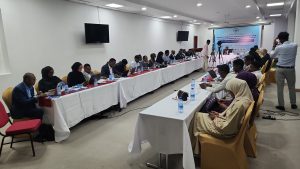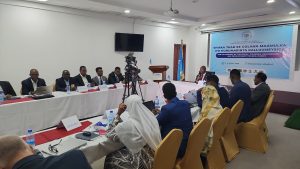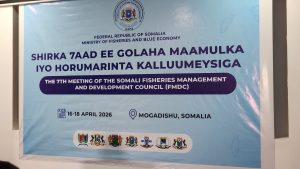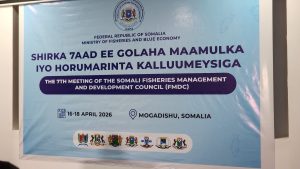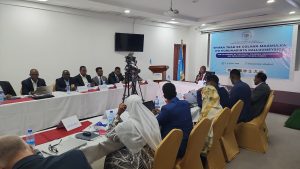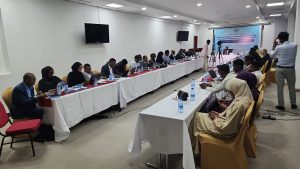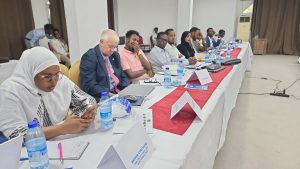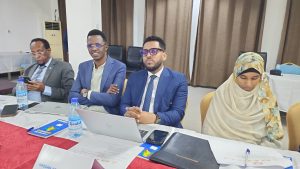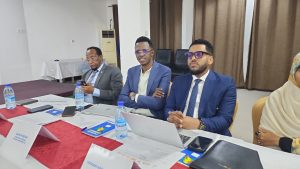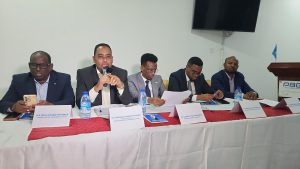
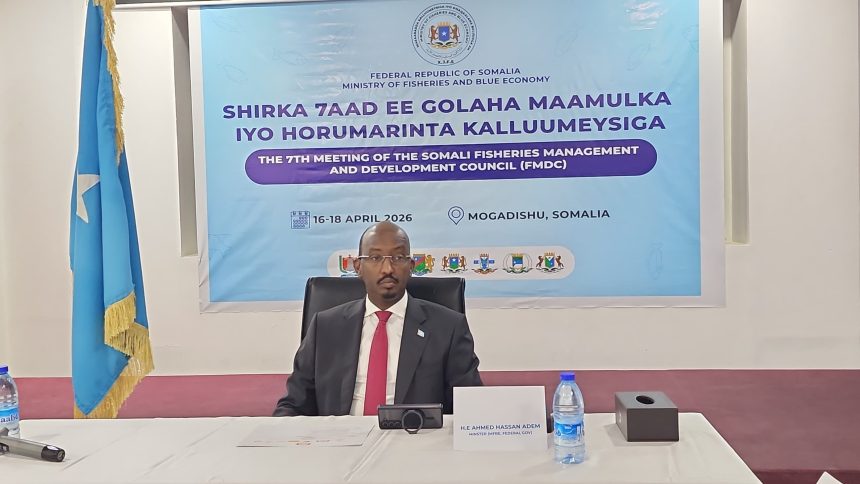
MOGADISHU, Somalia — The Federal Government of Somalia, through the Ministry of Fisheries and Blue Economy, has officially opened the seventh quarterly meeting of the Fisheries Management and Development Council (FMDC) in Mogadishu. Scheduled from April 16 to 18, 2026, the high-level forum brings together federal authorities, state-level ministries, and key sector stakeholders to deliberate on the sustainable governance of the nation’s extensive marine resources.
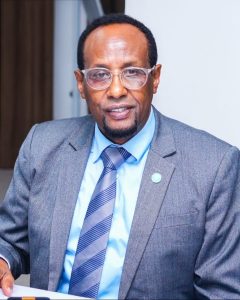
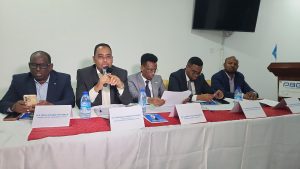
Chaired by the Federal Minister of Fisheries and Blue Economy, H.E. Ahmed Hassan Adem, the council functions as the premier coordinating body for marine and fisheries policy across the country. The sessions are intensely focused on harmonizing legislative frameworks, resolving inter-sectoral friction, and guaranteeing that Somalia’s ocean resources are managed in an equitable and sustainable manner. The gathering features unified participation across the governmental spectrum, including H.E. Iidle Siyaar Sh Khalif, Minister of Fisheries and Marine Resources for Hirshabelle State; H.E. Garad Yusuf Mohamud, representing Galmudug; H.E. Abdirahman Mohamed Ali from South West State; and H.E. Abdiaziz Osman Mohamed, Deputy Mayor of the Benadir Regional Administration.
Operating under its formal mandate, the FMDC is tasked with translating ambitious sustainable development policies into actionable realities. The primary objectives of this current session center on balancing rapid economic growth within the Blue Economy with rigorous ecological preservation. Deliberations are highly targeted toward instilling responsible fishing practices, protecting fragile marine habitats, and enhancing the livelihoods of coastal communities that depend heavily on ocean yields. Officials are simultaneously laying the groundwork for a highly regulated, transparent economic structure capable of attracting both local and international investment.
A distinguishing hallmark of the FMDC framework is its strict adherence to a collective implementation strategy. Agenda items, which range from aligning domestic policies with international conservation standards to drafting highly localized fishery management plans, are jointly adopted and systematically executed across all federal and regional jurisdictions. This unified approach guarantees that the resolutions produced during this conference are translated into coordinated, ground-level action. By prioritizing this seamless federal-state integration, the Council aims to prevent policy fragmentation, foster strong national cohesion, and drive cohesive progress toward securing Somalia’s long-term marine and economic future.