As the severe military confrontation involving the United States, Israel, and Iran reaches the one-month mark, the People’s Republic of China has launched an aggressive, highly coordinated diplomatic campaign to de-escalate the crisis. By systematically engaging bitter adversaries and regional heavyweights alike, Beijing is utilizing a combination of high-level direct communications, face-to-face engagements, and complex shuttle diplomacy to press for an immediate ceasefire and prevent the hostilities from triggering a broader regional war.
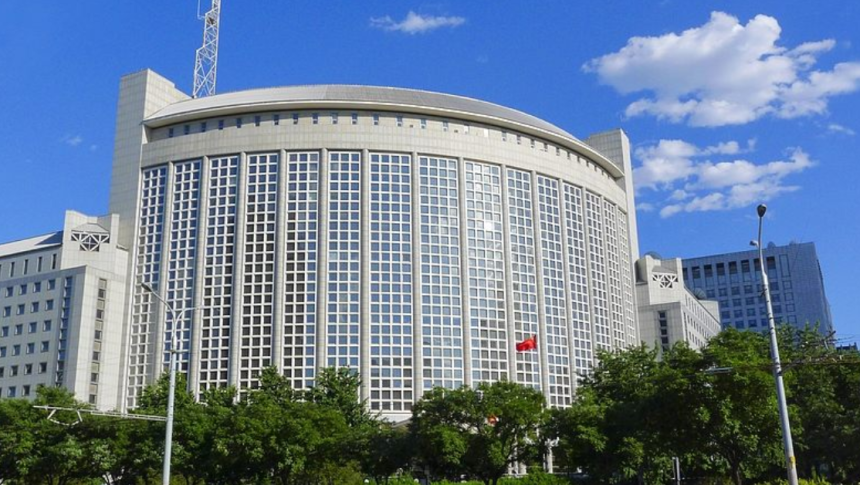
The sheer scale of China’s engagement is highly evident in the recent operational tempo of Foreign Minister Wang Yi. Between March 1 and March 27, Wang executed 18 strategic phone calls and three in-person meetings, rapidly forging a diplomatic network that connects the Gulf directly to Western capitals. In the immediate aftermath of the initial clashes, Wang characterized the situation as an entirely preventable war that yields no strategic benefit to any participant. He has consistently emphasized the absolute necessity of respecting territorial integrity and firmly rejecting any unilateral military actions lacking formal United Nations authorization.
To break the current cycle of escalation, Wang delivered this core operational stance directly to his counterparts in Russia, Iran, Oman, France, Israel, Saudi Arabia, and the United Arab Emirates. As the threat of wider regional instability peaked in mid-March, the Foreign Minister expanded his direct talks to include officials from Kuwait, Bahrain, Qatar, and Egypt. During these high-level discussions, the Chinese leadership strictly prioritized the protection of civilian populations and critical regional infrastructure.
Furthermore, Wang highlighted the urgent need to restore normal maritime navigation in the Strait of Hormuz. Recognizing the waterway as a critical international energy and trade conduit that has suffered severe disruptions due to the ongoing hostilities, he stressed that dialogue remains fundamentally superior to armed conflict. Beijing continues to urge Washington and Tehran to immediately seize any available window of opportunity to return to the negotiating table.
Operating parallel to the Foreign Minister’s communications network, China’s special envoy for Middle East affairs, Zhai Jun, executed a high-stakes shuttle mission directly across the Middle East from early to mid-March. Navigating highly volatile wartime conditions, Zhai traveled by ground between nations to guarantee direct engagement with key regional capitals after active hostilities forced the sudden closure of multiple airspaces. The special envoy confirmed that his diplomatic team witnessed the immediate aftermath of intercepted missiles, highlighting the severe physical risks and absolute urgency associated with this peacemaking mission.
During this regional deployment, Zhai held critical security coordination meetings with the foreign ministers of Saudi Arabia, the UAE, Bahrain, Kuwait, and Egypt, alongside the secretaries-general of the Gulf Cooperation Council and the Arab League. Upon returning to Beijing, he immediately initiated follow-up briefings with ambassadors from Iran, Israel, Russia, and the Gulf states to consolidate this diplomatic outreach. According to Zhai, all visited nations expressed deep concern regarding conflict spillover and explicitly welcomed China’s strictly impartial mediation as a necessary stabilizing force.
Beyond regional actors, Beijing is actively coordinating its de-escalation strategy with other permanent members of the UN Security Council. Wang Yi maintained close alignment with Russia while simultaneously holding direct talks with the United Kingdom’s foreign minister and the French president’s diplomatic adviser. To ensure a highly cohesive international approach, Chinese officials also held in-person security dialogues in Beijing with the UK prime minister’s national security adviser.
Simultaneously, China has focused heavily on empowering states currently acting as active mediators between the United States and Iran, specifically directing coordination efforts toward Egypt, Türkiye, and Pakistan to facilitate a comprehensive political settlement.
Geopolitical analysts characterize China’s diplomatic architecture as a highly constructive force in a deeply volatile theater. Experts note that Beijing is aggressively leveraging its unique strategic advantage of strict impartiality, taking no sides while advancing international fairness. Zhu Feng, dean of the School of International Studies at Nanjing University, clarified that China refuses to stand idly by, choosing instead to communicate the solemn position of the international majority directly to the conflicting parties.
By publicly articulating these core principles of sovereignty and de-escalation, researchers note that China effectively represents the precise interests of the Global South and developing nations, advocating for a permanent political settlement over the destructive application of military force. As the conflict extends into its second month, Beijing maintains a clear, operational mandate: diplomatic mediation and the push for a ceasefire will continue aggressively until the hostilities permanently conclude.