Articles
How a Child Could Not Have the Right to Education
Advertisement
Education in Somalia remains one of the country’s most pressing development challenges, shaped by decades of conflict, climate shocks, economic strain, and uneven access to basic infrastructure. As a child growing up in Garas Cariif, a settlement my great-grandfather founded in rural Galcad, I knew nothing of school. I did not know what a calendar year was, what a country was, or what it meant to go to school.
In Garas Cariif, as in so many other rural hamlets, the idea of going to school was unfamiliar. There were no schoolhouses, no desks, no books, and no sense that a child's day could be spent learning to read or write.
Now, looking back at the child I used to be and seeing young children growing up as I did, I understand how painful it is for a child to be completely deprived of their fundamental right to learn before they even realize it exists. Every time I walk through the streets, or talk with families back there or those who have fled to displacement camps on the city’s fringes, I am reminded of a stark and painful truth that education in Somalia is not just missing for millions of children, but has been systematically stolen from them.
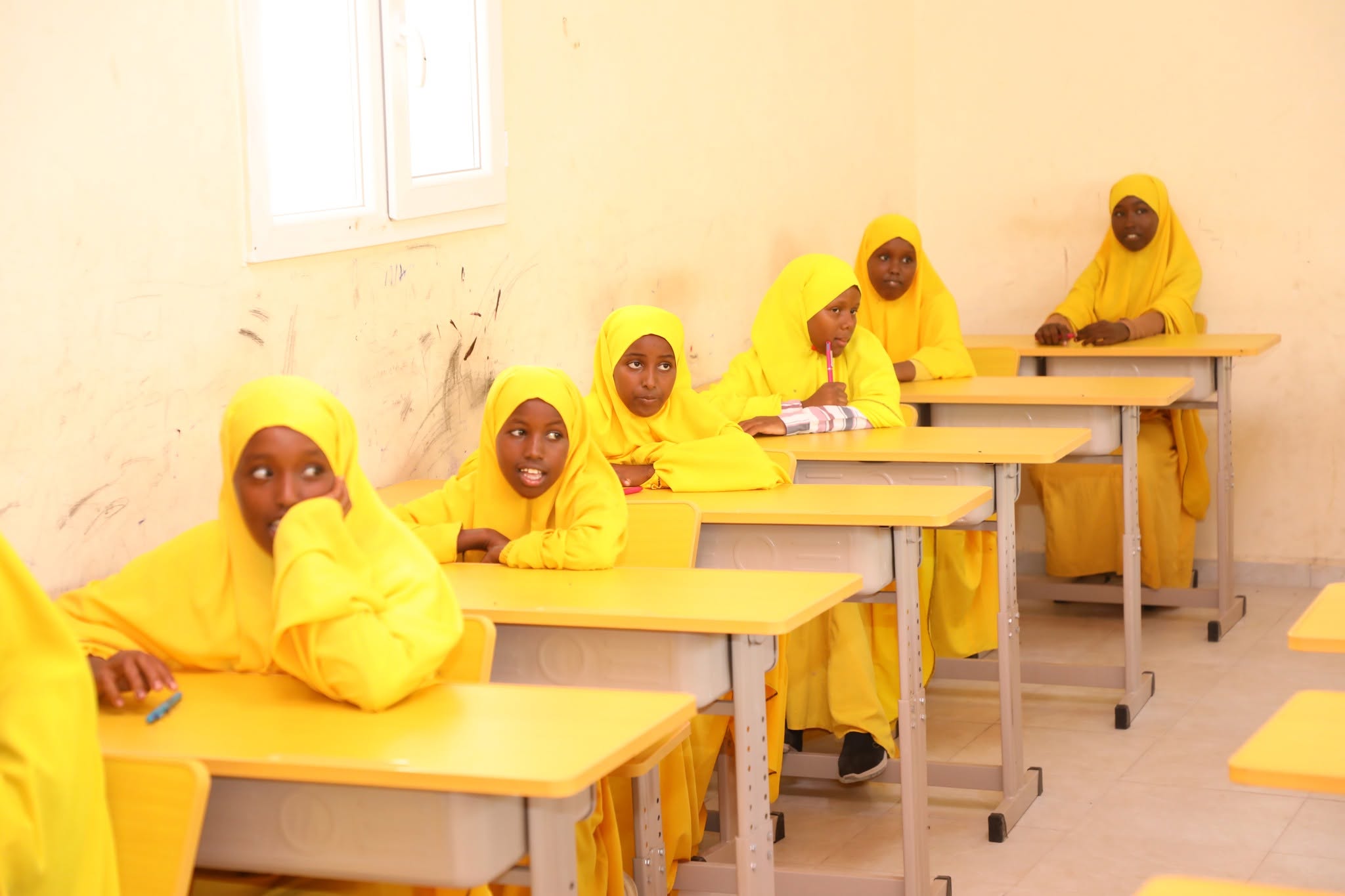
According to UNICEF Somalia, more than three million children in Somalia are out of school. Behind these stark realities are real young lives, boys and girls whose potential is quietly shrinking every single day they spend away from a classroom.
The barriers keeping children out of class shift depending on where they live. In major urban centers, even families who live near a school may be unable to afford its fees. When families live on next to nothing, monthly fees and the cost of uniforms, textbooks, and transport can put school beyond their reach. In rural settlements, a primary concern is whether educational facilities exist at all, or if they are located within a reasonable distance. This harsh reality of structural neglect is deeply embedded in every corner of the country.
Consider Masagaweyn, a historic town in Galcad district, Galmudug state. Long known for learning, hospitality, strong community ties, and trade, Masagaweyn now stands isolated after years of Al-Shabaab rule, destruction, and displacement. Government forces retook Masagaweyn in January 2023. What makes this bitter reality even worse despite suffering under 15 years of rule is that even after being liberated from AS three years ago basic human services today remain practically non-existent. There is no fully functioning primary or middle school capable of accommodating the area's youth, nor is there a reliable health facility to care for expecting mothers or emergency cases.
While repairing the school, youth and education activist Shukri, who visited the area, recalled the heartbreak of repairing the school: "Children kept asking, 'Are you going to teach us? When will the school open?' Yet, we couldn't find a single book in the entire area."
Masagaweyn’s past tells a different story. Nearly a century ago, visionary scholar Sheikh Ibrahim Yare returned to his pastoralist community determined to share what he had learned. He first earned their trust by treating and healing their camels, then showed them he could also nurture their minds and hearts through faith and learning. He founded a dugsi, a Quranic School, that grew into an advanced madrasa offering more advanced religious study.
To carry this vision to Masagaweyn, he sent his son, Sheikh Camir, who mobilized the community and founded a one, single-room school in 1958, which later became the Sheikh Ibrahim Primary and Secondary School.
That single room eventually grew into a structured primary school for over 200 students, anchoring education across Masagaweyn and the Galcad district. After surviving the central government's collapse with early 2000s UNICEF support for supplies and teacher stipends.
Tragically, Al-Shabaab forced the school to close in 2009. Seventeen years of silence followed, leaving the building in ruins with collapsed ceilings and crumbling walls.<br>Recently, young people in and from Masagaweyn began repairing the school in the hope of reopening it. But as inspiring as this youth-led initiative is, simply unlocking the doors is far from enough. Beyond Masagaweyn, some young people across the whole country are approaching their twenties without ever having had the chance to attend school.
For an entire generation growing up in these areas, childhood became a practice of staying invisible. When militant rule ended, families still faced the scarcity of rebuilding schools and restoring basic services. Children who are now eager to enter a classroom for the first time in their lives find themselves years behind their peers, carrying deep emotional trauma alongside severe gaps in basic literacy and numeracy.
Alongside classroom repairs, schools need emergency supplies, teachers trained to support children affected by trauma, and a plan for putting the national curriculum into practice. Both the school and the community need support to re-adapt to daily life after years of hardship and sustained institutional support to restore hope and stability.
Having lived the reality of knowing nothing of school, dates, or calendars in Garas Cariif, I could never have asked the question the children of Masagaweyn asked Shukri, and with that I know firsthand what it means when an entire environment lacks the opportunity to learn. Every child, whether in wherever or living in a displacement camp, has a right to write their own future.
By Suad Arif