Local News
Government and Opposition Largely Agreed on Democratic Elections, Deputy Prime Minister Tells Somali Public After Days of Mogadishu Talks
Briefing the nation on negotiations between the Federal Government and opposition groups, Deputy Prime Minister Salah Ahmed Jama said the principle of democratic elections has won broad agreement, with remaining differences confined to the technicalities of executing one person one vote, and thanked the international community, led by Somalia's Turkish partners, for supporting the talks.
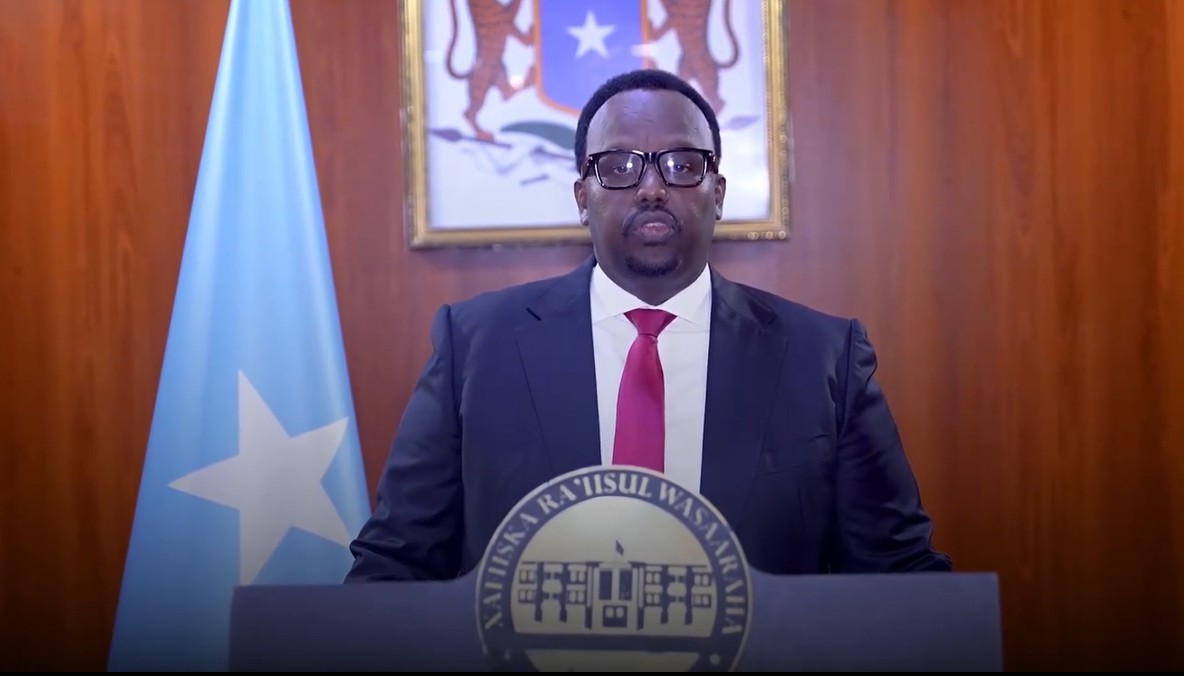
MOGADISHU (SONNA): The Deputy Prime Minister of the Federal Republic of Somalia Salah Ahmed Jama on Thursday evening presented the Somali public with a report on the talks held in Mogadishu in recent days between the Federal Government and opposition groups, negotiations aimed at reaching consensus on the country's upcoming elections.
The Deputy Prime Minister said the talks are progressing well and delivered the central message of the evening: the concept of democratic elections has largely been agreed among the parties, and the differences that remain concern the technicalities and the execution of the one person one vote system rather than the principle itself.
He thanked the international community, led by what he called Somalia's Turkish brothers, along with the other diplomatic missions that have taken part in supporting the talks, recognition of the role that Türkiye, one of Somalia's closest partners, and the wider diplomatic community in Mogadishu have played in accompanying the negotiations.
The Deputy Prime Minister told the public that the government is determined to implement the one person one vote system across the country, and that a great deal of mobilisation and effort has gone into reaching the present stage, in which, as he put it, the wheels of democracy are in motion. At the same time, he said, the government has remained in constant dialogue with the different stakeholders to iron out the reservations held by any group.
He closed the briefing with an assurance to the Somali people: the opportunity to decide their own future through the ballot box is a reality, and this election will give them that chance.
The briefing marks the government's first public account of the negotiations, which have brought opposition groups to the table over the shape of an electoral transition the Federal Government has placed at the centre of its agenda. Somalia is moving from the indirect, delegate-based model that has chosen its representatives since the adoption of the interim constitution in 2012 toward direct elections founded on universal suffrage, a shift the government has described as a democratic revolution and the opposition has pressed to see defined in agreed and transparent terms. The willingness of both sides to negotiate the mechanics, with the principle no longer in dispute, represents the common ground the Deputy Prime Minister placed before the public.
His account aligns with commitments the national leadership has made throughout the season. At the closing of Independence Week, the President of the Federal Republic of Somalia H.E. Hassan Sheikh Mohamud assured Somalis that they will never again be led by a person they did not directly vote for, and that after more than five decades the citizens of Somalia will take part in a democratic exercise. The Deputy Prime Minister himself told the same ceremony that the unity of the country requires organised politics, and that elections and democracy are the foundation of complete national unity.
The process is already visible on the ground. The National Independent Electoral and Boundaries Commission (NIEBC) has been carrying out voter registration and card distribution in phases across the country, extending in recent days to districts such as Harardhere in Mudug region, while Southwest State inaugurated a leader elected through one person one vote conducted across 13 of its 18 districts, an exercise the President hailed as peaceful and without bloodshed.
The Deputy Prime Minister indicated that the talks with the opposition are continuing, with the government's dialogue with stakeholders to carry on as the remaining technical differences are worked through.