Articles
Beyond Solar Panels: China’s Role in the Global Green Transition
The panel on a rooftop is the visible part of a transition that runs much deeper, through batteries, grids and the economics of an entire industrial chain. What China built over the past decade is what makes it possible for a Somali city to cut its electricity price by half. What Somalia does next is its own.
By Abdiqani Abdullahi Ahmed and Ci Xiaoning
MOGADISHU (SONNA):When people think about renewable energy, they usually picture a solar panel. The picture is not wrong, but it captures only the surface of what has happened. The transition now reaching countries that could not have contemplated it a decade ago is not a story about panels. It is a story about an industrial chain, built at a scale never previously attempted, in which each link brought the cost of the next one down.
What China did to the cost of a panel
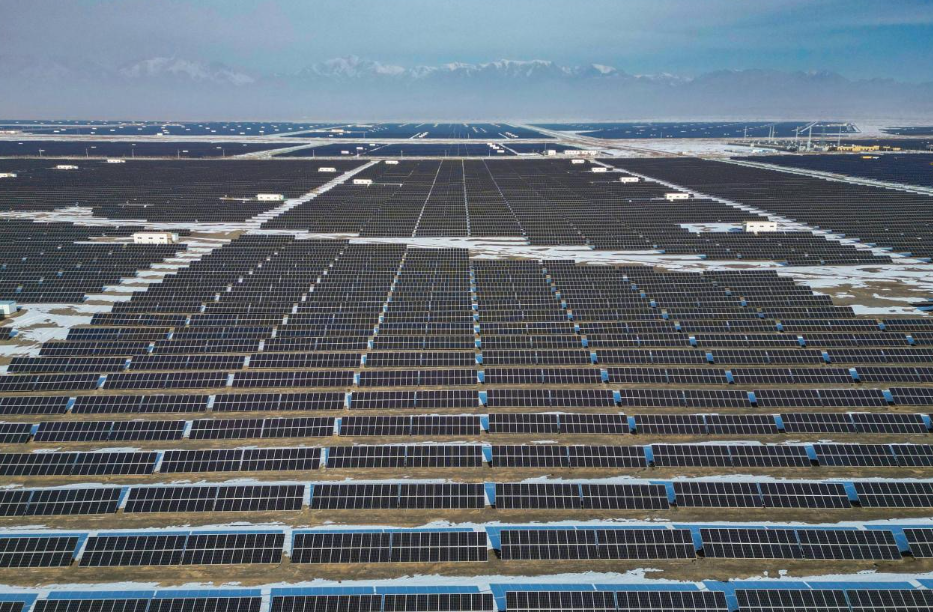
During its fourteenth five-year plan, China’s photovoltaic manufacturing output exceeded one trillion yuan, roughly one hundred and forty-eight billion dollars, with exports above one hundred and eighty billion. That scale drove the global price of a solar module down by an order of magnitude over fifteen years. It was not a single breakthrough. It was polysilicon refining, wafer cutting, cell fabrication and module assembly, each brought to industrial volume in the same country, each lowering the cost of the stage that followed. A panel bought in Mogadishu or Nairobi today is cheap because a Chinese factory made a hundred million like it.
The photovoltaic push did not stop at the panel, which is the point of this article’s title. Solar investment pulled an entire chain of adjacent industries with it: battery cells, grid-scale storage, inverters, smart grid control systems, and the electric vehicles that share the same battery chemistry. Each became cheaper because the demand created by solar made it worth manufacturing at volume. The result is that storage, which ten years ago was the expensive afterthought on any solar project, is now affordable enough to be part of the initial design. That single change is what converts solar from a daytime supplement into a replacement for the generator.
The argument that matters most: energy security
There is a case for renewable energy that rests on climate, and it is a serious one. But for most developing countries it is not the case that moves decisions, and it should not have to be.
A country without oil or gas of its own has historically faced two choices: burn coal or import fuel. Solar offers a third. The panels may be manufactured abroad, but once installed the electricity is generated at home. Fuel is bought every month, forever, at whatever price the market and the shipping lanes set that month. A panel is bought once. For a country that imports nearly all its fuel, pays for it in a currency it does not print, and receives it through sea routes that have been disrupted more than once this year, the difference between a recurring import and a one-time one is not academic. It is sovereignty, stated in kilowatt hours.
This reduces exposure to volatile fuel markets without eliminating external dependence, and honesty requires saying so. Most developing countries will not manufacture panels or batteries. But there is a difference between depending on a supplier for equipment that lasts twenty-five years and depending on one for fuel that lasts until the tank runs dry, and any country that has watched the price of a barrel move on news from the Strait of Hormuz understands which dependence it would rather hold.
The problems that remain
An honest account of this transition names its difficulties, and there are four.
The first is concentration. A supply chain in which one country produces the overwhelming majority of a critical technology carries risks for everyone else. Diversification of manufacturing is a legitimate goal, and countries able to build panel assembly or battery integration capacity will be better placed than those that cannot.
The second is what happens to a panel after twenty-five years. Recycling of photovoltaic modules and batteries is an industry still being built, and a country installing at scale now faces a disposal question in the 2050s that it has not yet begun to think about.
The third is the grid. Solar and wind are intermittent, and integrating them into a system that must deliver constant supply requires storage, forecasting and control systems that are technically demanding.
The fourth is the environmental footprint of the manufacturing itself, from polysilicon refining to mineral extraction for batteries. A green transition built on a supply chain that is not itself clean is a partial solution, and the industry’s own leaders acknowledge it.
Seen from Somalia
Somalia sits under some of the strongest sunlight measured anywhere. Solar irradiance across the country averages five to seven kilowatt hours per square metre per day, with more than three thousand hours of sunshine a year, and the resource is distributed evenly enough that most of the territory is suitable for generation. The country is also assessed as having one of the highest combined solar and wind potentials on the planet. The sun has never been Somalia’s constraint.
The constraint is diesel. In Bosaso, according to the African Development Bank, twenty-three of the city’s twenty-four megawatts of installed capacity run on it. Mogadishu and Hargeisa are not fundamentally different. Every kilowatt hour delivered to a Somali household begins as a barrel of imported fuel, paid for in dollars, shipped by sea, trucked to a generator and burned. A Mogadishu invoice from July this year put the tariff at forty-one cents a kilowatt hour, about two and a half times what an American household pays and roughly eight times the Ethiopian rate.
At that price a poultry farm cannot compete with frozen chicken from Brazil. A cement plant cannot compete with bags landed from the Gulf. Cold storage, a data centre, a processing line for the fish Somalia catches: none of it closes financially, and none of it will until the number changes.
Then consider what happened in Baidoa. In late 2025, Somalia’s Minister of Energy and Water Resources described to this agency a new solar plant in the city, generating between seven and eight megawatts with substantial battery storage for use after dark. It had allowed the local utility to cut electricity prices by close to forty to fifty per cent. The government, he said, intended to replicate the model nationwide.
Baidoa is not a large city and seven megawatts is not a large plant. But the tariff cut is the whole argument of this article compressed into one municipality. The plant was affordable in 2025 because of what the industrial chain described above did to the cost of a panel. The tariff cut was possible, rather than merely a daytime saving, because storage had become cheap enough to be built in from the start. And the energy security argument arrives with unusual force in a city that had been buying every kilowatt hour as diesel, trucked inland from a port two hundred kilometres away.
Somalia’s version of the four problems is also worth stating. Concentration and recycling are real but distant. The grid problem is, unusually, an advantage: Somalia has so little existing grid that it can design distribution around variable generation rather than retrofitting a system built for something else. The decisive constraint is the fourth and it is local: the upfront capital for a plant, a tariff regime that assures an investor of repayment, and technicians who can maintain a battery system through a Somali summer. Baidoa solved these for one city. The national question is how to solve them for thirty.
Conclusion
Set the Baidoa figure beside Somalia’s own industrial history. Before 1991 the country ran sixty-six industrial enterprises: tanneries in five cities, grain mills in five more, fish canneries on both coasts, textile mills at Balcad and Afgooye, a sugar complex at Jowhar. Every one of them depended on a national electricity agency that no longer exists, and none could operate today at forty-one cents a kilowatt hour.
At twenty-two cents, which is roughly what a forty-five per cent cut produces, the arithmetic changes. Not enough to make Somalia a manufacturing economy overnight, but enough to make a cement plant worth building beside the country’s own limestone, enough to make a poultry operation competitive with Brazil, enough to make a fish processing line viable at a landing site the July protocol with China has just given a market. The distance between the Somalia that imports everything and the Somalia that once processed its own inputs is, to a first approximation, the distance between forty-one cents and twenty-two.
That is what a seven-megawatt plant in Baidoa proved. Not that Somalia is about to be transformed, but that the transformation has a price, that the price has fallen to a level a Somali city can afford, and that the technology which brought it there was manufactured at scale on the other side of the Indian Ocean. Beyond the panel lie the batteries that made it work at night, the industrial chain that made both affordable, and a set of remaining problems that are, for the first time, Somalia’s own to solve.
(Photo/Cai Zengle)