
MOGADISHU, SONNA — The global race for manufacturing dominance is won on the spreadsheets of corporate chief financial officers, and right now, mainstream African fiscal policy is losing that race. For decades, economists have highlighted Africa’s massive demographic potential, its young workforce, and its unparalleled access to raw materials as the foundation for an impending industrial boom. Yet, when global corporations seek to establish new factory floors, light manufacturing hubs, or assembly plants, they repeatedly bypass African coastal nexuses in favor of Southeast Asian nations. This systematic bypass is driven by an oppressive and short-sighted tax architecture that effectively erases Africa’s natural competitive advantage of low labor costs, turning the continent into an environment that actively repels long-term foreign direct investment.
When a corporate conglomerate evaluates where to deploy capital for a new manufacturing facility, it weighs statutory tax burdens against operational risks. In this arena, Southeast Asia operates with a highly sophisticated understanding of capital preservation. Nations like Vietnam offer a highly stable standard corporate income tax rate of 20 percent, frequently paired with multi-year tax holidays, accelerated depreciation schedules, and streamlined profit repatriation laws. India has similarly adjusted its fiscal borders, offering a competitive corporate rate of roughly 25.2 percent for existing companies and even lower rates for newly incorporated manufacturing entities. These rates are designed to let corporations accumulate capital, reinvest in infrastructure, and scale their local operations.
In stark contrast, the dominant economic heavyweights within Sub-Saharan Africa enforce some of the most punitive corporate tax baselines on the global market. Within regional integration blocs like the East African Community, major economies have locked themselves into an aggressive fiscal posture. Kenya, Tanzania, and Uganda operate as a standard 30 percent corporate income tax club. This statutory disadvantage means that before an industrial plant even begins production, its baseline fiscal liability is 50 percent higher in East Africa than it would be in Southeast Asia. This baseline difference instantly cancels out any financial savings an investor might gain from lower local wages, driving capital out of the region.
To understand why African governments continue to enforce these high tax rates, one must examine their relationship with international financial institutions and multilateral lenders. Over the past decade, a significant portion of the continent has become trapped in a destructive cycle of sovereign debt accumulation. When these governments face looming default or seek emergency restructuring, international lenders demand intense domestic revenue mobilization as a non-negotiable condition for assistance. To satisfy these external bodies and prove their capacity for debt repayment, African states are forced to either introduce new levies or aggressively raise existing statutory rates.
This counterproductive economic dynamic demonstrates that international loan mechanisms often encourage developing states to lock themselves into a permanent economic depression by using aggressive taxation to chase unpayable debt. Rather than allowing local economies to breathe and build wealth, African governments are pressured to function as collection agents for foreign banks. They systematically choke off the private sector to service public liabilities, destroying any hope of building a sustainable, long-term internal revenue base.
Beyond the pressures of external debt, internal structural inefficiencies and an over-reliance on rent-seeking behaviors continue to plague many African administrations. Instead of investing tax revenue back into organic industrial enablers such as reliable high-capacity energy grids, optimized deep-water ports, and synchronized rail networks, governments frequently treat the formal corporate sector as a direct cash register to fund bloated state machineries and political patronage networks. Because the informal economy across Sub-Saharan Africa remains largely untaxed due to administrative limitations, the entire fiscal burden falls squarely on a tiny group of formal, law-abiding enterprises. This creates a deeply punitive environment that starves local companies of the liquidity needed to innovate or scale.
The microeconomic reality becomes even more devastating when consumption taxes and personal income brackets are factored into the equation. In Tanzania, for example, the top-tier 30 percent personal income tax rate applies to individuals earning as little as $475 of monthly income, which is then immediately compounded by a heavy 20 percent Value-Added Tax on everyday purchases. When a state taxes an underdeveloped workforce at these severe thresholds, it completely destroys the purchasing power of its own domestic consumer market. A factory operating in such an environment cannot find local buyers for its products, and the high tax rates prevent it from exporting competitively, leaving the business entirely stranded.
As the rest of the continent struggles under the weight of fiscal exhaustion, a disruptive macroeconomic alternative is emerging along the Horn of Africa. By implementing a highly competitive, baseline 5 percent tax structure, Somalia has established the lowest tax footprint on the entire African continent. This ultra-lean fiscal framework represents a total rejection of the continental debt-extractive model. Instead of taxing businesses at the point of entry or starving corporations of early-stage liquidity, the Somali model keeps capital directly in the hands of the operators, allowing for instant reinvestment and rapid scaling.
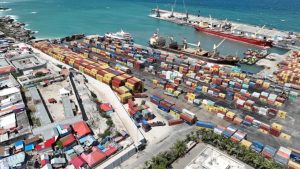
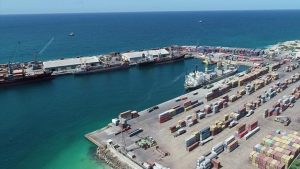
This 5 percent baseline completely changes the dynamic of African manufacturing economics. If the federal government can successfully pair this hyper-competitive tax rate with absolute structural guarantees in security and an aggressive deregulation campaign to optimize the ease of doing business, Somalia is uniquely positioned to leapfrog its regional neighbors. With its strategic coastline, expanding logistics networks, and an ultra-low fiscal burden, the nation possesses the exact ingredients required to displace traditional supply chains and emerge as the premier production hub of Africa. While regional heavyweights continue to tax their industries into obsolescence, Somalia’s lean tax architecture offers global manufacturers a high-yield safe haven to accumulate capital and anchor continental manufacturing operations.
If African nations want to stop this industrial capital flight and compete with Asian markets, their governments must completely re-engineer their fiscal strategies. They must move away from an extractive taxation mindset and move toward a model of economic enablement. This requires a sweeping simplification of the tax code, a complete dismantling of duplicate municipal levies, and a willingness to lower corporate tax baselines to mirror competitive international benchmarks.
African states must stop viewing the private sector as an infinite source of short-term revenue to patch up state budget deficits. Public revenue must be strictly reinvested into high-capacity infrastructure that drives down the cost of doing business, such as specialized industrial zones with guaranteed logistics links. Only by lowering the cost of capital accumulation can Africa transform its demographic potential into a functioning industrial reality, ensuring that the factories of tomorrow are built in the industrial zones of the continent rather than the industrial parks of Asia.
About Author

Abdiqani Abdullahi Ahmed is a geopolitical analyst and the Senior Strategic Consultant for the Somali National News Agency (SONNA). Serving as a Senior Advisor on Communication and International Relations since 2017, he directs state-level media strategy for the Federal Government. He is Somalia’s lead representative to the East African Community’s Kiswahili Commission (EAKC), serves on the jury for the IGAD Media Awards, and is an expert in global energy markets, regional economic integration, and digital governance.