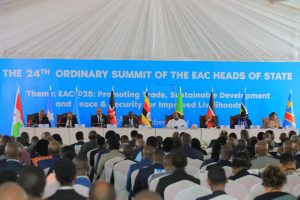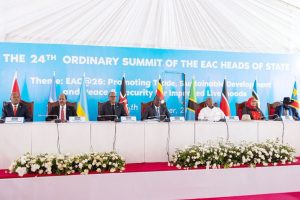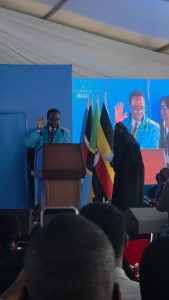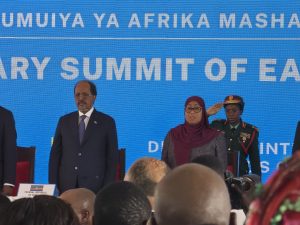
ARUSHA, TANZANIA — The 25th Ordinary Summit of the East African Community (EAC) Heads of State concluded on March 7, 2026, delivering an aggressive recalibration of the bloc’s financial architecture and regional security protocols. Hosted by Tanzanian President Samia Suluhu Hassan, the assembly executed major structural adjustments to ensure the survival and operational efficiency of the eight-nation community.
The most critical outcome of the Arusha summit was the complete overhaul of the EAC’s funding mechanism. The Heads of State formally vacated the previous contribution model (65% equal and 35% assessed). Effective July 1, 2026, member states will strictly operate under a 50% equal and 50% assessed contribution structure, forcing larger economies to carry a heavier financial load.
To clear the crippling backlog of operational debt, the summit executed a highly calculated austerity measure: it authorized a one-off waiver of 50% of all member arrears, mandating that the remaining balance be completely paid within a two-year window starting March 7, 2026. Furthermore, representatives to the East African Legislative Assembly (EALA) will be stripped from the EAC secretariat payroll; effective December 2027, their respective national assemblies will absorb their salaries. Conversely, the summit approved a 2% remuneration increase for standard EAC staff across organs and institutions, effective January 2027.
Bureaucratic friction was addressed by adjusting the meeting quorum for all EAC organs to two-thirds of all partner states. The summit also deployed a strict new compliance perimeter for leadership appointments. Future nominations for high-level positions—including Speaker, Judge President, and Secretary General—will now absolutely require the nominating partner state to have ratified all community legal instruments, domesticated the EAC treaty, and fully implemented their specific integration requirements.
Addressing the volatile eastern Democratic Republic of the Congo, the summit demanded an immediate ceasefire and commended outgoing Chairperson, Kenyan President William Samoei Ruto, for coordinating the EAC-Led Nairobi process. The leadership consolidated regional mediation by determining that all initiatives originating from the International Conference of the Great Lakes Region (ICGLR) must be channeled exclusively through the African Union. The AU was aggressively urged to inject necessary financial and logistical resources into this unified mediation framework.
The Heads of State officially launched the EAC Customs Bond to streamline cross-border trade and issued a hard deadline to resolve all outstanding Non-Tariff Barriers (NTBs) by June 30, 2026. The summit also inaugurated the 7th EAC Development Strategy (2026/27-2030/31) and assented to the EAC Appropriation Bill 2024 and Statistics Bureau Bill 2025.
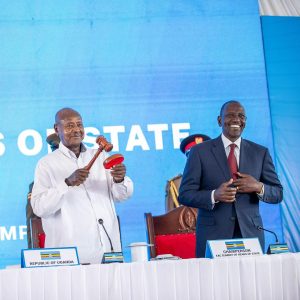
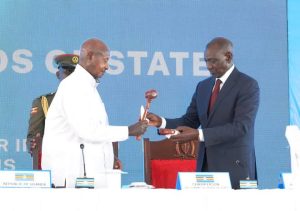
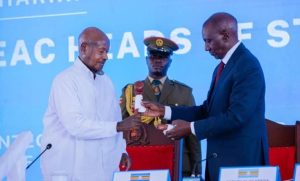
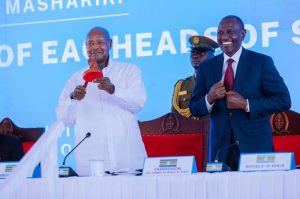
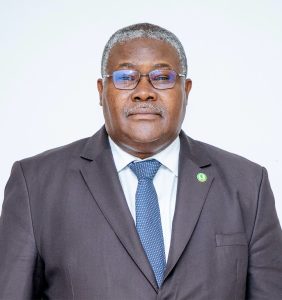
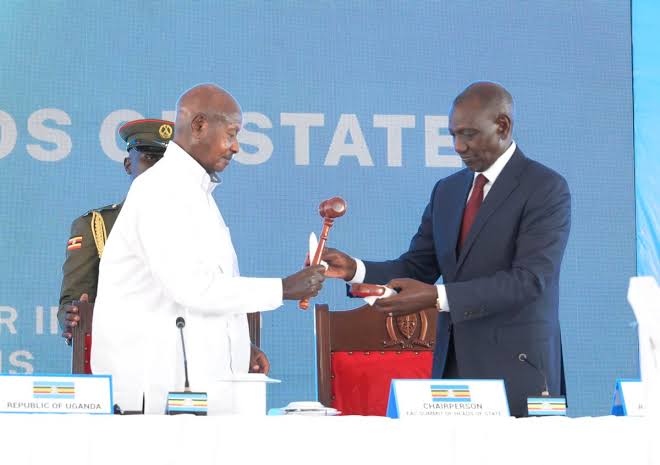
Ugandan President Yoweri Kaguta Museveni officially assumed the chairmanship of the community, with the Republic of Rwanda designated as the Rapporteur. At the secretariat level, Ambassador Stephen Patrick Mbundi of Tanzania was appointed as the new Secretary General, replacing Veronica Mueni Nduva for a non-renewable five-year term commencing April 25, 2026. The summit also renewed the terms of Deputy Secretaries General Andrea Aguer Ariik Malueth and Annette Mutaawe Ssemuwemba.
With President Hassan Sheikh Mohamud representing the Federal Republic, Somalia’s integration into the EAC machinery accelerated rapidly. Advocate Abdiwahid Warsame Abdullahi was officially appointed as a judge to the First Instance Division of the East African Court of Justice, injecting vital Somali representation directly into the regional judiciary alongside new judges from Kenya and South Sudan.
The communique issued specific, time-sensitive directives for Mogadishu: Somalia, alongside the DRC, must fast-track the domestication of the EAC treaty. Most critically, Somalia is mandated to conclude its national consultations regarding the EAC Political Confederation Constitution by a hard deadline of June 30, 2026.