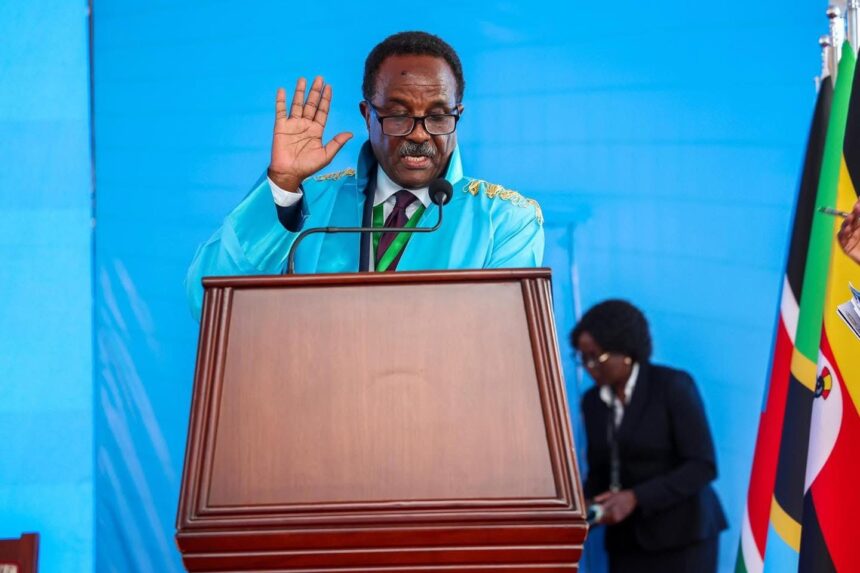
ARUSHA, TANZANIA — The Federal Republic of Somalia continues its aggressive reclamation of regional leadership, securing a commanding seat within the East African Community’s judicial architecture. During the 25th Ordinary Summit of the EAC Heads of State in Arusha, Advocate Abdiwahid Warsame Abdullahi was officially sworn in as a judge to the First Instance Division of the East African Court of Justice. This transition represents a major geopolitical victory in Somalia’s broader strategy to anchor itself at the absolute center of East African governance and policy-making.
The installation of Justice Abdiwahid brings a highly versatile and experienced legal operator to the Arusha bench. His professional trajectory bridges the critical gap between domestic African legal frameworks and international constitutional law. Having served directly as a State Prosecutor for the Banadir Regional Court in Mogadishu, he possesses a granular understanding of Somalia’s internal legal mechanisms. He subsequently expanded his expertise by earning a Master of Laws in comparative and constitutional law from Ohio State University. Until his elevation to the East African Court of Justice, he served as a case reviewer and legal counselor within the prosecution division of the Columbus City Attorney’s Office in the United States, providing him with rigorous exposure to advanced institutional prosecution standards.
Placing a Somali judge on the regional court carries massive economic and diplomatic weight for the Federal Republic. Somali entrepreneurs control vast logistical and commercial networks across East Africa, frequently navigating complex cross-border trade regulations. The East African Court of Justice is the ultimate arbiter for disputes arising from treaty violations, including illegal detentions of cargo, the imposition of non-tariff barriers, and commercial friction between partner states. Justice Abdiwahid’s presence ensures that the legal intricacies of Somali commerce are fully understood within the highest levels of regional arbitration.
This judicial appointment arrives exactly as the EAC Heads of State issue aggressive integration deadlines. The community leadership has mandated that Somalia must rapidly fast-track the domestication of the EAC treaty into its national laws and conclude its domestic consultations regarding the East African Political Confederation by the end of June 2026. Securing this top-tier judicial leadership guarantees that Somali legal professionals are embedded in the core organs of the community just as the national government navigates these complex legislative deadlines and aligns its newly approved national Constitution with the broader legal architecture of the East African bloc.