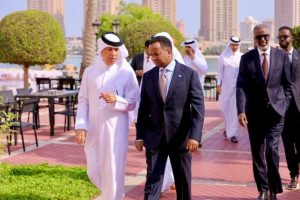
DOHA, Qatar – The Minister of Foreign Affairs and International Cooperation of the Federal Republic of Somalia, H.E. Abdisalam Abdi Ali, led a high-level delegation to Doha today to participate in the inaugural session of the Somalia-Qatar Joint Committee.
Established to solidify the friendship and strategic cooperation between the two nations, the committee’s first session was co-chaired by Minister Abdisalam and the Qatari Minister of State for Foreign Affairs, H.E. Soltan bin Saad Al-Muraikhi.
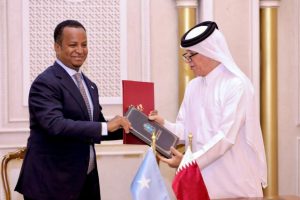
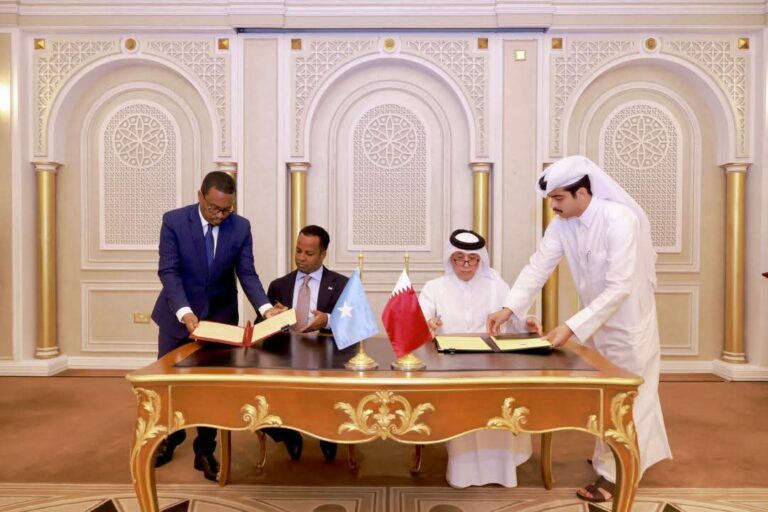
During the high-level meeting, the two governments finalized and signed four major agreements aimed at advancing development across the sectors of culture, finance, youth empowerment, and agriculture.
1. Heritage and Culture Agreement Under the auspices of the Ministry of Education, Culture, and Higher Education, Somalia and Qatar agreed to collaborate on the management of libraries and historical archives. The agreement includes provisions for organizing cultural festivals, art exhibitions, and knowledge exchange programs. Both nations also committed to joint participation in international book fairs to promote cultural dialogue.
2. Customs Cooperation Agreement Signed by the Ministry of Finance, this agreement focuses on enhancing the enforcement of customs laws and combating smuggling and financial crimes. The framework aims to ensure the accurate assessment of taxes and tariffs while streamlining customs procedures in accordance with regional and international regulations.
3. Youth and Sports Development This agreement, overseen by the Ministry of Youth and Sports, is designed to strengthen the connection between the youth of both nations. It involves exchange programs for youth organizations, joint conferences, and the establishment of youth camps. Additionally, the deal focuses on providing training in project management and leadership skills to empower the next generation.
4. Agricultural Partnership The Ministry of Agriculture and Irrigation finalized a deal to boost national food production. The partnership involves the sharing of scientific data and agricultural expertise. It also outlines cooperation in utilizing modern farming technologies, improving fertilizer application, and advancing greenhouse management and storage solutions.
These agreements mark a significant step forward in the bilateral relationship, reflecting the shared determination of both governments to pursue sustainable development and deepen strategic ties.