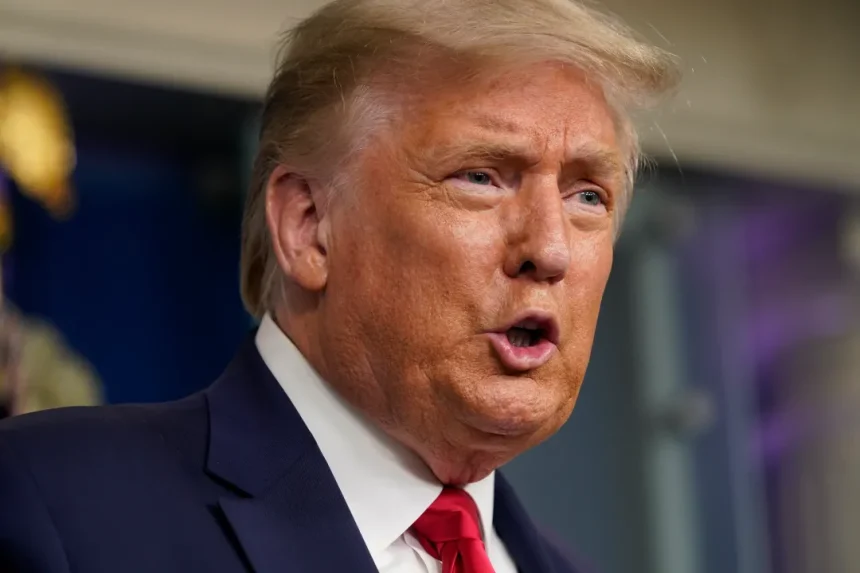
WASHINGTON, United States – U.S. President Donald Trump has explicitly stated that he does not intend to follow Israel in recognizing the Somaliland region of Somalia, casting doubt on the diplomatic momentum sought by the breakaway administration. Speaking in a telephone interview from West Palm Beach on Friday, Trump adopted a dismissive tone regarding the issue, emphasizing that his administration has no immediate plans to alter its diplomatic stance on the Horn of Africa.
When asked by the New York Post if he would embrace the recognition extended by Israeli Prime Minister Benjamin Netanyahu, Trump offered a blunt rejection. “Just say, ‘No, comma, not at this —,'” he began, before clarifying his stance to a definitive, “Just say, ‘No.’” While acknowledging that “everything is under study,” the President appeared unimpressed by the strategic overtures presented by the region, including offers of a naval base and access to the Gulf of Aden.
“Does anyone know what Somaliland is, really?” Trump asked during the interview, questioning the geopolitical weight of the region. When pressed on the proposal for the United States to gain access to a port in the strategically significant Gulf of Aden—a key selling point for the region’s international lobbying efforts—Trump responded with characteristic skepticism, remarking, “Big deal.”
The comments come just a day after Israel became the first nation to formally recognize the region’s separation from Somalia. Prime Minister Netanyahu, speaking during a video call with Somaliland President Abdirahman Mohamed Abdullahi, had vowed to convey the region’s desire to join the Abraham Accords during a planned meeting with Trump on Monday. However, Trump indicated that he was not swayed by the prospect of expanding the Accords to include the East African region at this time.
Instead, the President highlighted that his upcoming discussions with Netanyahu would prioritize the ongoing stability of the Gaza Strip. Trump, who currently chairs a United Nations-approved Board of Peace to oversee reconstruction and the implementation of the October ceasefire he brokered, stressed that these efforts remain his primary diplomatic objective. He noted that while he studies all proposals, he trusts his decision-making process to yield the correct results without rushing into new commitments.
The stark contrast between Netanyahu’s enthusiastic endorsement and Trump’s cool reception suggests a divergence in approach between the two close allies regarding policy in the Horn of Africa. While Israel has moved to formalize ties with Hargeisa, Washington appears steadfast in maintaining its current diplomatic posture, prioritizing established conflicts and stability over shifting territorial recognitions in Somalia.