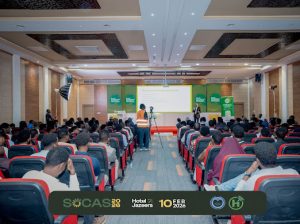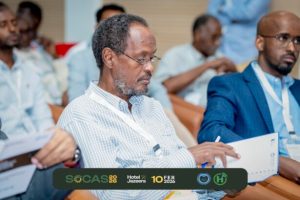
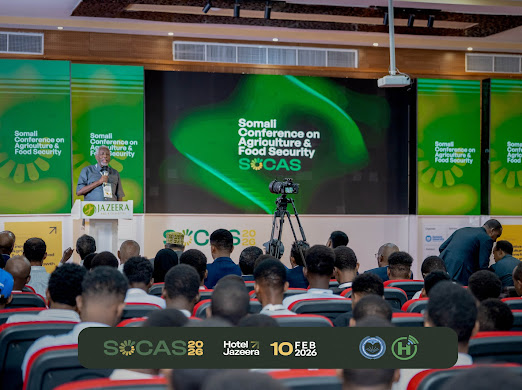
MOGADISHU (SONNA) — A high-level national scientific conference convened in Mogadishu on Wednesday to address the critical challenges of food security, crop seed development, and climate change adaptation. Organized by Zamzam University of Science and Technology, the forum brought together a diverse coalition of agricultural experts, government officials, academic researchers, and private sector representatives to explore sustainable solutions for the country’s farming sector.
A central theme of the discussions was the strategic importance of developing resilient crop varieties, with a particular emphasis on beans and other high-nutrient legumes. Panelists argued that the genetic improvement of these crops represents a fundamental pillar for enhancing national agricultural output. Participants stressed that establishing a reliable and high-quality seed system is a prerequisite for achieving consistent production levels and ensuring economic stability for rural communities that rely on agriculture.
The delegates examined the vital role of smallholder farmers in maintaining the nation’s food supply chain. The consensus among experts was that these producers require robust support systems, including access to modern agricultural knowledge, essential services, and favorable government policies. Furthermore, the conference highlighted the urgent need to integrate policy, scientific research, and agricultural technology to mitigate the adverse effects of climate change on local food systems.
Zamzam University of Science and Technology reaffirmed its leadership role in bridging the gap between academic research and national development goals. The institution emphasized that this conference is part of a broader commitment to fostering practical, science-based solutions that directly contribute to poverty reduction and the improvement of livelihoods across Somalia.