Articles
Capital Without Guardrails: The Dangerous Gap Between Investor Appetite and Regulatory Safety

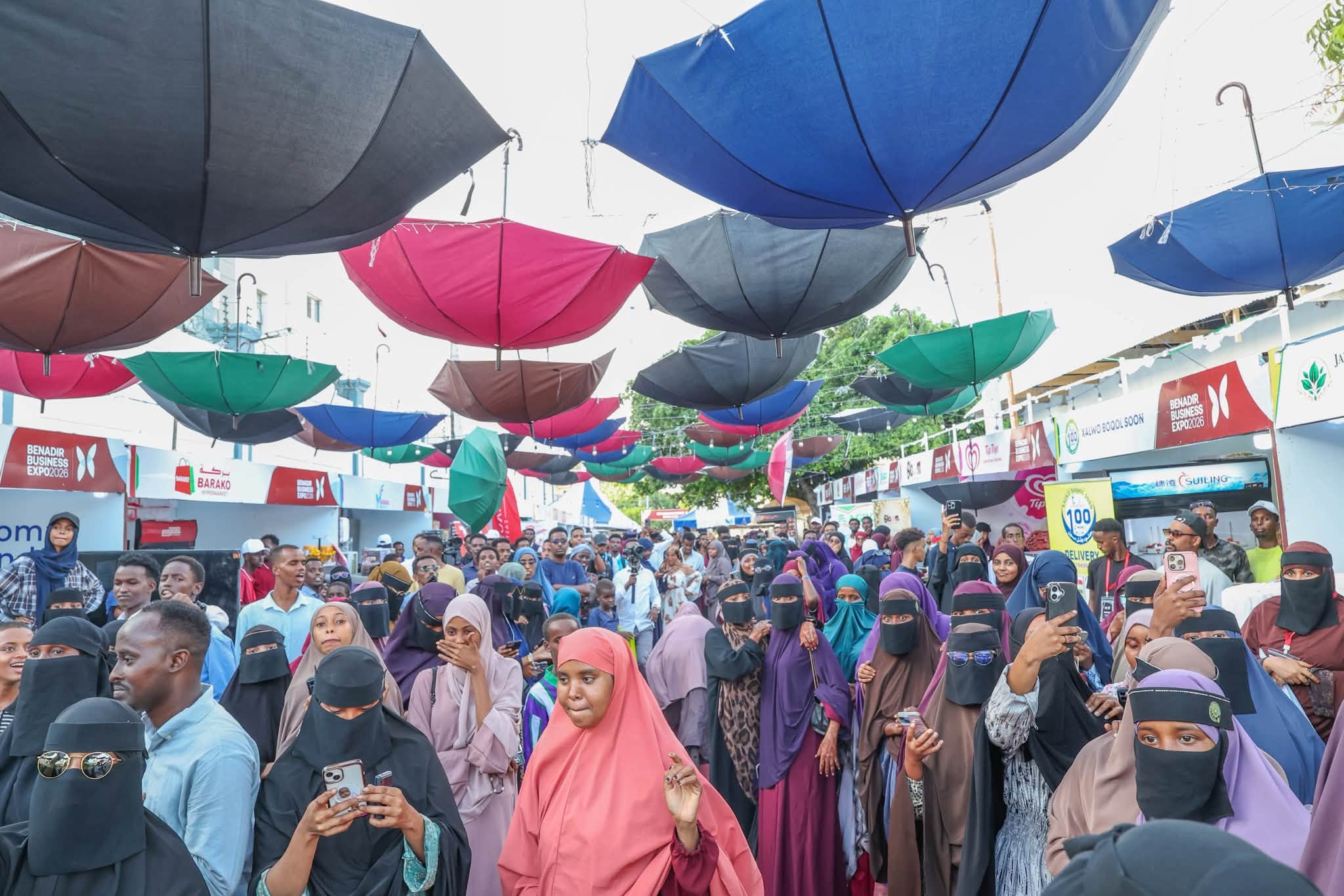
MOGADISHU — Somalia is witnessing a financial awakening. For the first time in decades, the conversation in Mogadishu has shifted from aid to investment, driven by a diaspora hungry to rebuild. But a dangerous race is underway. While the Central Bank of Somalia meticulously prepares the official National Securities Exchange (NSES) for a 2026 trading launch, unregulated private actors are rushing to fill the vacuum, selling "shares" in a legal grey zone that lacks investor protection.
This article investigates the high-stakes interval between today’s appetite for capital and tomorrow’s regulatory framework. It argues that while the government’s partnership with the Nairobi Securities Exchange is a milestone, the current silence on unregulated trading risks a systemic crisis. We explore why the Central Bank must urgently bridge this gap, ensuring that Somalia’s return to the global financial stage is defined by integrity, not a "wild west" collapse that could spook investors for a generation.
Why Rules Matter
To understand the gravity of this moment, one must look back to the origins of modern finance. When the Dutch East India Company issued the world’s first shares in 1602, it was not merely to raise cash; it was a mechanism to manage the immense risk of high-seas voyages that no single merchant could bear alone. The invention of the stock market allowed for shared risk and shared reward, fueling an era of unprecedented global expansion.
Somalia stands at a similar precipice today. The nation’s "voyages" are now its massive infrastructure projects energy grids, fiber optic networks, and blue economy ventures. These industries have outgrown the "family and friends" funding model that sustained the private sector during the civil war. They require the deep pools of public capital that only a stock market can provide. However, the Dutch success was eventually underpinned by strict governance. Without a "referee" to enforce the rules, the hunger for profit inevitably attracts bad actors, turning a market into a casino where the house always wins.
The "Private Club" Illusion
In the current interim period before the NSES officially opens its trading floor in early 2026 private entities have emerged, hosting roadshows and selling shares to the public. For the eager investor, this presents a paradox: the opportunities feel real, but the safety nets are often imaginary.
The core of the problem lies in the legal distinction between a public exchange and a private platform. In a developed market, when an investor buys a stock, they are purchasing a federally protected asset. Their ownership is recorded in a Central Securities Depository (CSD), a digital vault often guaranteed by the state or heavily insured.
Currently, in Somalia’s unregulated sphere, many share offerings are legally nothing more than private contracts. Without a statutory regulator (the Capital Markets Authority) to enforce the rules, an investor’s "share certificate" is often just a receipt from a private company. If that company dissolves, or if its internal database fails, the investor has no recourse to a higher authority. They are not trading on a national market; they are effectively trading inside a private club where the platform owner acts as judge, jury, and executioner a conflict of interest that global financial standards strictly prohibit.
The Risk of "Dead Shares"
A critical, often overlooked danger for early investors is the issue of portability. The Federal Government has signaled its intent to align with international standards, evidenced by the strategic partnership signed between the NSES and the Nairobi Securities Exchange (NSE) in late 2025. This partnership will bring world-class compliance and technology to Mogadishu.
However, this elevation of standards creates a trap for those buying into informal schemes now. When the official, government-sanctioned exchange begins trading, it will likely require strict financial disclosures and governance structures that early, informal companies may not meet. Investors holding shares purchased on private platforms today may find themselves holding "dead assets" shares that cannot be transferred to the official national exchange because the original paperwork was non-compliant. These investors could be left stuck in a closed loop, unable to sell their stake to the wider global market or institutional investors.
The Legal Vacuum and the Central Bank’s Mandate
Despite the delay in the full operationalization of the Capital Markets Authority, the landscape is not entirely lawless. The Central Bank of Somalia (CBS) possesses the legislative tools to police this grey zone, and the stability of the future market depends on its willingness to use them now.
Three existing statutes provide a litmus test for legitimacy that every Somali investor should apply. First is the Financial Institutions Law (Law No. 130 of 2012), which empowers the Central Bank to license and regulate any entity managing public funds. Any platform operating without a clear "No Objection" or license from the CBS is effectively bypassing the nation’s primary financial watchdog.
Second is the Anti-Money Laundering and Countering the Financing of Terrorism Act (Law No. 5 of 2016). This law requires rigorous "Know Your Customer" (KYC) protocols. In the rush to attract capital, unregulated platforms often skip these hurdles, accepting funds with little scrutiny. This not only puts the investor at risk of fraud but endangers the entire financial system by potentially mixing legitimate investment capital with illicit funds, inviting international sanctions.
Finally, the Company Law (Law No. 18 of 2019) provides the basic definition of a share. It mandates that companies distinguish between corporate funds and owner assets. In unregulated schemes, the line between the "exchange" money and the "company" money is often blurred a recipe for embezzlement that the Company Law was designed to prevent.
Trust is the Currency
The government’s timeline aiming for trading in 2026 has created a window of vulnerability. Nature abhors a vacuum, and in this six-to-twelve-month interim period, unregulated entities are racing to capture liquidity before the official gates open.
The Ministry of Finance and the Central Bank must consider issuing interim directives that clearly define what constitutes a "public offering" versus a "private placement." Silence from the regulators is currently being interpreted as consent.
Somalia is on the verge of a financial renaissance. The move toward a stock market is the correct path for national development. But the foundation of a stock market is not software, roadshows, or glossy prospectuses, it is trust. If the government allows the "wild west" to persist unchecked, a major scandal could poison the public's trust in equity markets for a generation. The time for the Central Bank to assert its authority is not 2026. It is now.
Share