Local News
Somali Media Leaders Discuss Gender Equality and Safer Working Environments for Journalists
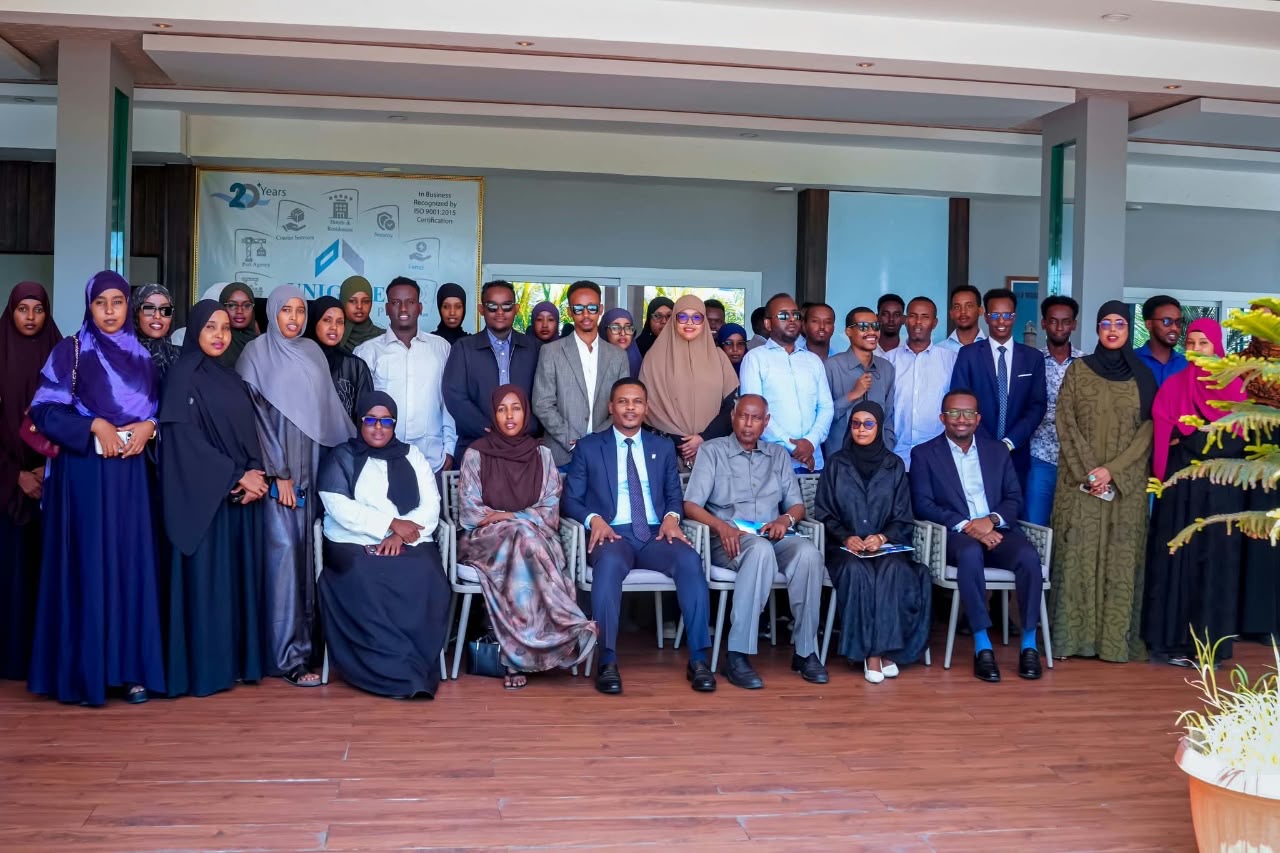
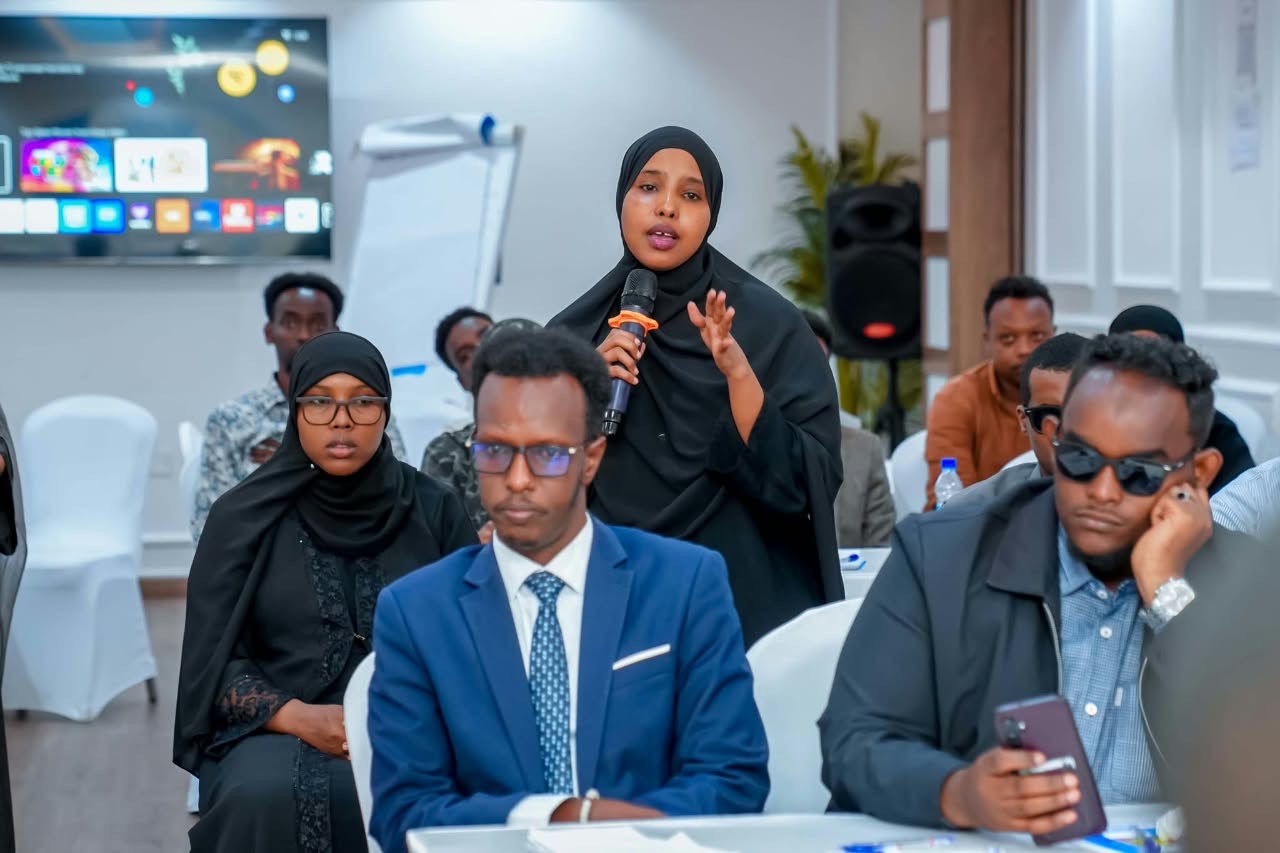
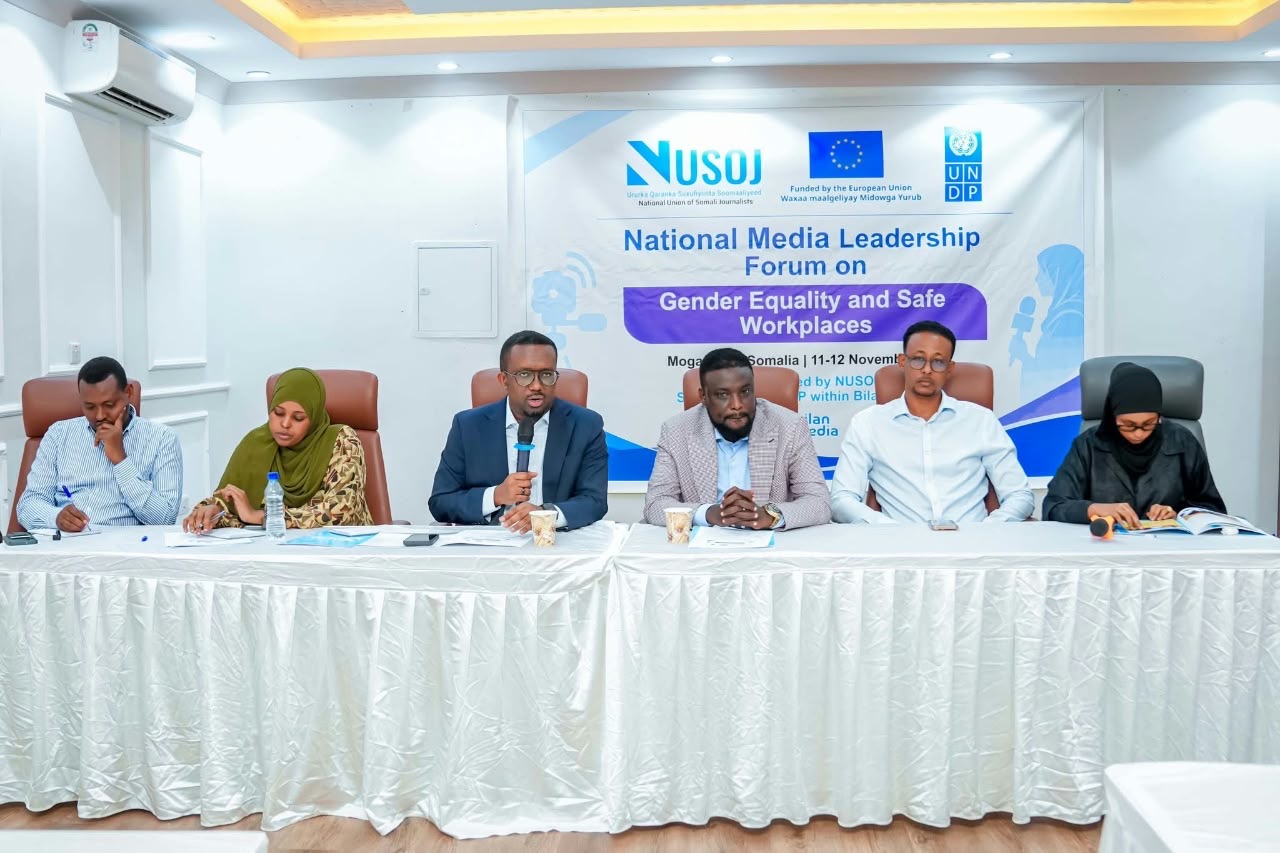
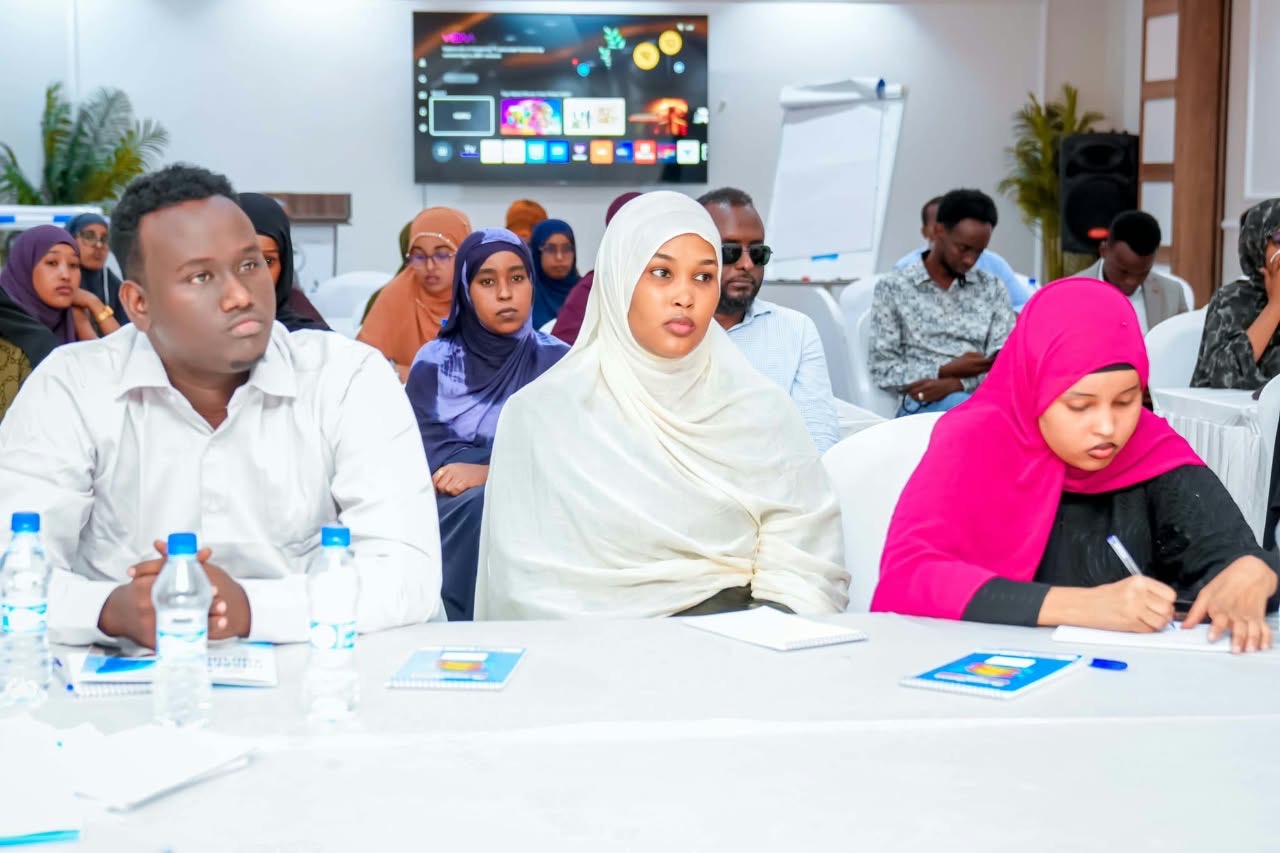
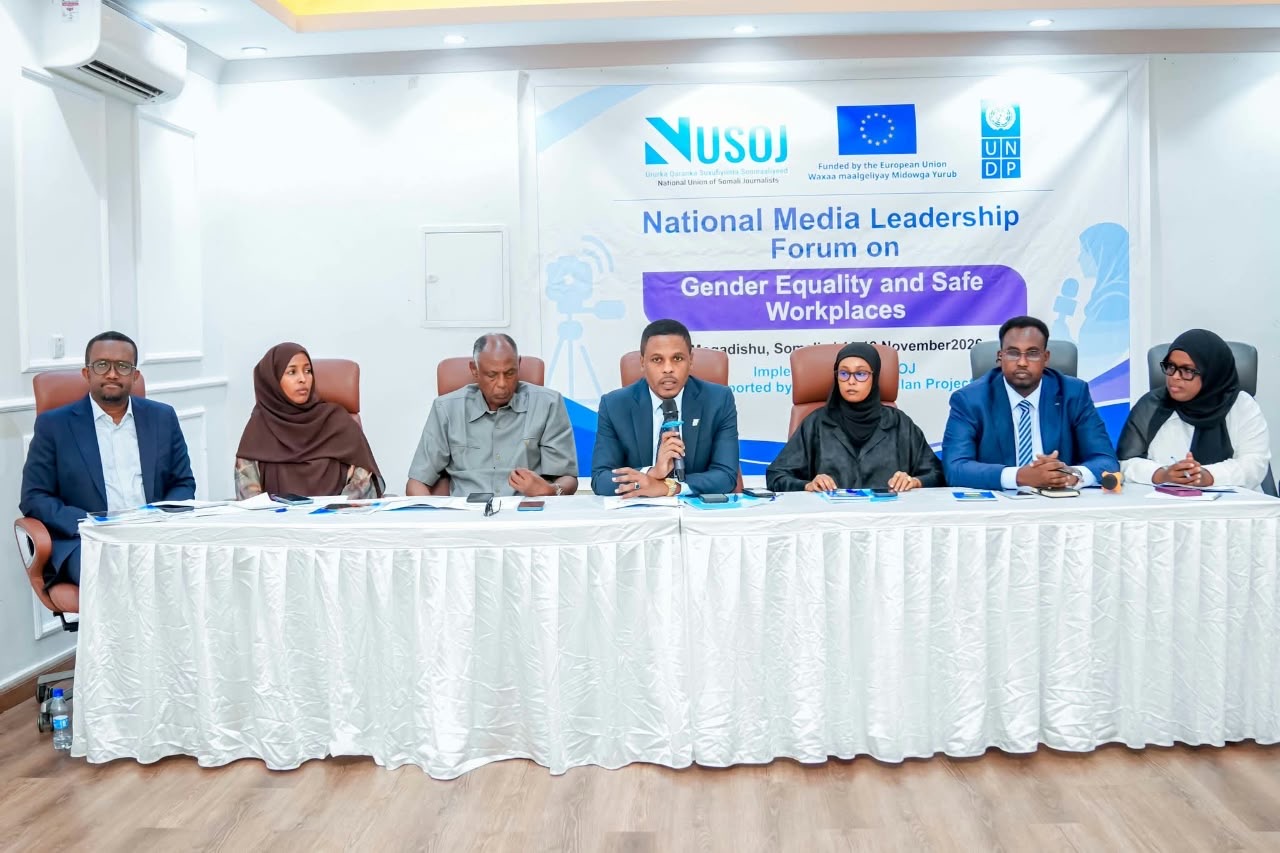
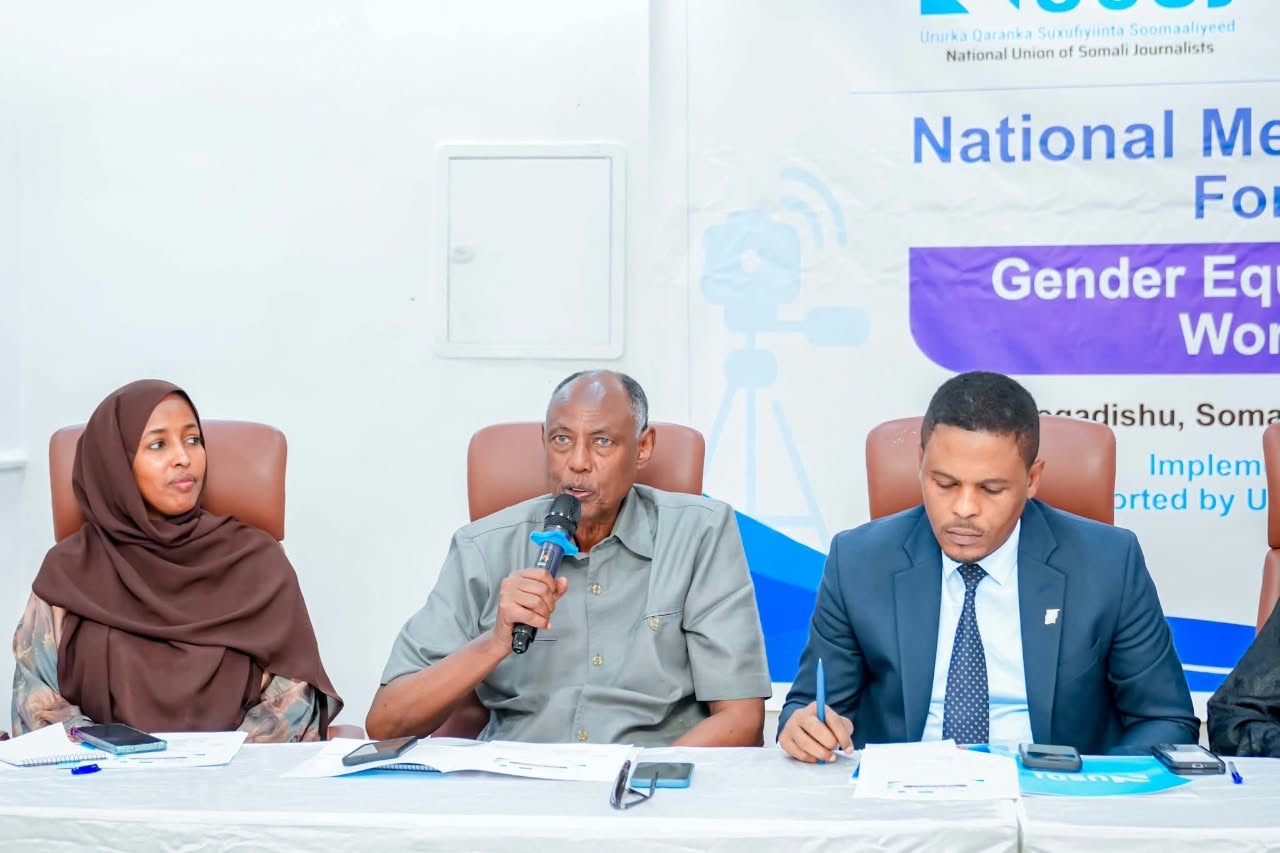
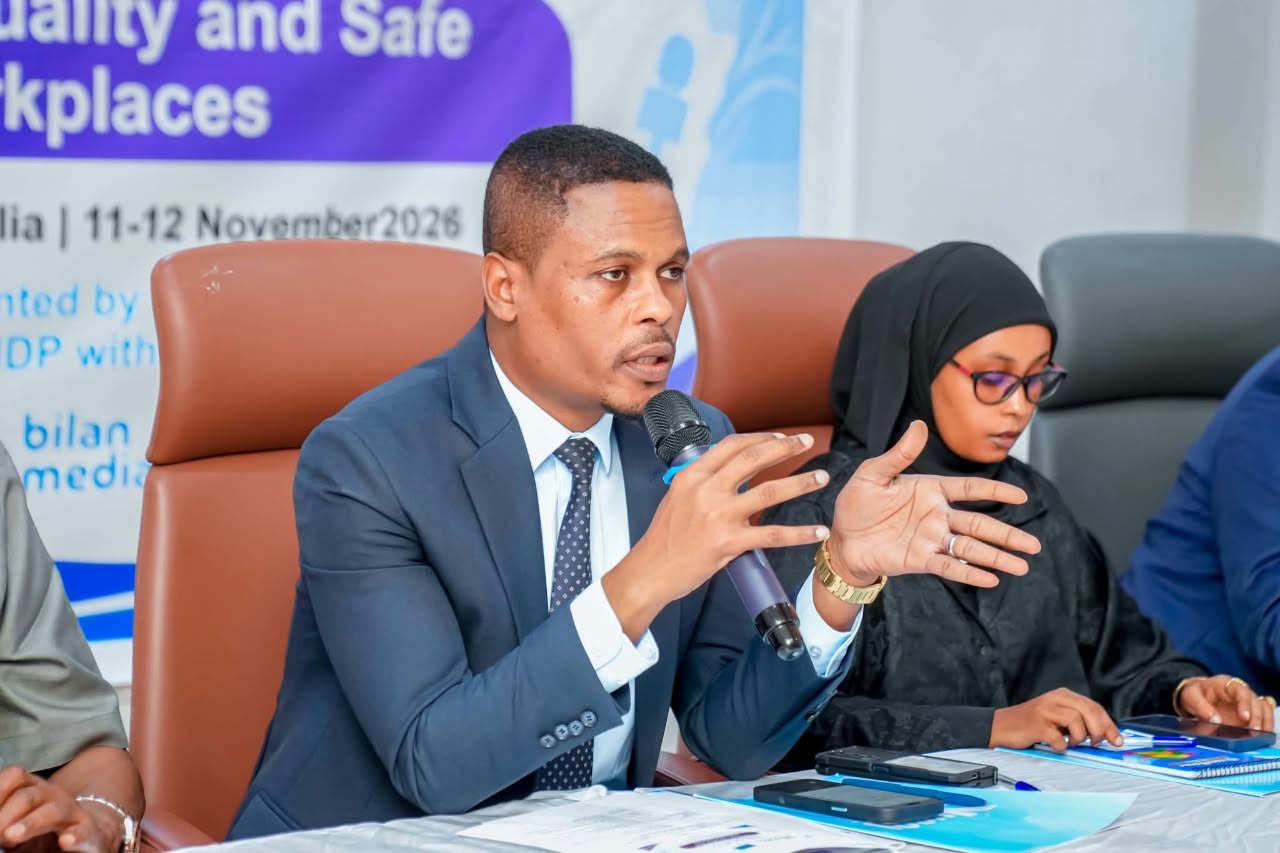
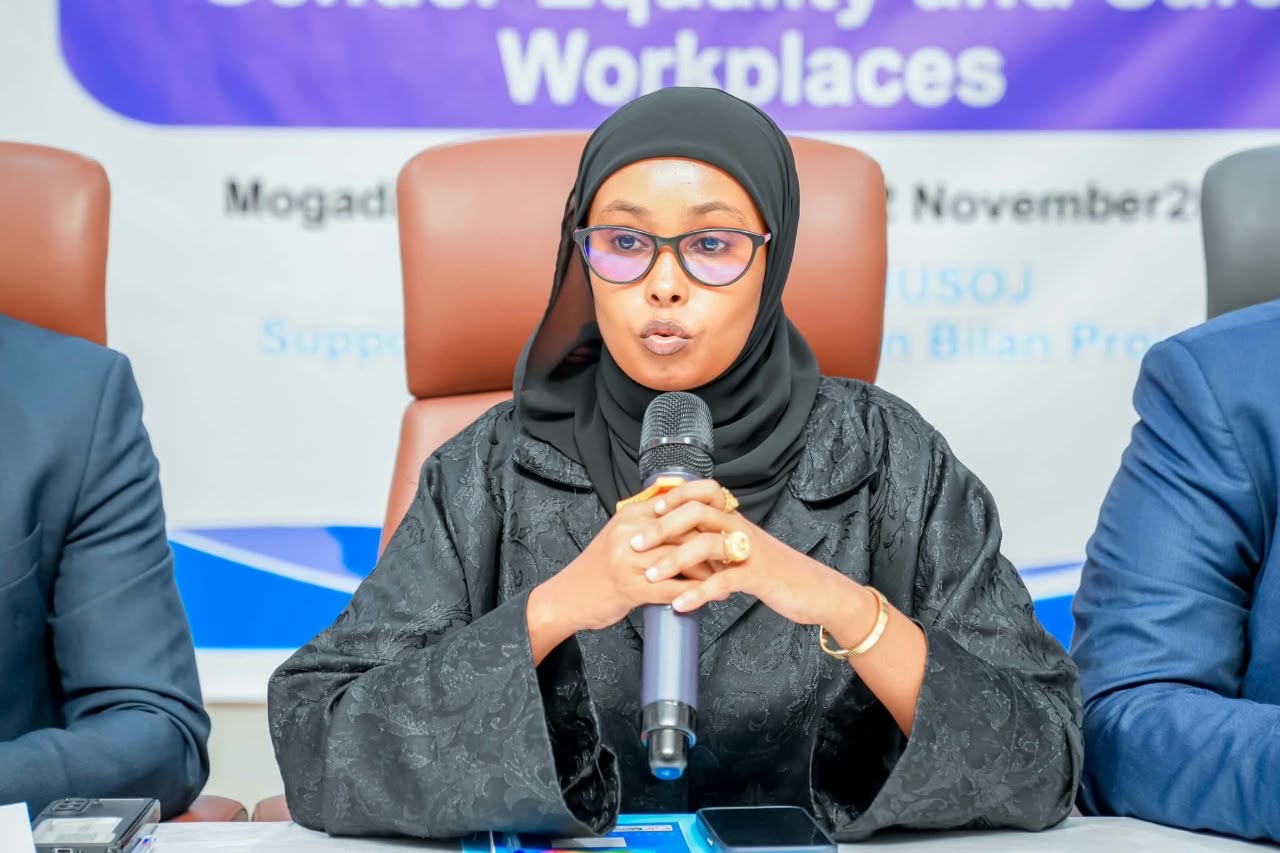
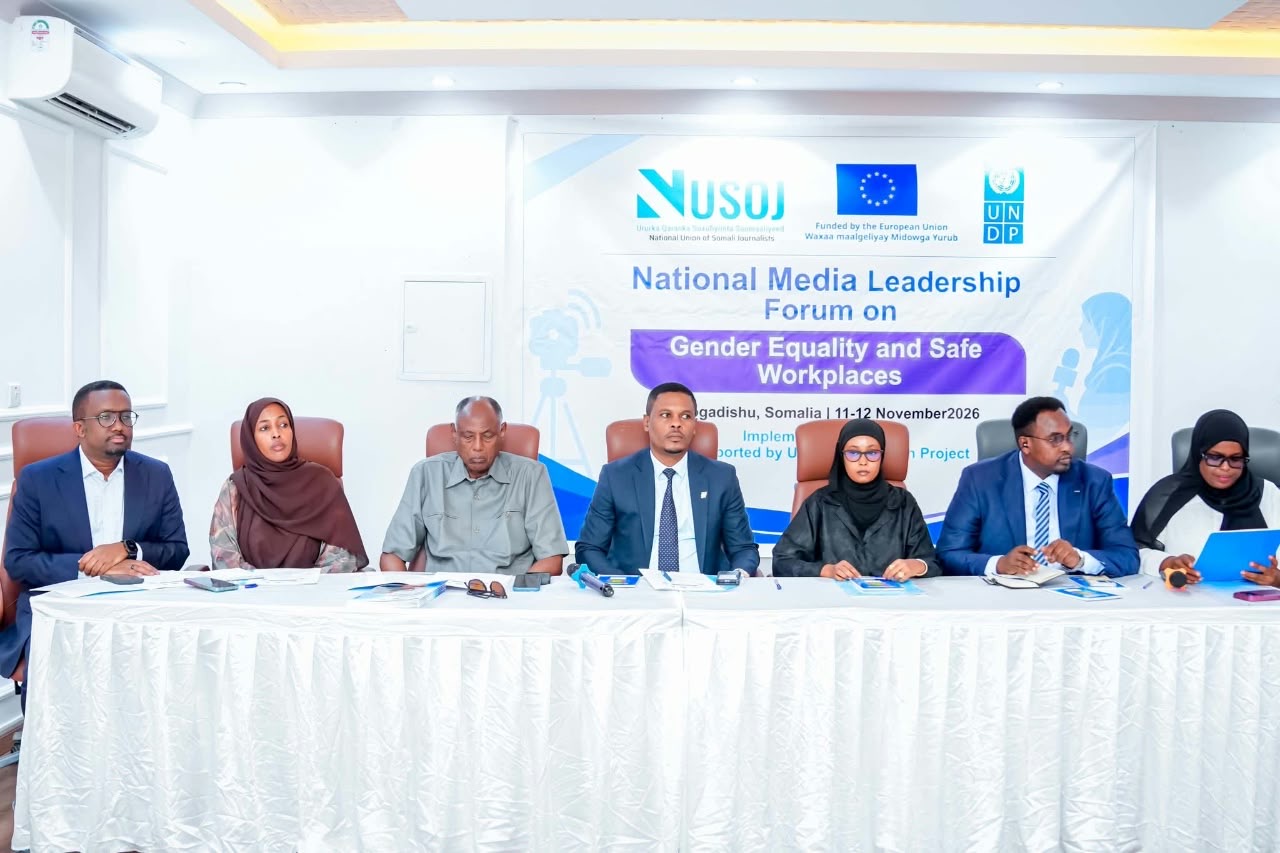
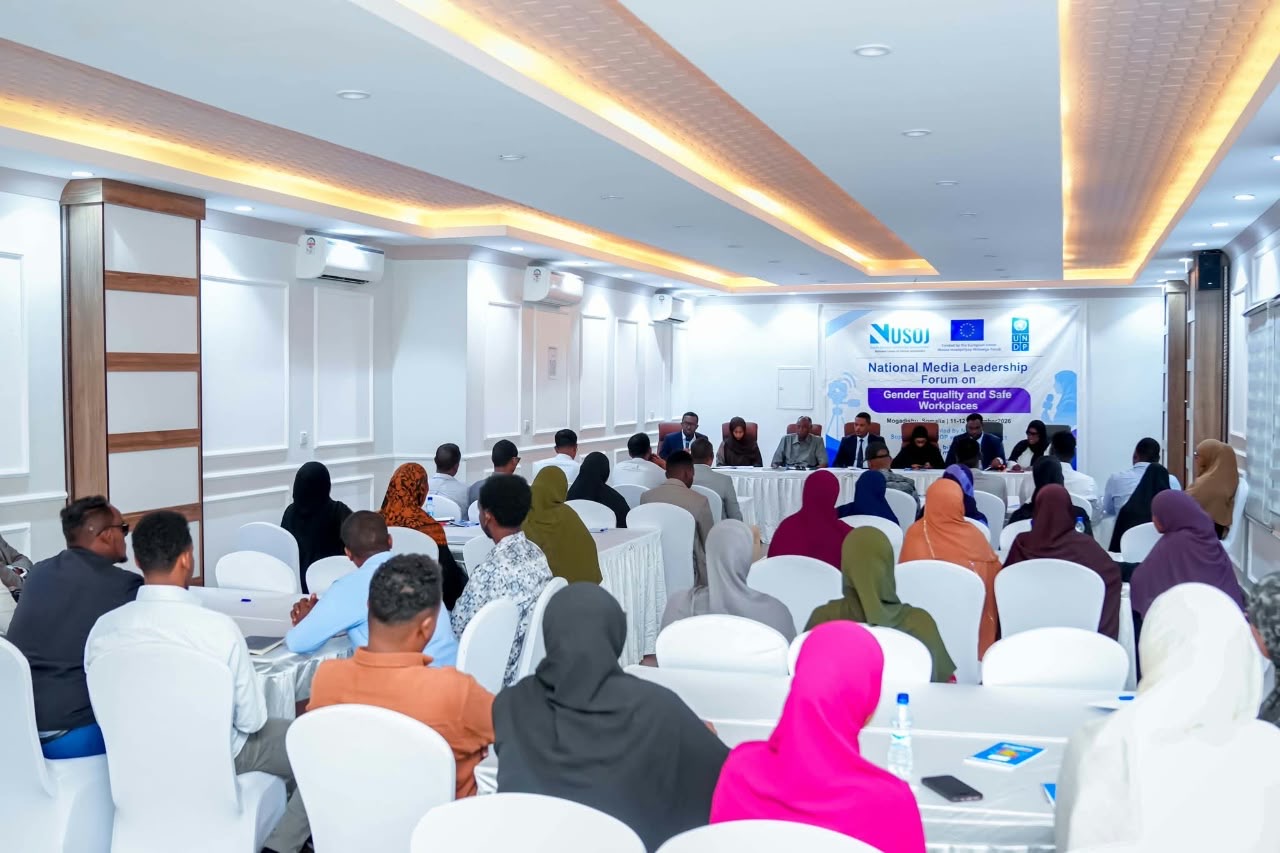
MOGADISHU (SONNA) – The National Union of Somali Journalists (NUSOJ) has convened a two-day National Media Leadership Forum in Mogadishu to address gender equality and promote safe working environments across the media sector.
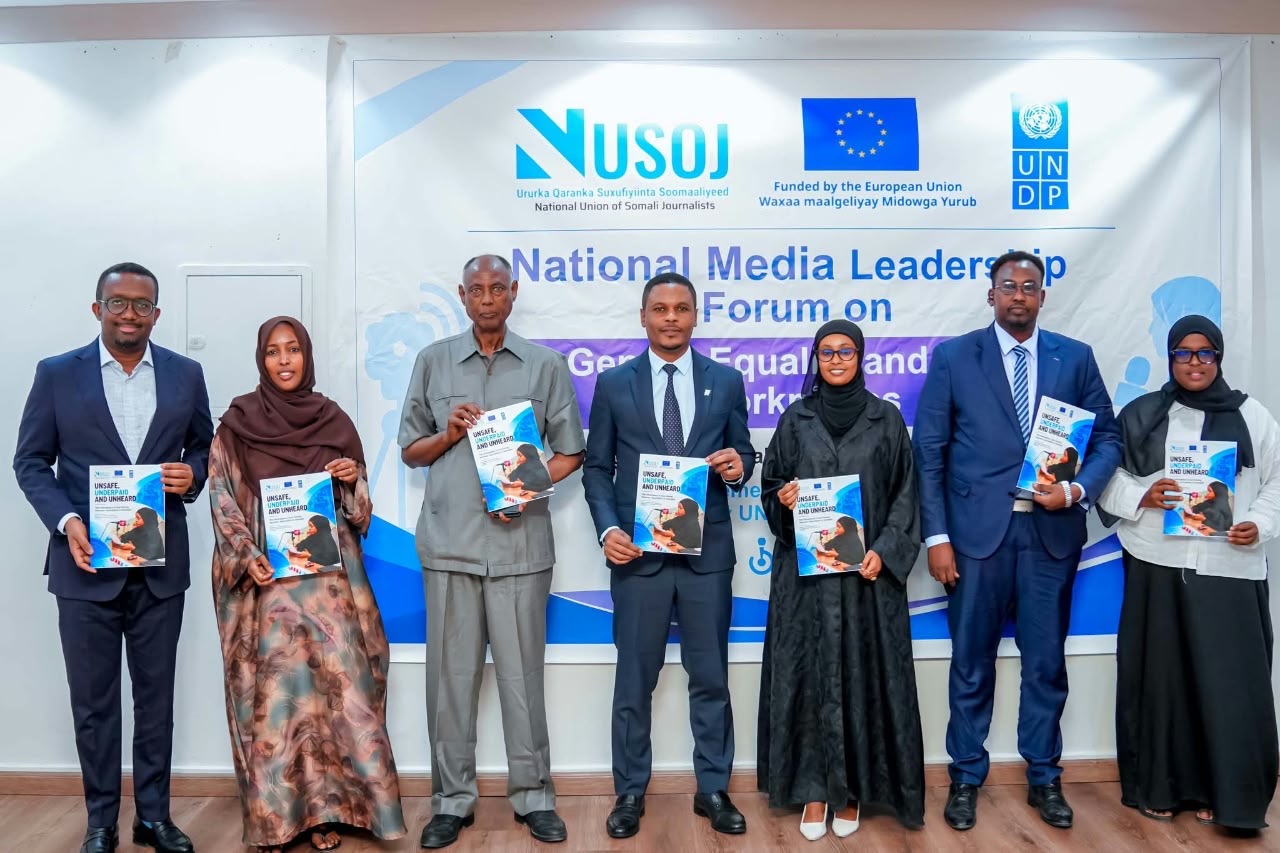
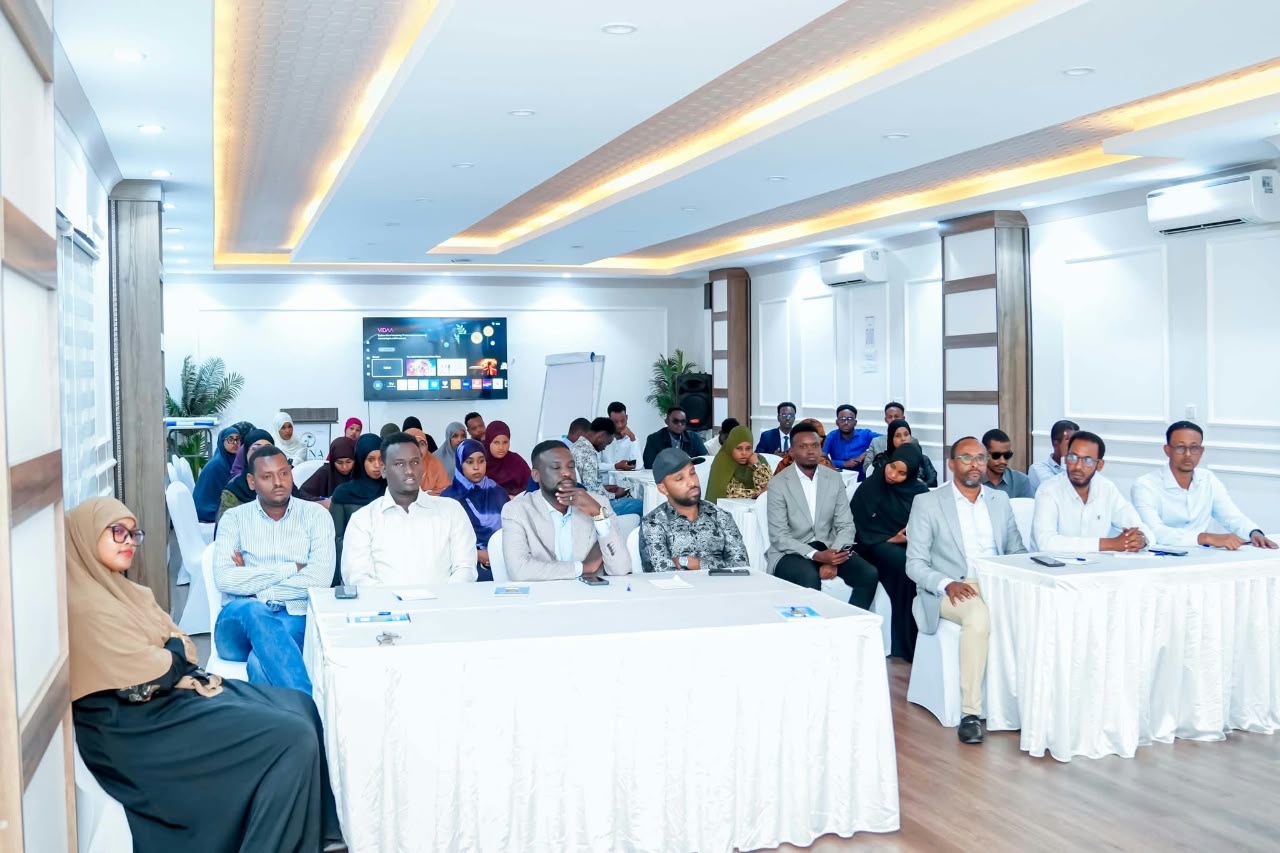
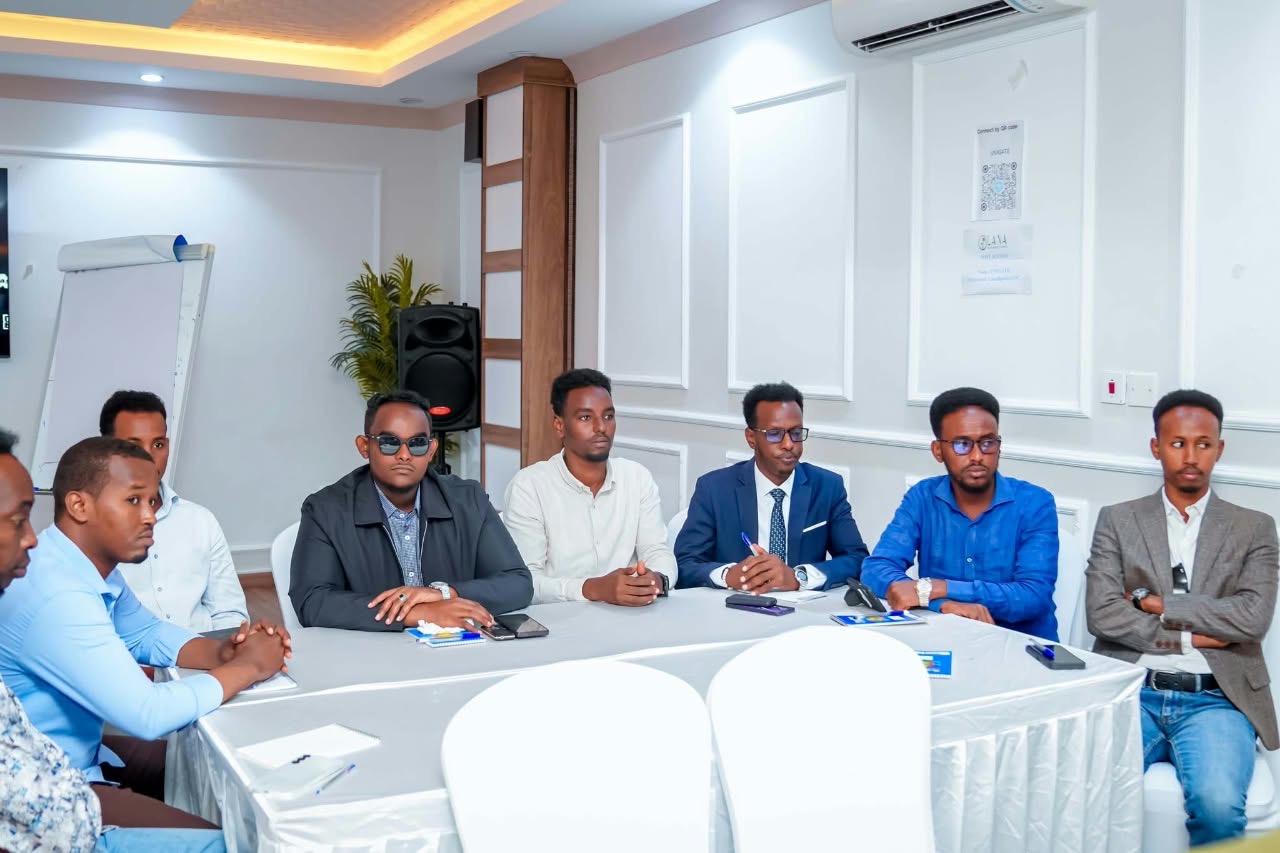
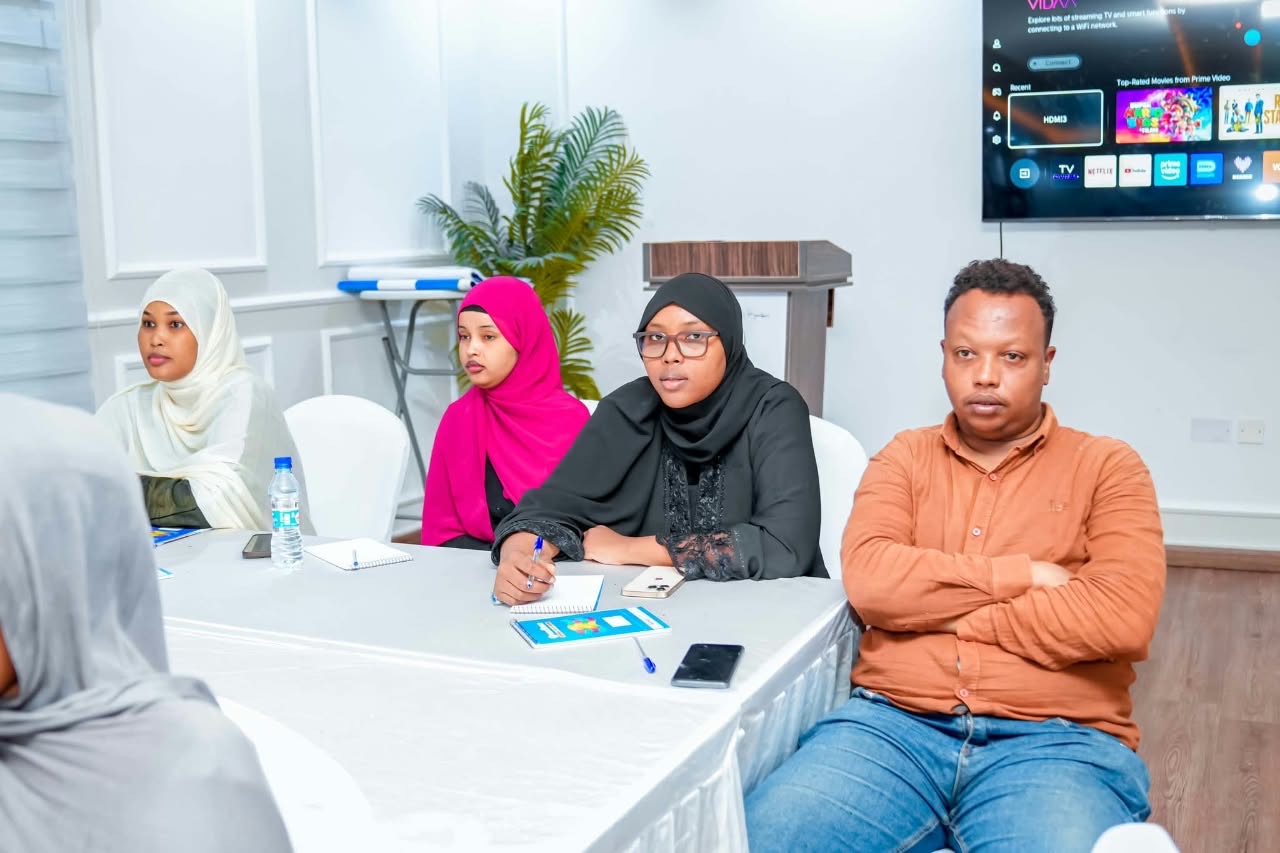
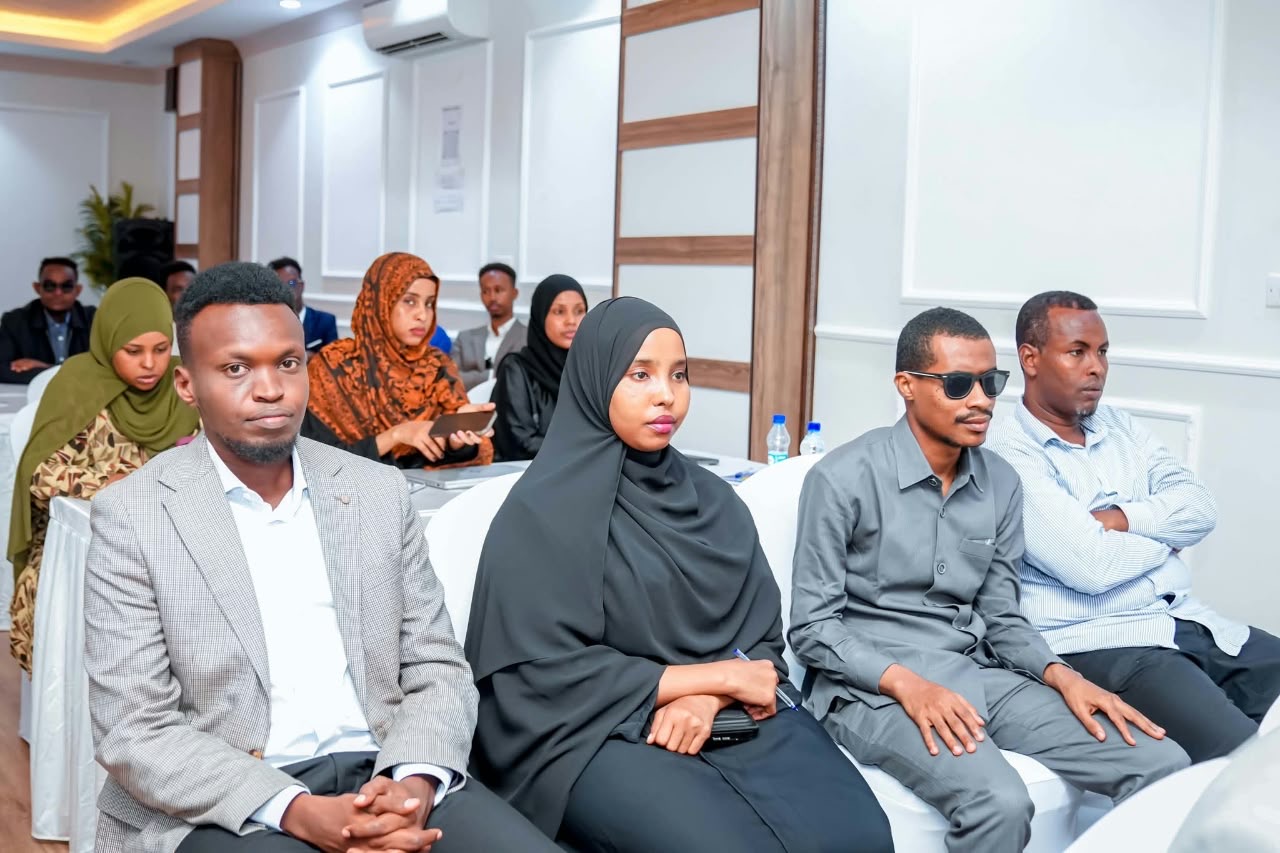
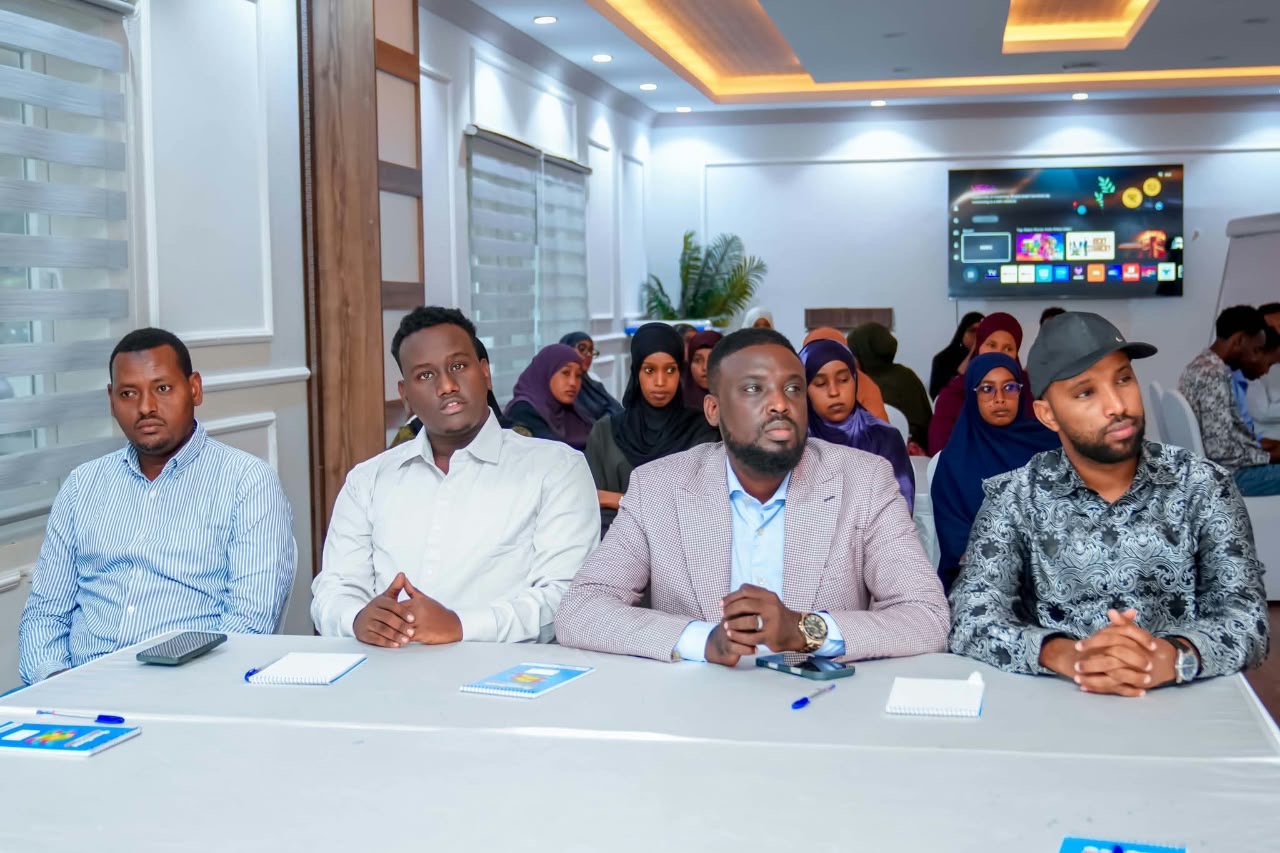
The forum, held on November 11 and 12, brought together 43 participants, including the Minister of Information, Culture and Tourism, H.E. Abdifatah Kasim Mohamud; the Minister of Labour and Social Affairs, Professor Saalim Ali Ibrahim; representatives of the Ministry of Family and Human Rights Development; media directors from Mogadishu and Federal Member States; editors, women journalists and media rights advocates.
Supported by the United Nations Development Programme (UNDP) and funded by the European Union (EU), the forum brought together media leaders and policymakers to discuss challenges facing women journalists in the workplace and the wider media profession, particularly concerning working conditions and professional development.
Discussions focused on identifying practical measures to promote gender equality, fair working conditions and safe workplaces free from harassment and abuse.
The forum opened with policy remarks by the Ministers of Information, Culture and Tourism, Abdifatah Kasim Mohamud, and Labour and Social Affairs, Professor Saalim Ali Ibrahim. Participants were also presented with findings from a rapid assessment of the working conditions of women journalists.
The ministers described the findings as important evidence that could help address the challenges facing women in the media industry. Participants examined the results and their implications for media institutions, particularly in preventing and responding to workplace harassment and discrimination.
The discussions also drew on the experiences of women in media leadership, including Farhiya Mohamud Yusuf, Director of Banaadir Radio and Television; Farhiya Murad, Editor of Bilan Media; Maryan Seylac, Executive Director of the Somali Women in Media Association (SOMWA); and Naciima Hassan Abdi, NUSOJ Organizing Secretary, alongside other women journalists.
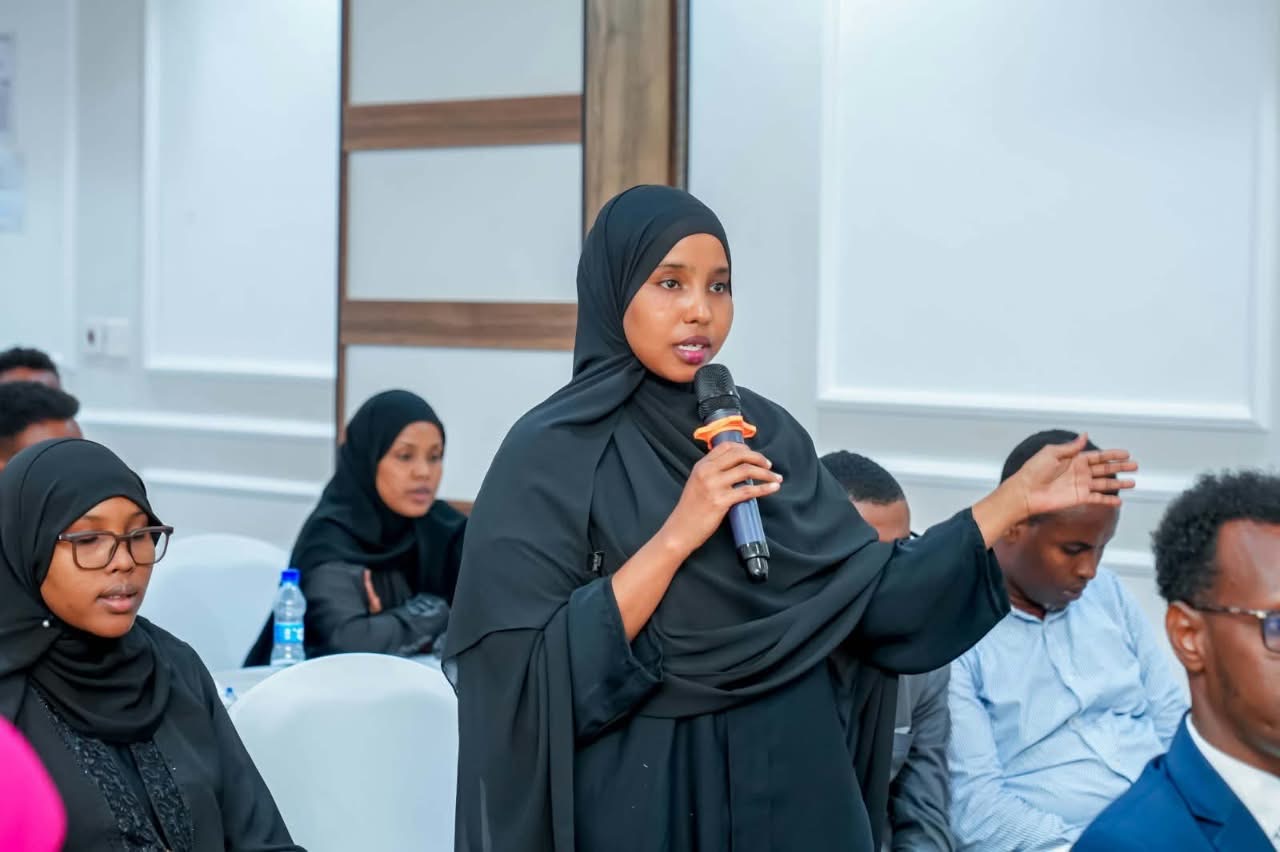
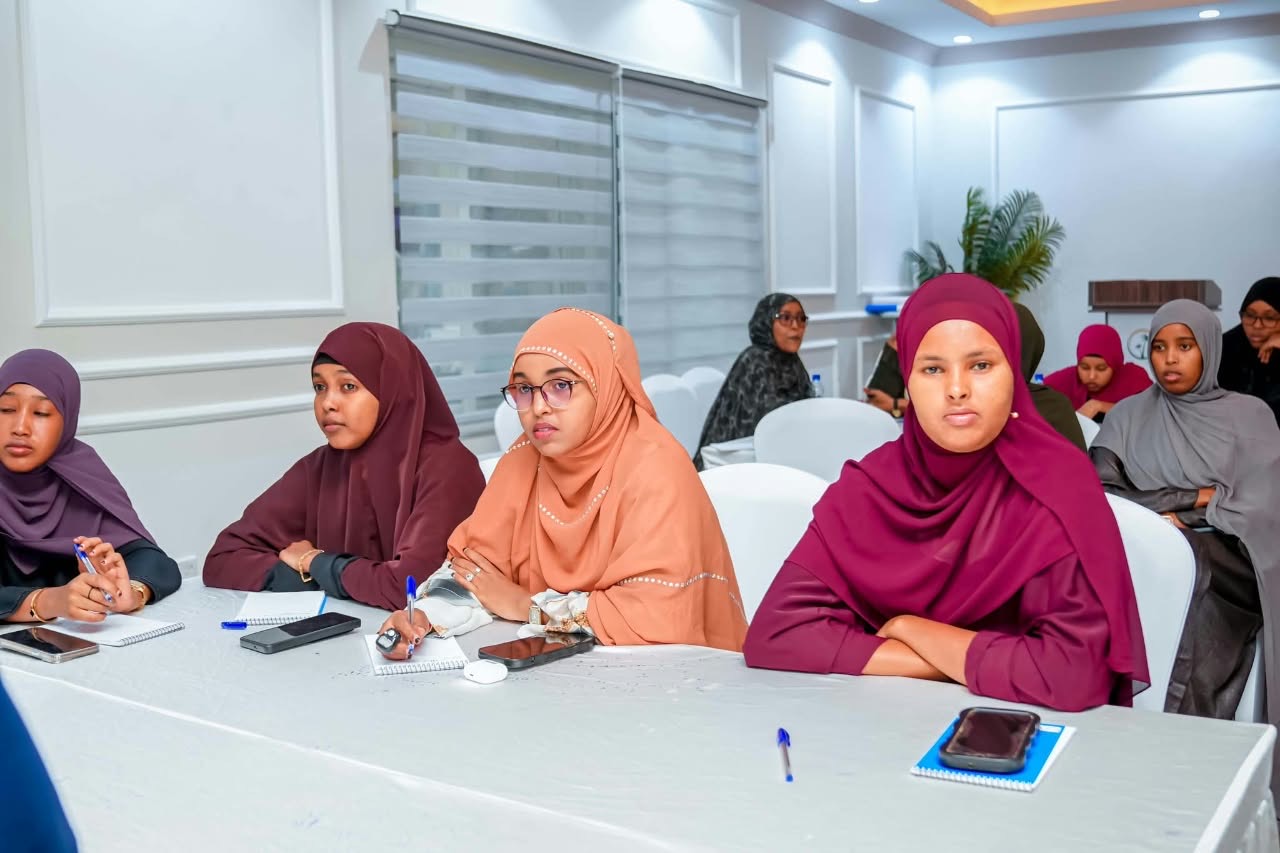
Participants discussed gender equality, discrimination, poor working conditions and the safety of women journalists, including protection against abuse and sexual harassment.
Building on the assessment findings and forum discussions, participants reviewed a draft Model Workplace Policy on Preventing Harassment and Discrimination. Through group discussions, they examined the draft and contributed recommendations and perspectives, which were subsequently presented for plenary discussion and approval.
The forum also addressed how media institutions could adopt the policy, strengthen workplace protections and monitor the implementation of the proposed recommendations.
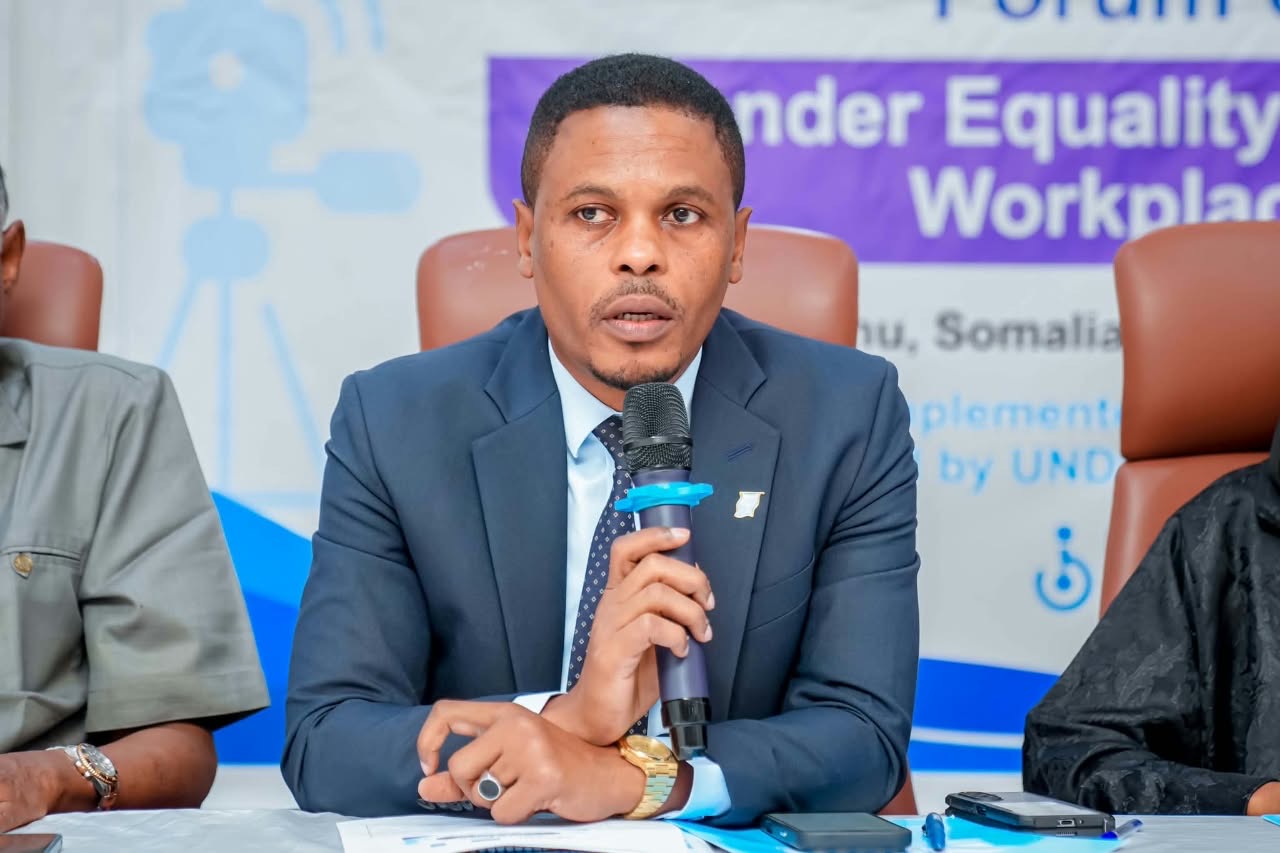
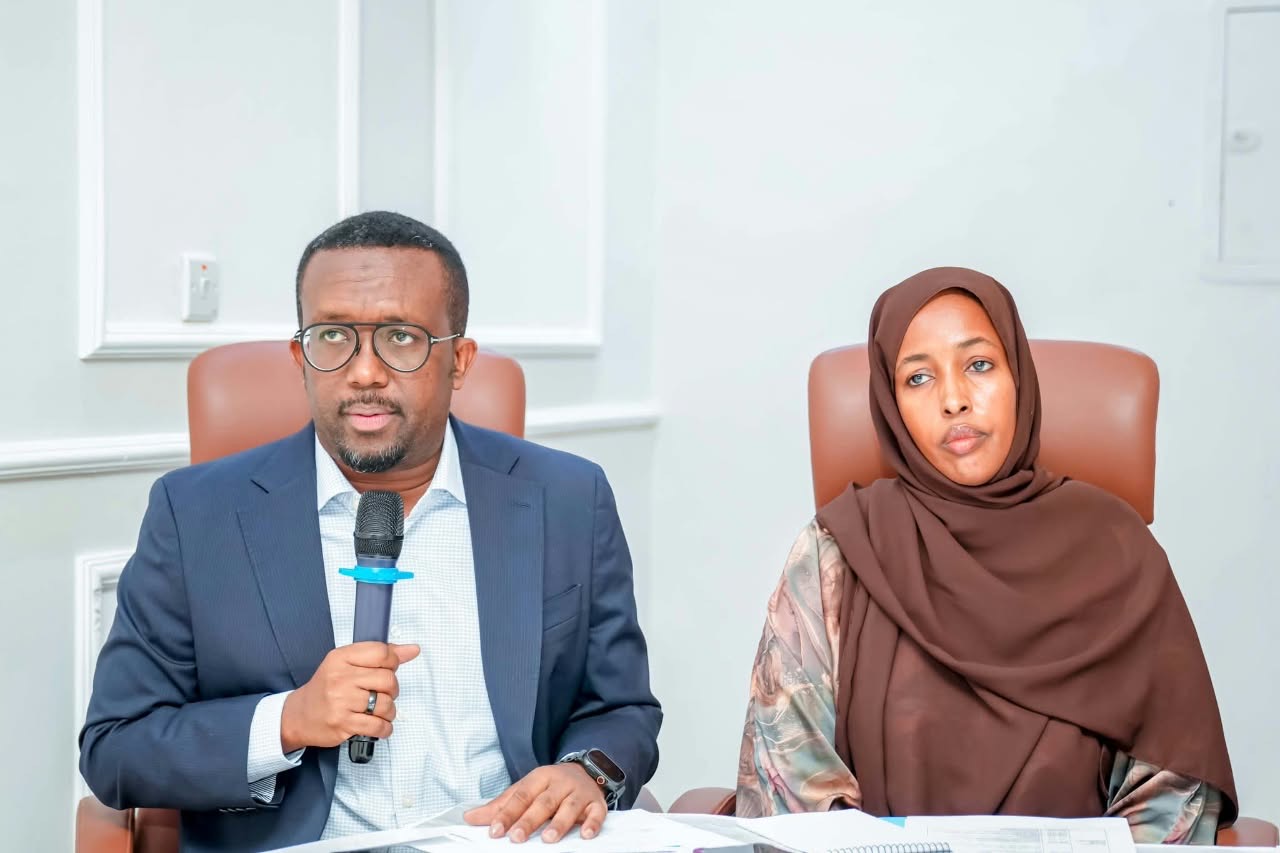
Minister of Information, Culture and Tourism Abdifatah Kasim Mohamud said improving working conditions for all journalists, including women, had been one of his priorities. He described the NUSOJ assessment as confirmation of challenges that had previously been reported and observed, calling on the government and media institutions to work together to address them.
He stressed that everyone had a responsibility to ensure women journalists could work safely, participate fully in the profession and access leadership positions.
Minister of Labour and Social Affairs Professor Saalim Ali Ibrahim emphasized that decent work and protection against harassment and discrimination were rights that should be guaranteed to everyone working in the media sector.
He pledged his ministry’s role in implementing the new Labour Law and promoting workplace safety and health for women in the media industry. He also highlighted the need for stronger workplace policies, accessible complaint mechanisms and support for employees, including through workplace inspections.
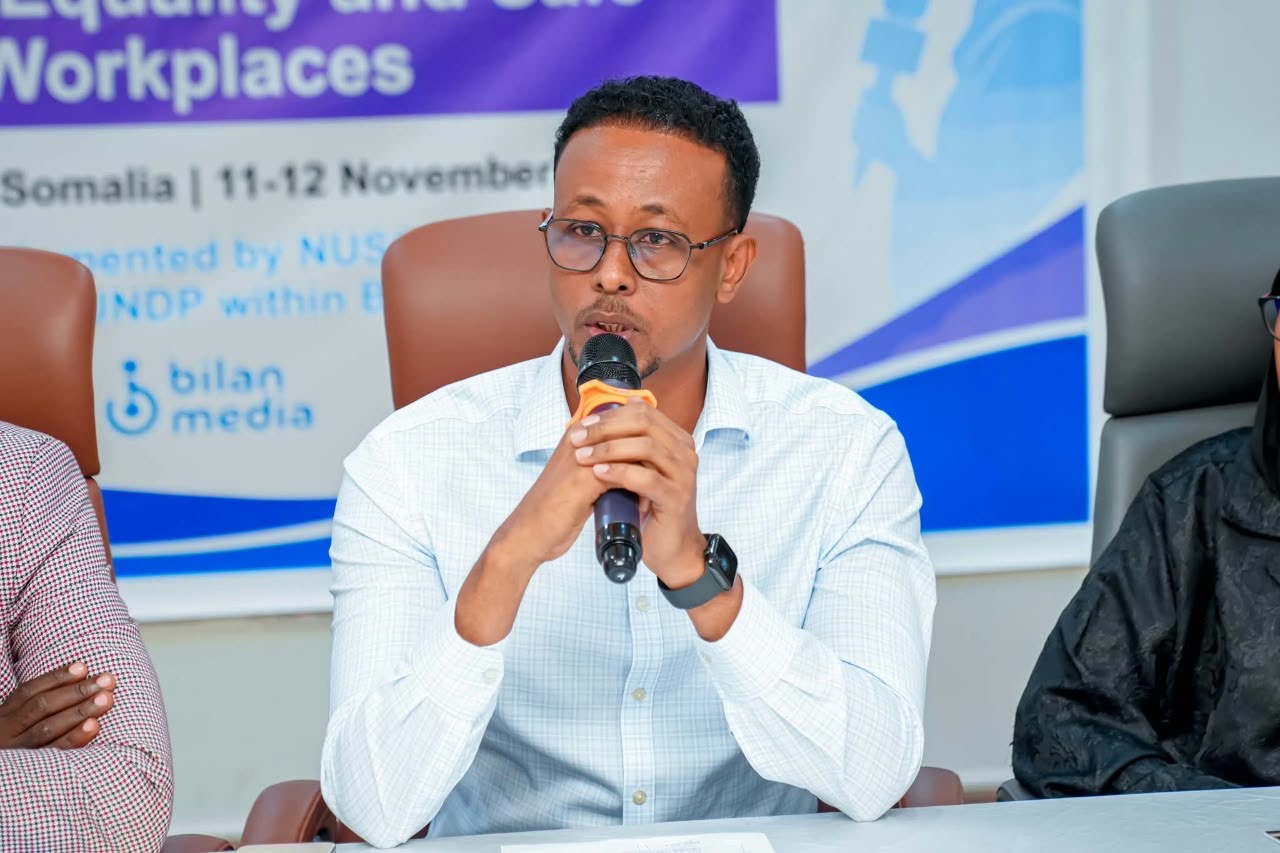
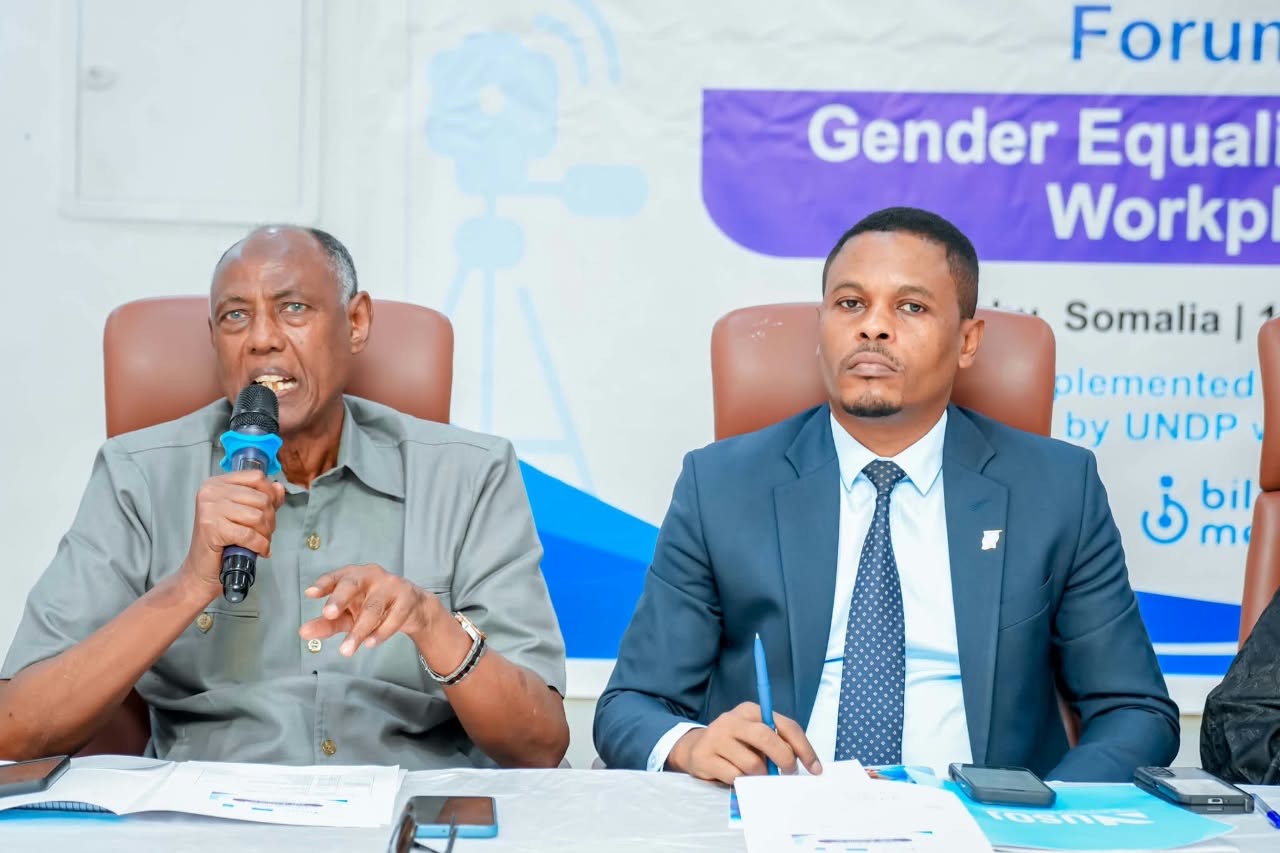
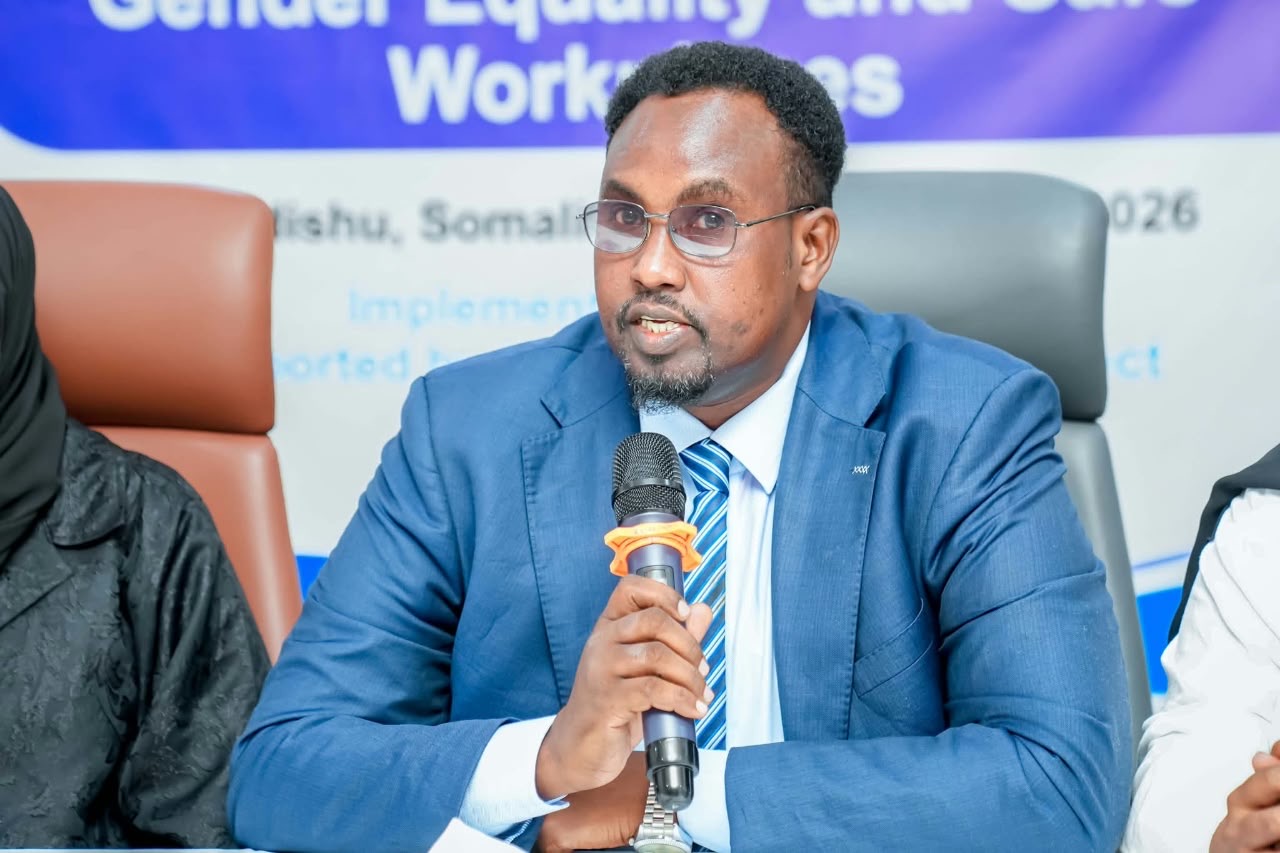
NUSOJ Secretary General Omar Faruk Osman said the forum brought together journalists, media managers, media rights advocates and government policymakers to examine challenges related to gender equality and the safety of women journalists and discuss practical solutions.
He called for professional cooperation and solidarity to turn the discussions into concrete measures that strengthen workplace protections and equal opportunities, noting that improving conditions for women journalists could also help raise standards across the wider media profession.
Participants expressed their commitment to addressing the challenges identified through the assessment and discussions, pledging to promote gender equality, improve working conditions and strengthen measures to prevent workplace harassment and discrimination.
The forum was held under a NUSOJ project titled “Strengthening Leadership, Safety and Equal Participation of Women Journalists in Somali Media.” The initiative is supported by the United Nations Development Programme through the Bilan Media Project and funded by the European Union, with cooperation from the International Federation of Journalists (IFJ).