Local News
Plan for decades, build in sequence: what Xiamen's rise teaches Somalia
China's coastal city of Xiamen grew from a 2.5-square-kilometre trial zone into an economy of almost 900 billion yuan by planning for decades and building in the right order. As Somalia begins its own 35-year vision, the Xiamen story offers lessons in patience, finance and partnership.
Yunnan, China (SONNA): The document is small and easy to walk past. In the exhibition hall of Xiamen International Bank, on the southern coast of China's Fujian Province, guides pointed our delegation of foreign journalists to a business registration bearing the number 0001. It marks the bank's place in history as the first Sino-foreign joint venture bank in the People's Republic of China, founded in August 1985 in a city that only five years earlier had been a modest frontline port with an economy of about 640 million yuan.
Last year Xiamen's economy reached 898 billion yuan, according to the Fujian provincial government. The city occupies about 1.4 percent of the province's land, yet in 2024 it produced almost 15 percent of Fujian's output and close to half of its foreign trade, according to Xiamen's executive vice-mayor, Huang Yantian. Behind those numbers lies a lesson that matters greatly to Somalia as it begins the long work of national transformation: China plans for decades, and then it builds in sequence.
I travelled to Fujian and Yunnan this month for the 2026 Media Cooperation Forum on Belt and Road, held in Fuzhou on 3 November and jointly hosted by People's Daily and the People's Government of Fujian Province. The Global Times reported that more than 200 foreign delegates from 182 media outlets and institutions across 100 countries attended. After the forum, our hosts took us on the road, through Fuzhou and Xiamen, across to Kunming and down to the shores of Fuxian Lake. Over ten days of factories, ports, banks and restored old quarters, one idea kept returning: the order in which things are built matters as much as what is built.
The plan comes first
Our first lesson came in Fuzhou, the provincial capital, at an exhibition marking three decades of the city's "3820" strategic project. The plan, adopted in November 1992 under Xi Jinping, then Party Secretary of Fuzhou, set out what the city should achieve over three, eight and twenty years. Its goal was to bring Fuzhou close to the average level of the moderately developed economies of Asia by around 2010.
What struck me was not only the ambition but the method. According to China's state broadcaster CGTN, more than 1,600 officials carried out research for the plan and the city received more than 25,000 public opinions within half a month, before the document went through dozens of revisions. The plan was then followed. Fuzhou's economy grew from about 15 billion yuan in 1992 to 1.51 trillion yuan in 2025, according to official data, and the eight-year and twenty-year goals were reported as met on schedule.
For many developing countries, the weakness is rarely the absence of a plan. It is the gap between the plan and the decades of disciplined follow-through it requires. Fuzhou showed us a plan treated not as a launch event but as a working instrument, consulted widely, revised often and kept in force long enough to matter.
Xiamen: building in the right order
If Fuzhou showed the value of planning, Xiamen showed the value of sequence. In October 1980, China's State Council approved a special economic zone of just 2.5 square kilometres in the Huli area of Xiamen Island, one of the country's first four such zones alongside Shenzhen, Zhuhai and Shantou. Construction began in October 1981. Only in 1984, once the model had shown results, was the zone expanded to cover the whole island, some 131 square kilometres.
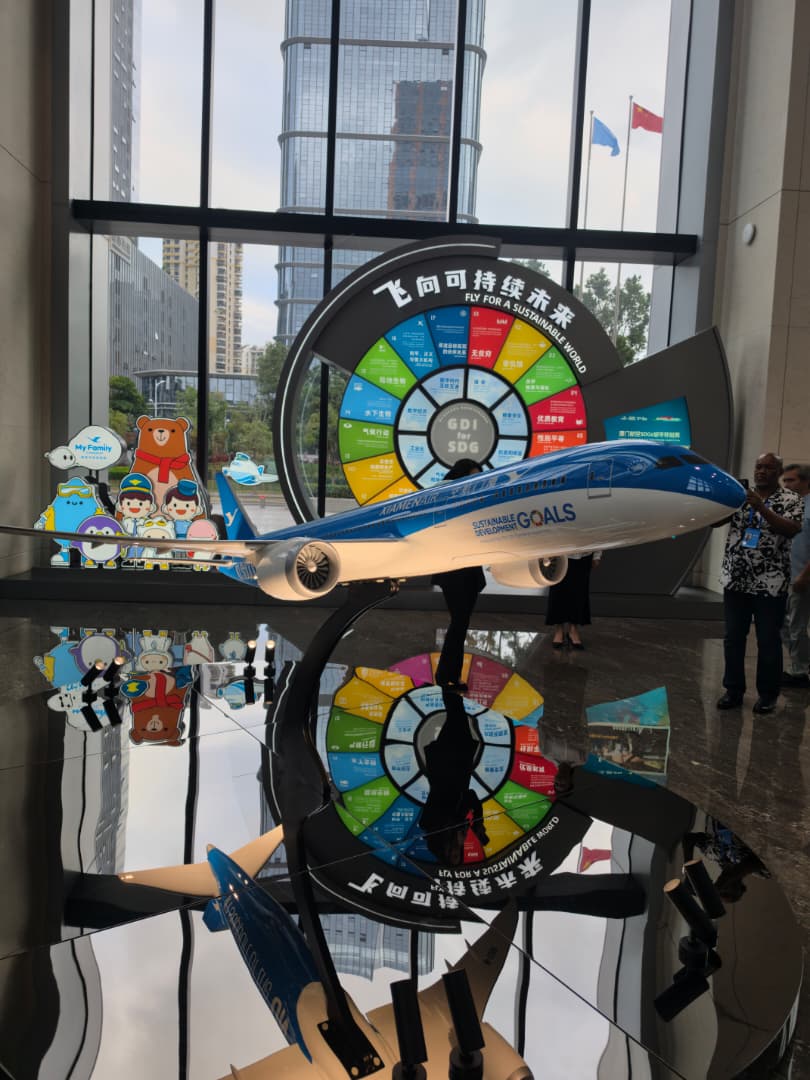
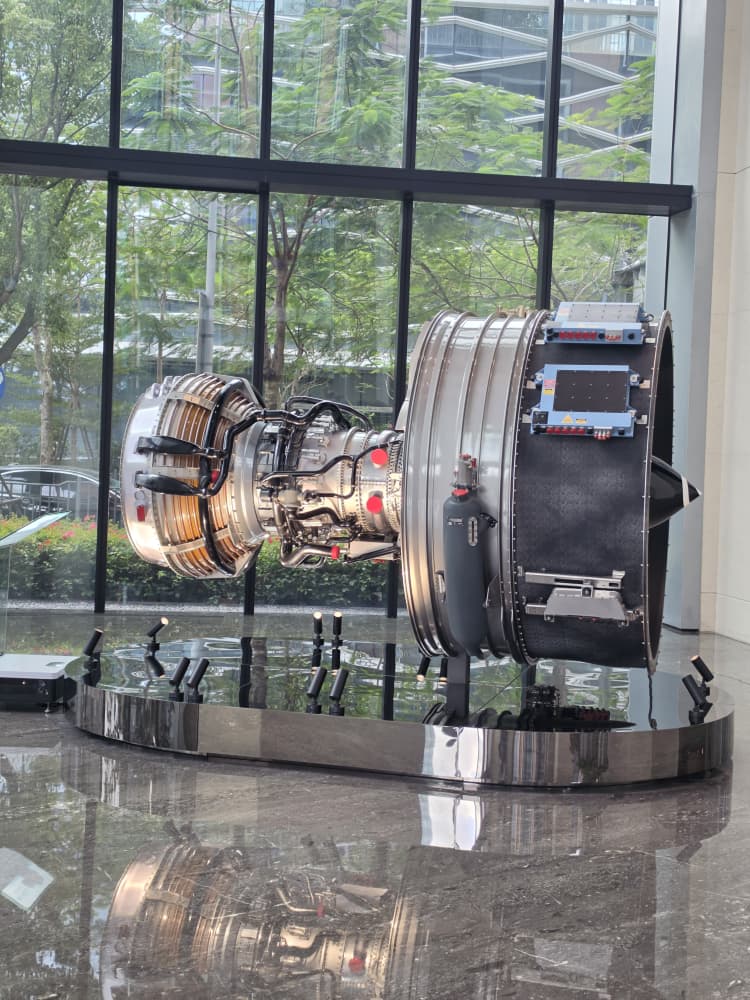
The institutions came next. In July 1984 Xiamen Airlines was founded, described as the first airline in China to operate independently as an enterprise. A year later came Xiamen International Bank, set up with capital from Hong Kong and overseas Chinese investors alongside Chinese state shareholders. The bank's own exhibition traces its roots to the overseas Chinese tradition that runs deep in this part of Fujian, including the legacy of Tan Kah Kee, the merchant and philanthropist who financed Xiamen University and the schools of Jimei. In the hall, guides also showed us examples of qiaopi, the letters that once carried both money and family news from Chinese workers abroad to their villages, a tradition any Somali familiar with xawaala will immediately recognise.
Then came connection. For more than three decades, a single causeway linked Xiamen Island to the mainland. Construction of the Xiamen Bridge began in 1987, and the bridge opened to traffic in 1991 as China's first cross-sea highway bridge. Its financing tells its own story. According to the bank, in 1986 it served as issuing agent for the first phase of bonds for the bridge, introducing a model in which highway construction was funded through a combination of state investment and locally issued bonds. The bonds were taken up by investors from Hong Kong and Macao as well as by local residents.
Only after the zone, the institutions and the connections were in place did the city's later chapters follow: services, high technology and a heritage economy. Gulangyu, the small island off Xiamen where our delegation walked through restored villas and heard a 1909 pipe organ played beneath the dome of the Bagua Lou mansion, was inscribed on the UNESCO World Heritage List in 2017. Today it draws visitors in large numbers, with its old buildings strengthened and reused rather than torn down.
No single project transformed Xiamen. Each step created the conditions for the next. A small zone proved the model. A bank and an airline gave investors confidence and access. A bridge financed partly by local and diaspora savings opened the island to the mainland. Forty years later, the bank tells visitors that international business now accounts for more than a third of its total, and it described to our delegation how, as a direct participant in China's Cross-border Interbank Payment System, it can offer renminbi clearing services to banks in other countries. When I asked about Somalia, Peng Shulin, general manager of the bank's Overseas Chinese Finance Department, said that service could extend to counterparties in Somalia.
Carrying the logic outward
In Yunnan, a landlocked province bordering Laos, Myanmar and Vietnam, we saw the same thinking applied beyond China's borders under the Belt and Road Initiative. At Tengjun International Land Port in Kunming's Jinning district, an inland dry port with its own customs facilities and bonded logistics centre, the operator describes the site as one of 17 Chinese dry ports covered by the United Nations ESCAP Intergovernmental Agreement on Dry Ports. Goods arrive by rail along the China-Laos Railway and continue to Thailand, Singapore and beyond, so a province with no coastline reaches the sea by planning its routes rather than waiting for geography to change. Its managers told us they currently serve mainly South and Southeast Asia, and that they plan to extend their business to countries along the African coast in future.
Across the city, at CRCC High-Tech Equipment, engineers showed us machines that maintain railway track, built to order for broad-gauge lines in Bangladesh, metre-gauge lines in Thailand and the 1,520-millimetre gauge of Kazakhstan, each adapted to local heat, humidity or cold. Their motto, "one country, one policy", carried a quieter lesson: infrastructure is not finished when it opens. It has to be maintained, financed and adapted for decades.
What Somalia can take from Xiamen
Somalia already has the first ingredient. In March 2025 the Federal Government launched the National Transformation Plan for 2025 to 2029, built on four pillars: transformational governance, sustainable economic transformation, social and human capital development, and environmental and climate resilience. In June 2025 it unveiled the Centennial Vision 2060, a 35-year framework organised in seven five-year phases. Like Fuzhou's plan, the National Transformation Plan was shaped through broad consultation, including the planning laboratories held in Mogadishu at the end of 2024. Somalia, in other words, now has a long horizon. The Xiamen experience speaks to what comes next.
The first lesson is to start small and prove the model. Xiamen began with 2.5 square kilometres, not an entire island. Somalia could focus early effort on a limited, well-governed economic area beside a working port such as Mogadishu, Kismayo or Bosaso, with clear rules, reliable power and fast customs, and expand only once it delivers results.
The second lesson is to finance creatively and close to home. The Xiamen Bridge was partly paid for by bonds bought by local residents and the Chinese diaspora. Somalia's diaspora sends remittances that rank among the country's largest sources of foreign income, yet much of that money is spent on daily needs rather than invested. Carefully designed instruments, backed by sound regulation, could give Somalis abroad a way to invest in roads, ports and power at home, as overseas Chinese once did in Xiamen.
The third lesson is to build institutions that outlast any single project. Xiamen International Bank and Xiamen Airlines were created in the zone's first five years and are still growing four decades later. Somalia's own banks, port authorities and regulators will matter more over time than any one ribbon-cutting.
The fourth lesson is sequence itself. Connection comes before scale, and maintenance comes with construction, not after it. A port without reliable roads, payment systems and trained people will not transform an economy, however modern its cranes.
From building for us to building with us
None of this means copying Xiamen. Somalia's history, resources and federal arrangements are its own, and China's experience is best treated as a method rather than a template. But the relationship between our two countries is entering a stage in which the most valuable thing China can share is not only what it builds, but how it plans, sequences and finances what it builds.
That suggests practical next steps. Somali planners could study the Xiamen and Fuzhou experience directly, through exchanges between the Ministry of Planning, Investment and Economic Development and its counterparts in Fujian. Somali banks could explore the correspondent and renminbi clearing links that Xiamen International Bank says it can now offer. And a Somali port city could seek a twinning partnership with Xiamen, a city that knows from experience how a frontline port becomes a gateway.
In Xiamen, a registration number of 0001 marked a beginning, not a destination. Somalia's Centennial Vision is now in its first phase. If we plan for decades and build in the right order, with partners who are willing to build with us, our own first numbers are being written now.
Abdiqani Abdullahi Ahmed is Editor of the SONNA English Desk and Senior Advisor, Communication and Analysis at Somalia's Ministry of Information, Culture and Tourism. He writes in a personal capacity. He visited Fujian and Yunnan for the 2026 Media Cooperation Forum on Belt and Road.