Local News
Somalia Presents Development Vision at Africa Day Debate During UN High-Level Political Forum
At the ministerial debate in New York, Somalia's Minister of Planning set out the reforms underpinning the country's development priorities, as African states took stock of their progress toward the 2030 Agenda and Agenda 2063.
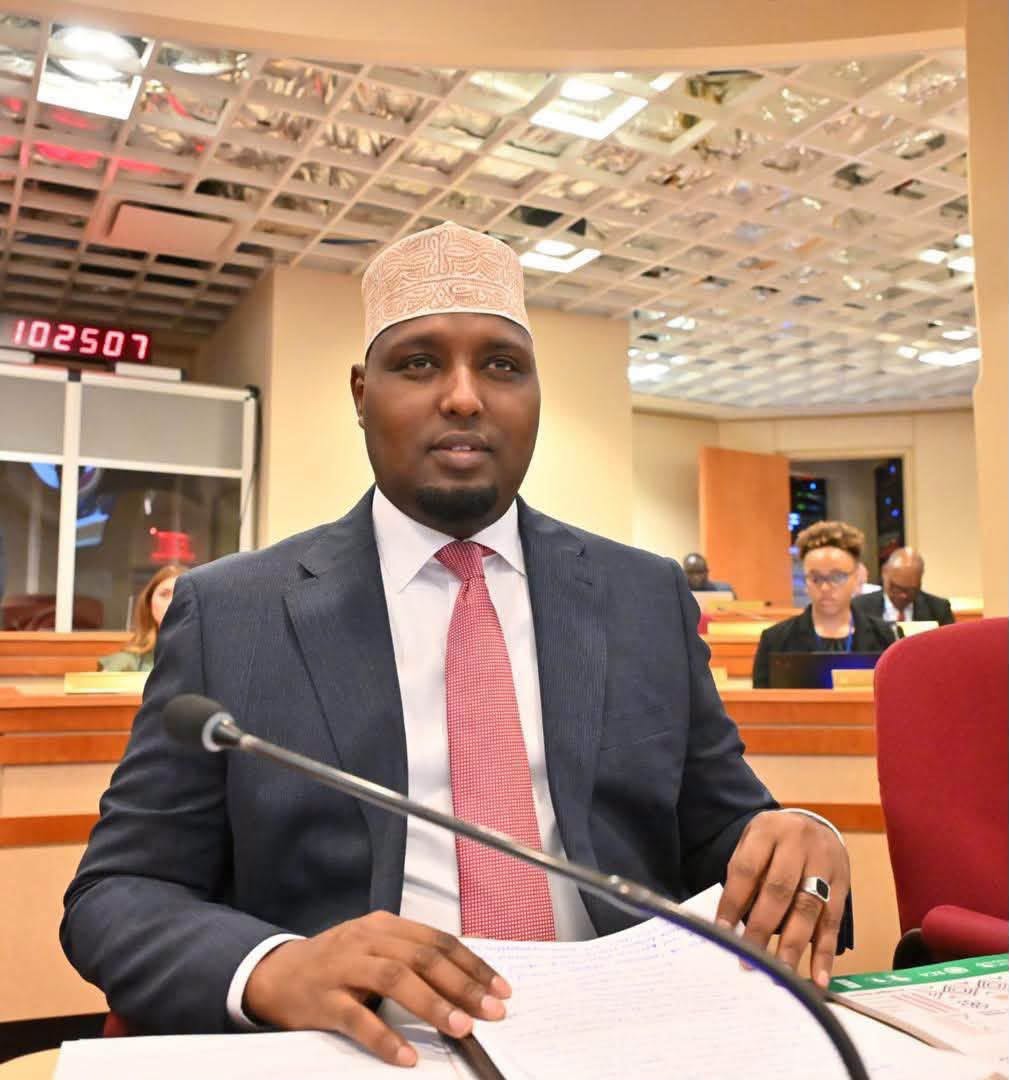
NEW YORK (SONNA): The Federal Government of Somalia has reaffirmed its commitment to advancing the development agendas of Africa and the wider world, taking part in the ministerial debate marking Africa Day held in New York during the United Nations High-Level Political Forum (HLPF), the UN's central platform for reviewing global progress on sustainable development.
Somalia was represented by the Minister of Planning, Investment and Economic Development, Hon. Mahmoud A. Sheikh Farah (Beenebeene), who presented the country's vision for sustainable development. He detailed the reforms the government is pursuing in national planning, economic management and the delivery of its development priorities, setting out how Somalia is working to align its own agenda with continental and global goals.
The debate brought together heads of state, ministers and representatives of African governments and international organisations, and served as the occasion for the launch of the Africa Sustainable Development Report 2026. The report assesses the progress African countries are making toward the United Nations 2030 Agenda for Sustainable Development and the African Union's Agenda 2063, the continent's long-term blueprint for inclusive growth and structural transformation.
Somalia's participation comes as the government works to consolidate a broad programme of economic and institutional reform. Central to that effort is the National Transformation Plan for 2025 to 2029, the framework through which the government has set its development priorities across governance, the economy and service delivery. The plan builds on the fiscal reforms that carried Somalia through its debt-relief process in recent years, an achievement that restored the country's access to international financing and reset its relationship with global lenders after decades of arrears.
For a country that spent much of the past three decades outside the formal structures of the international development system, appearances of this kind carry a significance beyond the podium. They mark Somalia's return as a participating member of the global and continental development conversation, no longer solely a subject of it. Presenting reforms rather than only needs, and doing so alongside other African states measuring themselves against the same shared goals, is itself a measure of how far the country's institutions have travelled.
As the Africa Sustainable Development Report 2026 makes clear, the road toward the 2030 and 2063 targets remains long for Somalia and for the continent as a whole. But the government's presence in New York, setting out a vision built on its own reforms, signals an intention to walk that road as a contributor to the shared African effort rather than a bystander to it.