Local News
Is Somalia’s Federalism a Trojan Horse?
In ancient Greece, the Greeks went to war with the Trojans. They laid siege at the gates of Troy to break into Troy. After a long siege, the Greeks failed to break into Troy. Realizing the difficulty they faced, they orchestrated a trick. They told the Trojans that they were sorry and would give a sacrifice to the goddess Athena in the form of a large wooden horse and leave them in peace. The Trojans believed the Greeks. In the meantime, the Greeks put soldiers in the large wooden horse, which, when allowed into Troy, allowed soldiers from outside to come into Troy. Troy was destroyed from within its walls by the soldiers that were brought in by the large wooden horse.
In Somalia, following the civil war, a political prescription was found in the 2012 Provisional Constitution, a system in which various regions would govern themselves and their leaders would be called presidents. The spirit of this prescription may have been meant well, given the distrust among various regional leaders following the civil war. Since then, the federal system has gone through various stress levels.
The main contention of political leaders has been that power and resources should be shared between the federal states and the federal government without one clan dominating others. This seems obvious to the naked eye. However, scratching the surface of this benevolent gesture is the ugly face of domination by larger clans of the smaller clans in each federal state, which is the opposite of the letter and spirit of the Provisional Federal Constitution. This has led to smaller clans asking for yet another federal state so that they are not dominated by the other larger clans. The onion keeps on getting peeled.
At the core of any functioning government is a separation of the roles of the federal states and the central government. A unique development has been the role of foreign governments and their relationships with the federal states and the central government. Contrary to the expected political stability in the federal system, it has become unfathomable to see regional leaders ceding national territory and governments. We have seen regional leaders working against and vetoing national development projects in various fields to the international community. There is no doubt that foreign governments will continue to take advantage of the structural weaknesses introduced by the federal system and call regional leaders to their capital cities for further instructions whenever they see fit.
It’s not unique to Somalia that foreign entities have meddled in the internal affairs of a country through proxy entities or weak institutions. As far back as 1917, Imperial Germany sought to weaken the USA by helping Mexico to reclaim Texas, New Mexico, and Arizona. The strategy was meant to exploit weak federal-state jurisdictions and foment civil war, which would divert resources from Washington that would have been used in the First World War. The French support of the secessionist Quebec in 1967 by exploiting the language differences between the French-speaking and English-speaking federal states of Canada was yet another example. In recent times, in 2010, China exploited Australia’s decentralised federal system by making financial incentives to lawmakers in New South Wales and Victoria. The lawmakers signed into China’s Belt and Road Initiative without a need to get approval from the central government. This created a national security crisis between federal states and the central government. Closer to home in Africa, foreign meddling through decentralised federal systems has been more blatant and violent. During the 1967–1970 Biafra Civil War, France and, to a lesser extent, Portugal exploited the cracks in Nigeria’s federal system by arming the secessionists with the intention of getting concessions in the rich oil reserves of Nigeria. The list of foreign entities exploiting weak institutions or unclear federal-versus-central-government laws runs throughout history and on all continents of the world.
The question arises: if foreign meddling through weak institutions, financial incentives, or proxy groups has happened and will most likely happen throughout history, how do we deal with them?
The solution lies at the door of the government of the day. Somalia could learn from other countries that have been at the receiving end of foreign meddling using a Trojan horse. These solutions could be the good, the bad, and the ugly. Ultimately, any solution must uphold the rule of law and protect the sovereignty of its people and constitution. One such solution is the plugging of legal loopholes through constitutional and legal reforms. In 2020, Australia signed Australia’s Foreign Arrangements Act into its laws. This Act was meant to stop China from making deals with federal states like it did with Victoria state on the Belt and Road Initiative. It also gave the Foreign Minister the power to veto and cancel agreements made between a foreign government and a federal state or a local council. The USA declared national voting systems as national critical infrastructure following suspected election interference from Russia, making cybersecurity a national priority. If those measures were the ‘good’ ones, there are interventions that could be deemed as less good or ‘bad’ options. These are what people call ‘direct rule’. Canada invoked the War Measures Act of 1970 when Quebec separatists, encouraged and supported by France, turned to terrorism. The then Prime Minister Pierre Trudeau suspended civil liberties and deployed the army. The least desirable action against the consequences of foreign meddling is military intervention. In both Nigeria’s civil war and Ethiopia’s Tigray war, the central government intervened against foreign meddling through military intervention. However, the least confrontational and possibly the optimal approach is the diplomatic route coupled with counter-intelligence. Canada retaliated against France on its interference with the Quebec region by cutting diplomatic ties with France. Somalia passed laws in 2018 to annul all unauthorised DP World agreements and, by 12 January 2026, officially signed a decree to annul all agreements with the UAE. The government also signed a sovereignty law prohibiting federal states from keeping defence and infrastructure agreements with the UAE. In the 2010s, both Malaysia and the Philippines used diplomatic routes to counter interference with their sovereignty with China. A famous Somali called Wiil Waal, after going to war with various groups, is quoted to have said, ‘Walaaloow wax dhaama waa waayay,’ which is interpreted as ‘I couldn’t find a better way to resolve matters other than through peaceful means.’
If one were to see where the current federal system is going, it’s clear that whatever the architects of the federal system may have intended, it may become the Trojan Horse that destroyed Somalia from within. That is if the necessary tools at the disposal of the central government and federal states are not used to protect the sovereignty of the country.
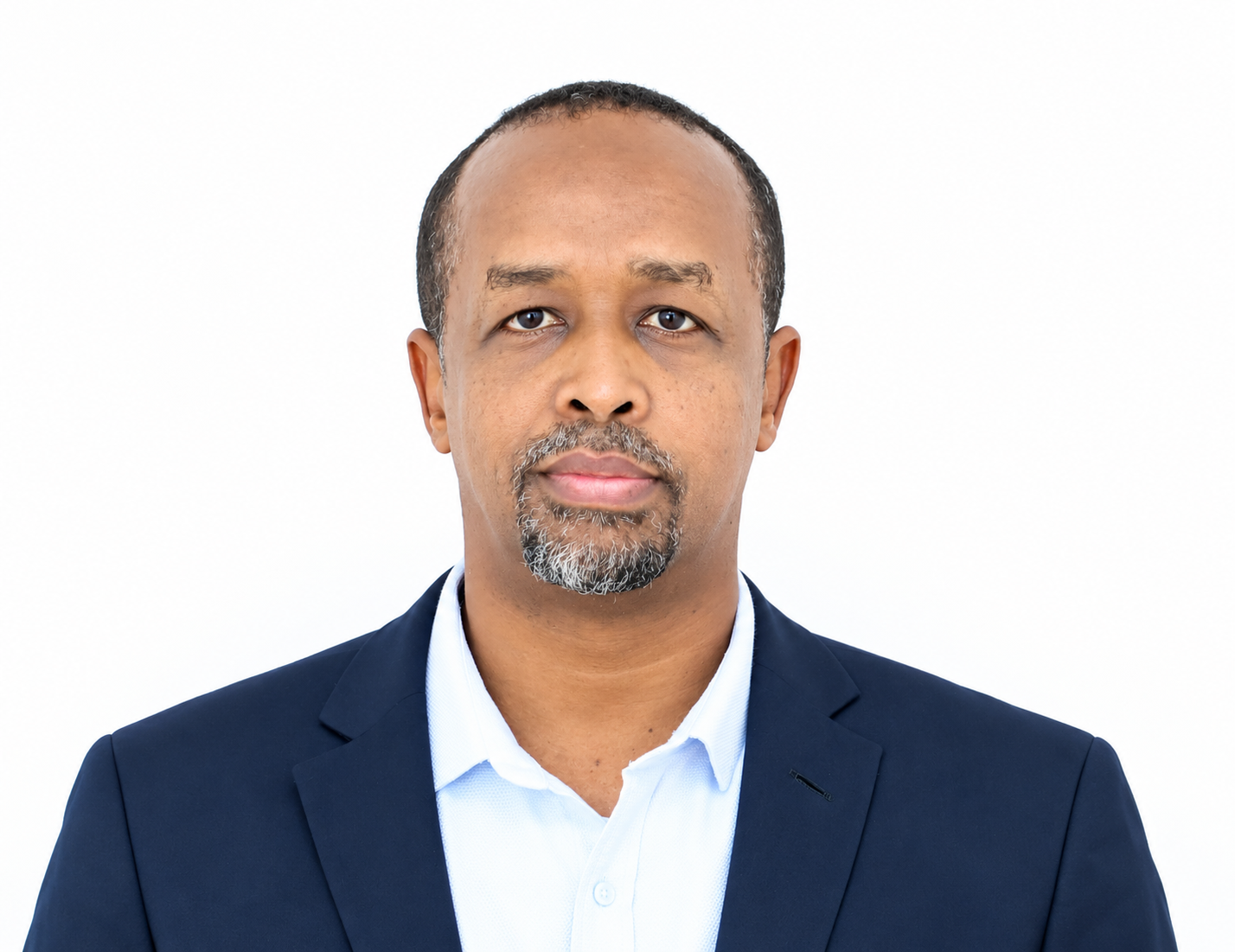
Dr. Abdullahi Ali Noor (Ameriko) is a pharmaceutical regulatory expert with more than 25 years of corporate leadership experience in European and U.S. regulatory affairs. He writes on public policy, governance, healthcare, and national development, drawing on decades of experience in pharmaceutical regulation, leadership, and institutional compliance.