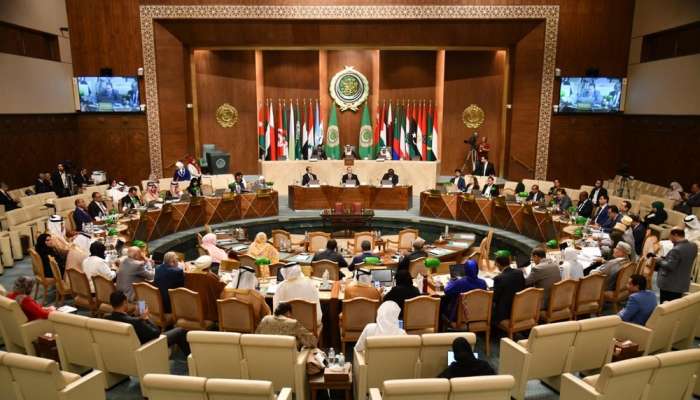
BEIRUT, Lebanon – The Arab Inter-Parliamentary Union (AIPU) has issued a decisive statement categorically rejecting the reported recognition of the Somaliland region by the Israeli authorities. In an official declaration released from Beirut, AIPU President Mr. Ibrahim Boughali, who also serves as the Speaker of the People’s National Assembly of Algeria, condemned the move as a flagrant violation of international law and a direct assault on the sovereignty of the Federal Republic of Somalia.
The statement expressed the Union’s “firm and decisive refusal” of any unilateral measures that undermine the political stability, security, and territorial integrity of Somalia. President Boughali framed the Israeli announcement as a “blatant interference” in the internal affairs of a sovereign state, warning that such actions constitute an explicit invitation to destabilize both the Horn of Africa and the broader Arab region. The Union characterized the move as a desperate attempt to sow discord and fragmentation within the Arab world.
Legally, the AIPU anchored its position in the Charter of the United Nations, specifically Article 2/4, which prohibits the threat or use of force against the territorial integrity or political independence of any state. The statement also cited UN General Assembly Resolution 2625 (XXV) of 1970, which upholds the principle of non-intervention in the internal affairs of states. By invoking these international statutes, the Union declared the recognition legal void and a violation of the global consensus on respecting national borders.
Furthermore, the Union emphasized that the security and stability of Somalia are an “integral part of Arab national security.” The statement affirmed the AIPU’s absolute solidarity with the Federal Government of Somalia in all legal measures it takes to preserve its sovereignty. It called for “joint Arab coordination” to confront external threats, urging the international community to respect Somalia’s unity and reject any attempts to legitimize separatism.
This high-level parliamentary intervention adds a significant layer of diplomatic support to Mogadishu, signaling that the legislative bodies of the Arab world stand united against the fragmentation of Somalia. The declaration concludes by reaffirming the need for friendly relations and cooperation among states based on the 1970 UN Declaration, while strictly opposing any policies that compromise the independence of member nations.