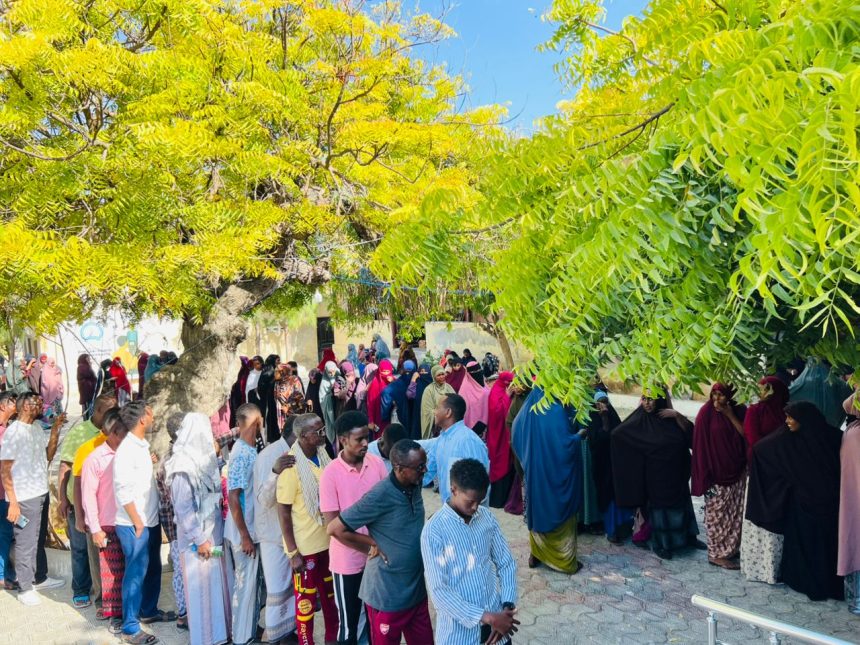
MOGADISHU, Somalia – In the midst of Mogadishu’s bustling morning, Zakariye Abuukar made a choice that defines the spirit of today’s election. Pulling his three-wheeled Bajaj—the lifeline of the city’s public transport—to the side of the road, he stepped away from his livelihood to join the queue at a local polling station. His action serves as a powerful illustration of the deep value residents are placing on their constitutional rights today.
For Zakariye, the potential loss of fares was secondary to the magnitude of the moment. He explicitly stated that he parked his vehicle to “cast his vote and participate in the civic duty of the election.” This decision highlights a broader trend visible across the capital, where ordinary citizens from the working class are prioritizing their democratic participation above their daily economic routines.
The Bajaj is the heartbeat of Mogadishu’s transport network, yet drivers like Zakariye are taking time off the roads to ensure their voices are counted. This level of grassroots participation indicates how deeply the significance of the “one-person, one-vote” system has permeated the public consciousness. It suggests that residents view this election not merely as a political procedure, but as a personal responsibility to shape the governance of their city.
As Zakariye stood in line, his parked Bajaj remained as a silent symbol of a city willing to pause its rapid pace to embrace a new democratic future. His story reflects the determination of Mogadishu’s residents, who see this day as an opportunity that cannot be missed.