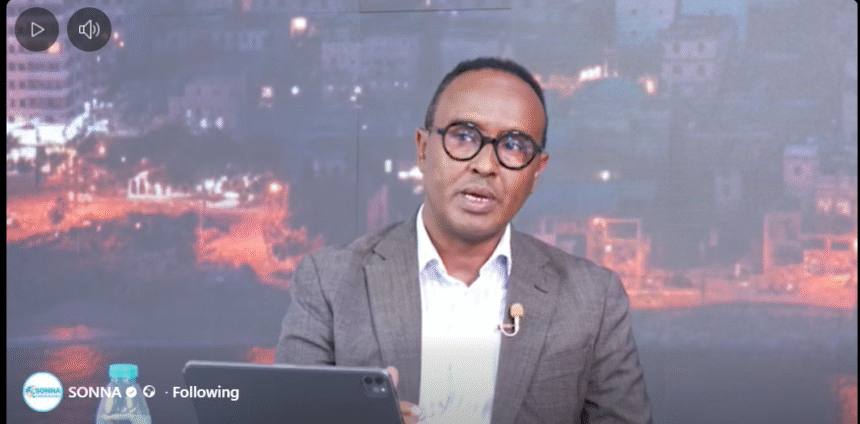
MOGADISHU (SONNA) — The humanitarian situation in Somalia has deteriorated into a critical emergency, with the Somali Disaster Management Agency (SoDMA) confirming that the nation has now entered the fourth phase of drought severity. Commissioner Mohamud Ma’allin Abdulle, speaking on the National Media, provided a grim assessment of the climate crisis, revealing that the acute shortage of water and food is now being compounded by a significant reduction in international support.
Commissioner Ma’allin disclosed a concerning shift in the operational landscape, noting that traditional donor governments that previously supported Somalia’s relief efforts have halted their humanitarian activities. This suspension of external aid has created a dangerous vacuum at a time when the need is most acute. Consequently, the Commissioner issued a strong directive for national self-reliance, urging both the Federal Government and the Somali public to unite resources to avert a catastrophe. He emphasized that in the absence of foreign intervention, the responsibility to save the lives of vulnerable populations and livestock now rests entirely on domestic mobilization.
The agency’s assessment indicates that the failure of consecutive rainy seasons has precipitated widespread water scarcity and crop failure across the country. This environmental collapse has pushed the drought classification to its fourth stage, a level indicative of extreme danger and pre-famine conditions. The Commissioner warned that without immediate and substantial humanitarian intervention in the coming days, the risk of mass fatalities among the displaced and rural populations will rise exponentially.
Data released by SoDMA paints a stark picture of the crisis, estimating that approximately five million people are currently facing acute food insecurity. The impact is nationwide, with the most severe conditions reported in the regions of Awdal, Gedo, Hiiraan, Bay, Bakool, Mudug, Galgaduud, and Sanaag, as well as the Northern and Northwestern territories and the Jubba regions. These areas are witnessing what officials describe as the worst drought conditions observed in recent history.
The Commissioner concluded his address with an urgent appeal for immediate action, stressing that the window to save lives is narrowing. The agency is calling for a unified national response to bridge the gap left by the withdrawal of international aid, prioritizing the delivery of water and fodder to the communities most at risk of devastation.