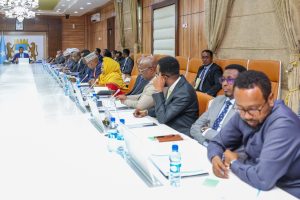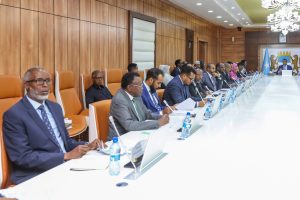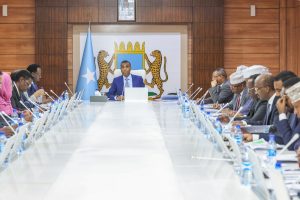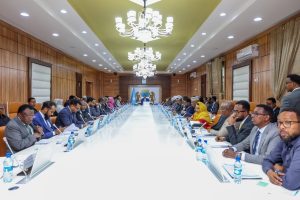
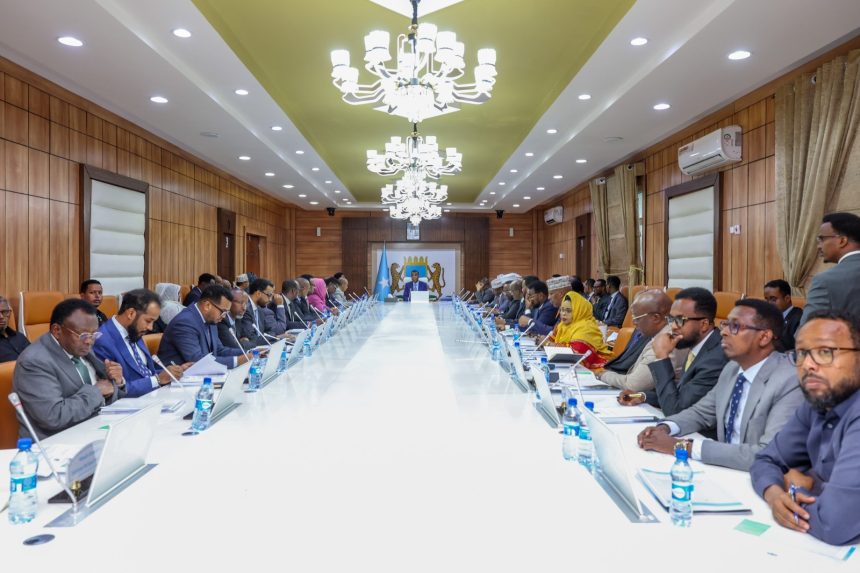
MOGADISHU, Somalia – The Council of Ministers of the Federal Government of Somalia, chaired by Prime Minister H.E. Hamza Abdi Barre, convened for its weekly meeting on Thursday, February 5, 2026. The session was dominated by urgent discussions regarding the country’s climate challenges, resulting in the approval of a critical regulatory framework for disaster management and a strategic maritime agreement with Turkey.
The Cabinet began proceedings with a detailed review of the current drought situation affecting the nation. Reports presented to the Council highlighted the severe impact of water shortages and food insecurity on vulnerable populations. In response to these findings, the government announced it is finalizing a series of immediate tactical measures to mitigate the crisis and support affected communities.
To institutionalize these relief efforts, the Council officially approved the Regulation for the National Fund for Risk and Disaster Management. This new legal framework is designed to unify the country’s preparedness, prevention, and response mechanisms for both natural and man-made disasters. The regulation aims to foster a system of self-reliance, integrating government resources with community contributions to ensure a sustainable response to future crises.
In a move to strengthen Somalia’s sovereignty and economic infrastructure, the Cabinet also ratified a significant Memorandum of Understanding (MoU) between the Federal Government of Somalia and the Government of Turkey regarding maritime transport cooperation. This agreement is expected to bolster trade logistics and port operations between the two nations.
Furthermore, the Council adopted a suite of international maritime protocols to bring Somalia into compliance with global standards. These include the Maritime Labour Convention (2006), the Nairobi International Convention on the Removal of Wrecks (2007), and the International Convention on Tonnage Measurement of Ships (1969). These ratifications signal Mogadishu’s intent to modernize its maritime sector and improve safety and labor conditions within its territorial waters.
The session concluded with a briefing from the National Committee on Combating Smuggling and Human Trafficking. The Committee presented a stark assessment of the dangers posed to Somali youth by illegal migration networks. The report detailed the physical and human rights abuses suffered by victims, emphasizing that human trafficking remains a severe threat to the country’s future human capital and national development.