It was nearly midnight when I met them.
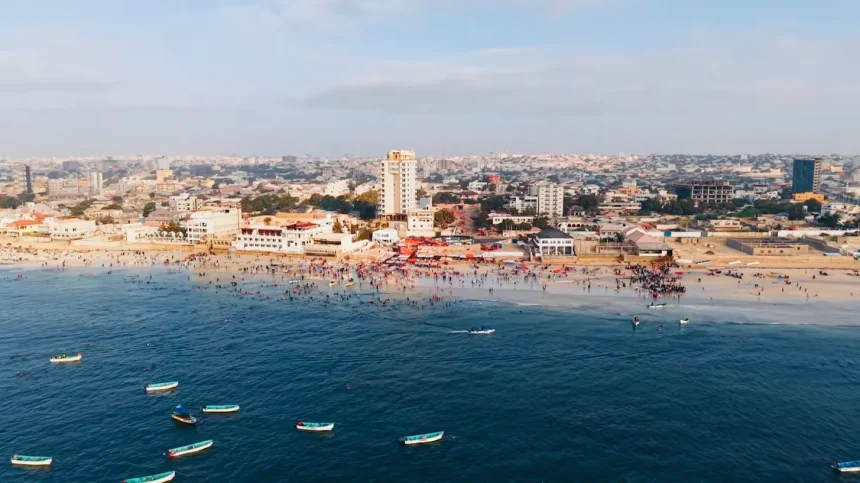
The café stood quietly along Mogadishu’s Lido Beach, its lights reflecting against the dark surface of the Indian Ocean. Groups of young Somalis sat around small tables, drinking coffee, scrolling through their phones, talking about business, politics, and football, everything and nothing. The city, despite the late hour, was fully awake.
At the next table sat two foreign visitors. They had arrived in Mogadishu days earlier, not as aid workers, as it is used to be, but simply to see the city for themselves. They ordered cappuccino. They watched the ocean. They watched the people. They looked surprised.
“It feels normal,” one of them said quietly.
Their words transported me back to another midnight, ten years earlier.
I had just landed in Turkey after a long and exhausting journey out of Mogadishu. It was around 2:00 a.m. I was tired and disoriented. The aircraft had crossed over unfamiliar landscapes, and I had stepped into a world I had only imagined before. From the airport, I traveled toward Gebze, a district merely outside Istanbul, passing through the cold darkness of an unfamiliar country to me at the time.
The driver stopped near the E-5 (D-100 state) highway, in a place called ArapÇeşme Mahallesi. It was freezing. The streets were quiet. Yet there, beside the highway, stood a brightly lit restaurant, open at that late hour. Inside, people were eating calmly. Workers, travelers, ordinary citizens, living their lives without interruption. It was such a simple moment, yet it struck me deeply. This was what stability looked like. This was what normal life felt like. A place where midnight did not mean danger. A place where life did not stop.
At the time, it felt distant from Mogadishu.
But sitting at that café in Mogadishu’s Lido Beach years later, watching foreign visitors drink coffee at midnight, I realized something profound.
That distance had disappeared.
Mogadishu today breathes with the same quiet confidence I once observed elsewehere. The most powerful sign of its recovery is not found in western media outlets or reports of development agencies. It is found in ordinary moments. In cafés open at midnight. In families walking along the beach. In businesses operating without fear.
Improved security has made this possible. Over the past several years, sustained security efforts have restored public confidence across the capital. Major roads remain active long after sunset. Commercial districts operate deep into the night. Public spaces, once empty after dark, are filled again with life.
Security does not simply prevent violence. It enables normalcy. It allows economies to function, and societies to breathe.
Economic transformation has followed naturally. Mogadishu’s commercial markets are expanding. Construction cranes rise across the skyline. New apartment buildings, offices, and hotels signal growing investor confidence. Mobile money systems power everyday transactions, allowing seamless financial activity across all sectors of society.
The Somali diaspora has played a decisive role in this transformation. Many who once left in search of stability are now returning, bringing investment, expertise, and vision. They establish businesses, universities, hospitals, and tech ventures. They invest not out of nostalgia alone, but because they see opportunity.
The airport itself tells the story. Flights now connect Mogadishu directly to global cities. Each arrival brings visitors, investors, and returning citizens. Each departure carries a new image of Somalia back into the world. The tears of that Somali youtuber who returned back to his neighborhood 25 years later, was hiding true happiness behind it.
Social life has evolved alongside economic growth. Young Somalis gather in coffee shops, collaborate in co-working spaces, and build businesses and ventures that did not exist a decade ago. A generation shaped by hardship is now shaping recovery through entreprenuership.
That night at Lido Beach, the foreign visitors finished their coffee. They looked relaxed, comfortable, and curious. They were experiencing Mogadishu not as a symbol of conflict, but as a living city.
Cities rise not only through infrastructure, but through confidence. They rise when people believe in their future. They rise when midnight becomes just another hour, not a boundary between safety and fear.
Mogadishu has reached that moment.
And for those of us who remember what it once was, and what it now is, the change is unmistakable.
A moment of salute to our securitiy forces for enabling such environment.
By Abdulkarim Abdulle, a Researcher