Education
Students, Civil Servants, and the Quiet Rebuilding of Somali Expertise
The scholarships get the photographs. The quieter programme of professional training now moving through one Somali ministry after another may be doing the more immediate work, and together they are rebuilding something the war took away.
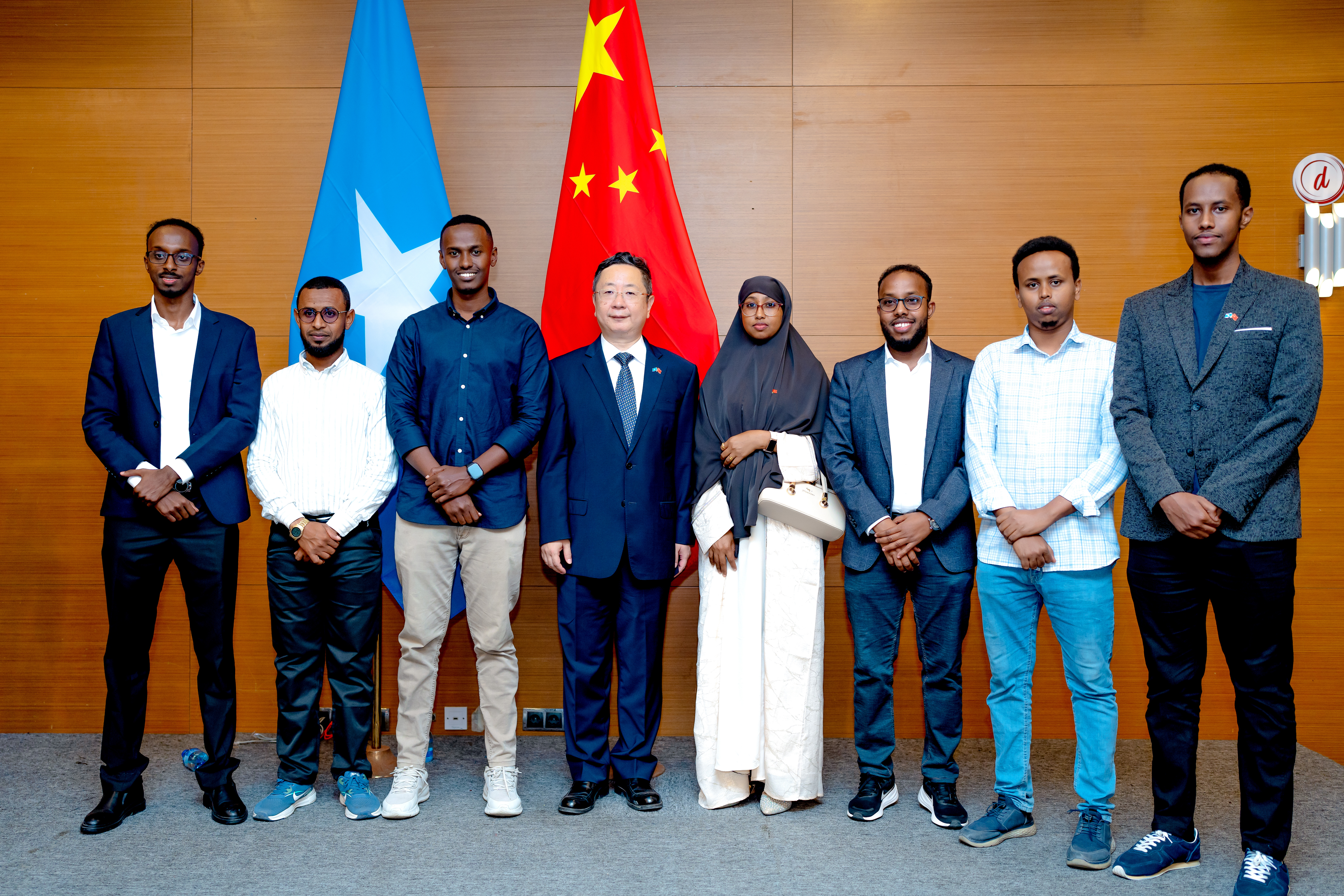
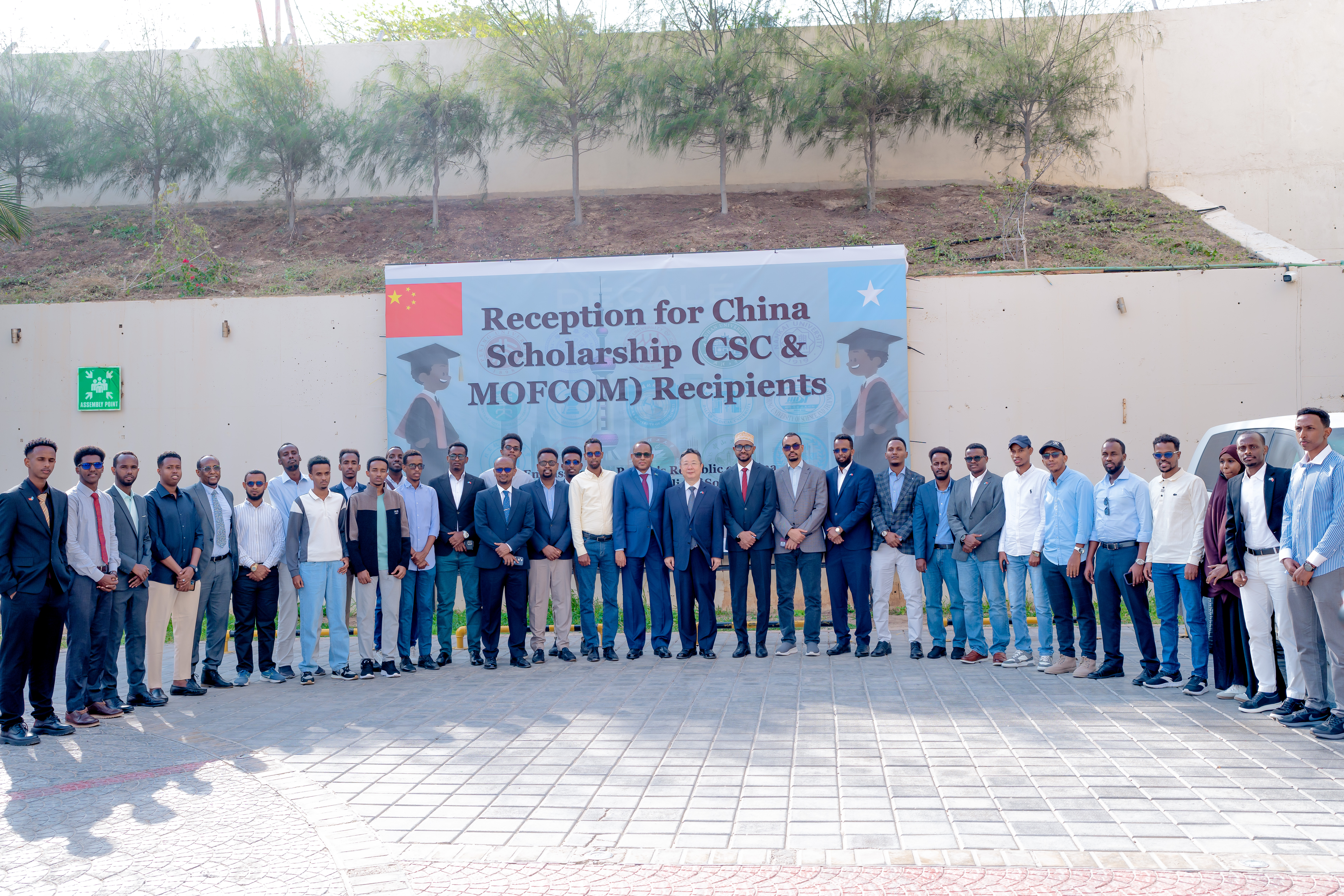
MOGADISHU (SONNA). On Sunday afternoon a group of young Somalis will gather in a conference hall at the Amara Hotel to be told, formally and in front of witnesses, that they have been selected. For many of them it will be the most significant afternoon of their lives so far. Somewhere in that room will be a young woman who applied without telling anyone in case it came to nothing, and a young man whose family sold something to keep him in school long enough to qualify. They have been waiting for this confirmation for months. When it comes, it will change the shape of everything that follows.
There will be photographs, and speeches from officials of two governments, and parents who came to watch. Then the students will go home to pack. Within weeks most of them will be walking into lecture theatres in cities they have never seen, beginning the work that this afternoon made possible.
These ceremonies have become annual enough that it is easy to walk past them. The numbers, though, deserve a second look. In the 2015 to 2016 academic year, twenty Somali students received Chinese government scholarships. By 2018 the figure was forty seven. In 2023 it was forty two. In November 2024, at a ceremony at the National University of Mogadishu, the Minister of State for Education and Higher Education and the Chinese Ambassador signed the China Somalia Friendship Scholarship, opening fifty places for students from the capital. Last year the total reached nearly seventy, drawn from the China Scholarship Council and the Ministry of Commerce programmes, the highest number of Somali students ever selected. This year's figure will be announced on Sunday afternoon.
Across a decade the annual intake has more than tripled. That is a considerable thing, and it is worth pausing over.
One practical point is worth stating, because it is widely misunderstood in Somalia and it deters applicants who should be applying. Instruction on these programmes is delivered in English. A student who wishes to study in Chinese may choose to, and many do, since the language is an asset in its own right. But it is not a precondition. The barrier to a Chinese scholarship is academic merit, not fluency in Mandarin, and any bright Somali graduate who has been discouraged by the assumption that it is should reconsider.
It is also only half the picture, and the half that receives the least attention is arguably doing the more immediate work.
Alongside the degree scholarships, China runs a continuous programme of short professional training for Somali government institutions. These are not four year commitments. They run for a week, a fortnight, sometimes a month, and they are aimed squarely at people already holding posts. The Ministry of Information is the most recent participant, with a group of twenty staff shortly to travel for human resource training. Before that it was the Ministry of Trade. Before that the Office of the Prime Minister. Before that the Somali Disaster Management Agency. The rotation has been running quietly for years, moving through ministry after ministry, agency after agency.
Set the two programmes side by side and something rather elegant appears.
The scholarships build expertise the country does not yet have, over a horizon of four or five years. The short courses sharpen expertise the country already has, and return it to the desk it came from within weeks. A young graduate sent to Beijing for a doctorate is an investment whose return arrives late. A procurement officer sent for three weeks comes back to the same office, with the same colleagues, and applies what she learned on the following Monday. Neither substitutes for the other. Together they address the same problem from opposite ends.
To see why that problem is so stubborn, it is necessary to be honest about what happened to Somali education, and the honesty is uncomfortable before it is encouraging.
Before 1991 Somalia had one state university in Mogadishu and a functioning, if modest, public system beneath it. The collapse destroyed both. What is less often stated is the human cost. Studies of the period estimate that more than eighty per cent of the country's educated class left. They did not leave their qualifications behind. They took with them the accumulated experience of people who knew how to run a ministry, design a curriculum, supervise a thesis, manage a laboratory, audit a budget. A country can rebuild a lecture hall in eighteen months. Replacing the person who knows how to teach in it takes a generation.
What filled that vacuum deserves real admiration. Somali educators, business people and community organisations built universities from nothing, in a country that offered them no funding, no security and no regulatory framework to work within. Mogadishu University, the Indian Ocean University and SIMAD University were founded in the late 1990s and early 2000s, at a time when no government was capable of providing the service. They trained much of the professional workforce that now staffs Somali institutions, including a good many of the officials who will be in the room on Sunday. That achievement stands on its own, and nothing that follows diminishes it.
But the model has structural limits, and they are honest limits rather than failures of effort.
Almost every Somali institution depends on student fees as its primary income. An institution funded entirely by tuition must teach, because teaching is what students pay for. It cannot easily afford to do much else. The consequence shows in the research record. A comprehensive survey of Somali higher education institutions found that only fifteen out of forty four reported any engagement in academic publishing at all, and none reported significant research activity.
That finding is the crux of the matter, and it is not a reproach. Somalia is producing graduates. It is not yet producing knowledge. Those are different things, and the difference determines whether a country can diagnose its own problems.
I have watched this at close range, and one recent example has stayed with me. Each year, in the run up to World Kiswahili Day, university students across the East African Community are invited to submit research papers on a set theme. The theme this year was the impact of artificial intelligence on the preservation of indigenous languages, a subject that is contemporary, genuinely open, and squarely within the interests of any curious undergraduate.
From the other Partner States the submissions arrived in the hundreds. Selection committees had the pleasant difficulty of reading through more good work than they could shortlist. From Somalia, last year, there was not a single submission. This year there were two, both from SIMAD University, and SIMAD deserves credit for being the institution that produced them. Only South Sudan, in a comparable position for comparable reasons, was in the same situation.
It would be easy and quite wrong to read that as a comment on Somali students. They are not less capable than their counterparts in Kampala or Dar es Salaam, and anyone who has taught in Mogadishu knows it. The difference is that a student in Nairobi has a supervisor whose job includes supervising, a department that treats a call for papers as something the institution responds to, and someone senior who will read a draft and send it back covered in corrections. That machinery is what turns a bright student into a submitted paper. Somalia has the students. It is still building the machinery.
A graduate has been taught what is known. A researcher has been trained to establish what is not yet known, which is a different intellectual operation altogether. It requires learning to distrust a claim until it has been tested, to design a method that could prove you wrong, to sit with a question for years without a satisfying answer, and to accept correction from evidence rather than from seniority. These habits are not acquired from textbooks. They are acquired by apprenticeship, from people who already have them, in institutions built to sustain them. Somalia has few such places yet, through no fault of the people running them.
This is what a scholarship abroad actually transfers, and it is why the degree certificate is the least valuable thing in the envelope.
A Somali student who spends four years in a Chinese engineering faculty does not simply learn engineering. She learns what a properly equipped laboratory looks like and what it costs to run. She discovers what a research supervisor does, how a literature review is built, why a result is checked before it is announced, and what happens to a claim that cannot be reproduced. She encounters a functioning academic bureaucracy, with admissions that run on time, examinations marked to a standard, and a library that catalogues its holdings. None of this appears on the syllabus. All of it is absorbed. And all of it is knowledge about how institutions work, which is precisely the knowledge Somalia is shortest of.
The short courses transfer the same thing in compressed form. A civil servant who spends three weeks inside a Chinese ministry observing how files move, how decisions are recorded, how a personnel system is actually administered, brings back something no manual conveys. This is why the human resource training now being arranged for the Ministry of Information matters more than its modest scale suggests. Human resource management is unglamorous. It is also the machinery by which an institution recruits on merit, retains the people it has trained, and remembers what it learned after the individuals who learned it have moved on. Institutional memory is not an abstraction. It is a filing system, a personnel policy and a handover procedure, and somebody has to know how to build them.
There is a further reason the Chinese destination carries particular weight, and it is not a diplomatic courtesy to say so.
Somali students who study in Europe or North America encounter systems whose development is essentially invisible to them. The laboratories were built before their grandparents were born. The institutional habits are centuries deep. It is difficult to learn how a thing was made when it appears to have always existed. China is different, and the difference is instructive. Within the working lifetime of people the students will meet, China moved from a largely rural economy to the position it now holds in manufacturing, infrastructure, telecommunications and applied research. The students will meet professors who remember the earlier period. They will study in institutions whose founding documents are more recent than Somalia's independence.
That proximity matters because it makes the process legible. A Somali student in Shenzhen or Wuhan is not looking at an unreachable outcome. She is looking at a sequence of decisions taken within living memory, some of which worked, some of which did not, all of which can be examined. She can ask what was done first, what was sequenced afterwards, what was set aside, and what turned out to have been a mistake. For a young person from a country at Somalia's stage, that is a far more useful education than admiring a finished system from the outside.
It should be said clearly that this is where the critical faculty becomes essential rather than decorative. A student who returns having concluded that Somalia should simply do what China did will have missed the opportunity. The conditions are not comparable. Somalia's population, geography, federal structure, social fabric, security situation and external relationships are entirely its own, and any policy imported without adaptation will fail in ways that were predictable from the start. The value of foreign study is not the model. It is the analytical equipment, which the returning graduate then points at Somali conditions and applies to Somali questions that no foreign faculty ever thought to ask.
Somalia's most serious problems are, at root, problems of analysis. Why does revenue collection succeed in one district and fail in the next? Which livestock export interventions actually raise pastoralist income, and which merely enrich intermediaries? What is the real cost structure of electricity in Mogadishu, and what would change it? Why do some reconciliation processes hold while others collapse within a year? These are researchable questions, and at present they are answered largely by visiting consultants who arrive without the language, leave before the follow up, and produce documents describing Somalia to readers who are not Somali. A Somali research capacity would answer them differently, and better, because it would begin from inside the problem rather than outside it.
It is often assumed that the risk in all of this is that the students will not come back. On the evidence, that assumption is simply wrong. They do come back. They finish their degrees and they return home, and they arrive with qualifications the country could not have given them.
The real question begins the day after they land, and it is a harder one. Will the skill be used? A hydrologist returns to a country with an acute water problem and no hydrological service to join. An agricultural scientist returns to a ministry that has no research budget and no laboratory. A structural engineer returns and finds that the work available is supervising the same construction methods she was sent away to improve upon. Nothing has been stolen from Somalia in these cases. Something has simply been left on the shelf.
That is when people begin to leave, and it is a second departure rather than a failure to return. A graduate who spends two years at home unable to practice what she trained for, watching a qualification lose its currency, eventually takes the offer from Nairobi or Doha or anywhere their skill is usefull. By then the country has already paid the cost of her absence and received almost none of the benefit of her presence. The loss is not that Somali students go abroad. It is that Somalia brings them home and then gives them nothing to do.
The answer to that is not persuasion, and it is certainly not lecturing young people about patriotism. It is construction, and the encouraging thing is that construction has started.
The reconstruction of the Somali National University's Gaheyr Centre, launched in April this year, is the first serious public commitment to public higher education in a generation. The university's cooperation agreement with the University of Rwanda, signed in June, points toward the regional academic integration that Somalia's accession to the East African Community makes both possible and natural. Every ministry that sends staff for training becomes a slightly better place for a qualified person to work in, which is exactly the condition under which graduates return. The two programmes reinforce one another. The short courses are building the destination that the scholarships will eventually send people back to.
What would make the whole arrangement work better does not require anyone to give more. It requires planning to catch up with generosity. Which fields does the country most need, and are the scholarship places aligned to them? Is anyone tracking where the graduates go and what they do afterwards? Are there posts waiting for the ones who return? Is there a way for those who remain abroad to supervise Somali students, co-author with Somali institutions or teach remotely, so that distance becomes a network rather than a loss? None of these questions requires Chinese action. All of them are within Somali hands, and none of them is difficult.
On Sunday afternoon those students will hear their names read out, and for each of them it will be a door opening onto a life that looked out of reach a year ago. Somewhere in that room is a young person who in fifteen years will be running a Somali institution rather well. That is what these ceremonies are for, and it is worth every minute of the speeches.
In four or five years they will come home with skills this country has been missing since 1991. They will come home. That much is not in doubt. The task between now and then belongs to the rest of us, and it is to make sure that when they walk back through the airport, there is work waiting that is worth the years they spent preparing for it. On present evidence, that building has begun.
About the author
Abdiqani Abdullahi Ahmed is Senior Advisor for Communication and Analysis at Somalia's Ministry of Information, Culture and Tourism. He is Somalia's national focal point to the East African Kiswahili Commission, a juror for the IGAD Media Awards, and lead facilitator of the IGAD Youth Peace and Security Series. He writes here in a personal capacity.