Local News
Mogadishu and Muscat are connected again after more than thirty years
SalamAir of Oman has begun flights into Aden Adde, the tenth airline now serving the country, and the Transport Minister used the occasion to ask Somali business people why their assets are in Nairobi and Cairo rather than at home.
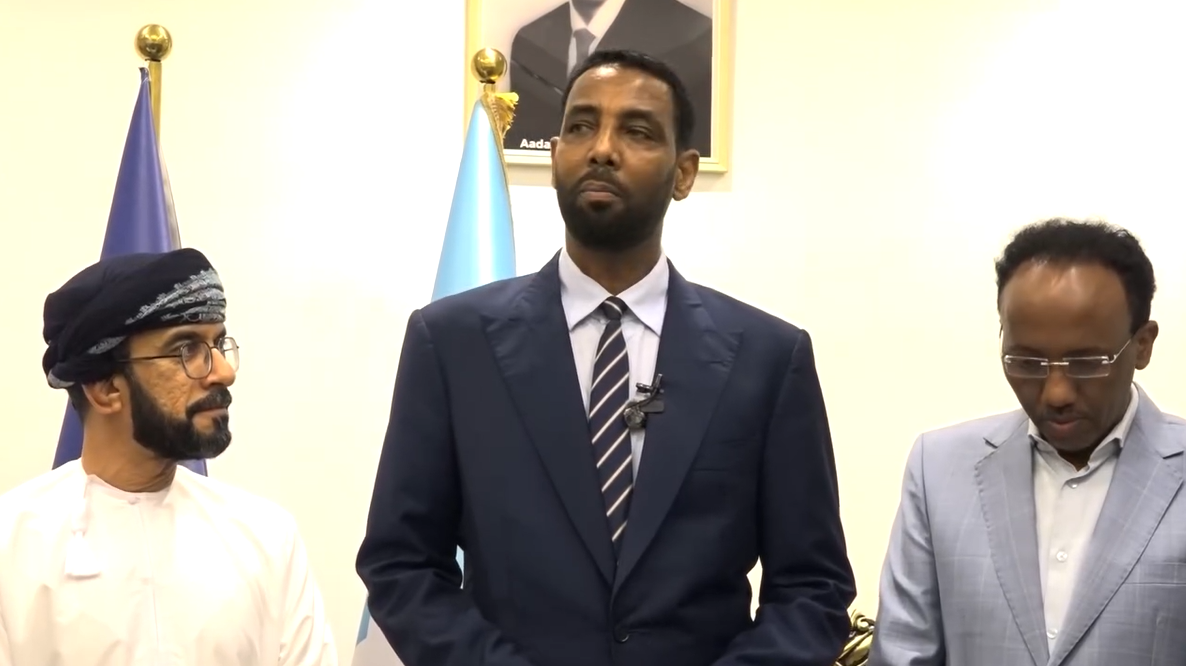
MOGADISHU (SONNA): The Omani carrier SalamAir has begun flights between Mogadishu and Muscat, restoring a direct connection between the two capitals after a gap of more than three decades.
The inaugural flight was marked at Aden Adde International Airport by the Minister of Transport and Civil Aviation, Mohamed Farah Nuh, with the Omani Ambassador to Somalia, the airline’s management, its crew and captain, officials of the airport operator and Somali business figures present.
The Minister said the Ministry is working to secure further air services and connecting flights, so that Somalis can travel more easily and at fares they can afford. He said around ten airlines now serve the country and others are expected, and attributed their arrival to the improvement in security and stability and to the laws passed by parliament, which he said have given companies the confidence to come.
An air route is a narrow thing to celebrate and a revealing one. Airlines do not open destinations as a favour. They open them when they calculate that enough people will pay to fly a route to cover the cost of flying it, and that the airport at the far end can handle the aircraft safely. A carrier from the Gulf scheduling Mogadishu is making a commercial judgement about Somalia, and it is doing so alongside nine others.
Oman is a natural destination for the route. It sits at the mouth of the Gulf on the shipping lanes Somali exports already use, and the two countries face each other across the Arabian Sea. The Minister said relations between them go back centuries, and described the reopening of the route as the resumption of something interrupted rather than the creation of something new.
The more pointed part of his remarks was addressed to the Somalis in the room. He said Somali business people have built substantial assets in Nairobi, in Egypt and in Türkiye, while their land, their security and their futures remain in Somalia. If the world is prepared to invest in the country, he said, Somalis should be prepared to invest in it themselves, and their money is safer at home than they suppose.
That argument has now been made by four ministers in six weeks. The Deputy Prime Minister told a trade forum in August that Somali capital has stayed out of productive sectors and that the country exports almost entirely raw commodities. The Minister of Fisheries and Blue Economy has pressed investors to enter a sector he describes as underdeveloped. The Minister of Agriculture and Irrigation put the Ministry’s own figures to a forum this month, arguing that a million dollars in a farm returns more than five million in an apartment block. The Transport Minister has now put the same case to the aviation and trade audience at an airport.
The consistency is the point. What the government is describing is a domestic capital market that has functioned for thirty years by placing Somali money outside Somalia, and an effort to change where that money goes. Whether it changes will be visible in what gets built rather than in what is said at launches.
For the airport itself the route is a further step in a steady recovery. Aden Adde has been rebuilding its schedule over the past decade, and the Minister’s figure of around ten carriers marks a return to a level of international service the airport has not seen in a generation.
The Minister said the Ministry expects further carriers to follow, including from larger countries, and that agreements with airlines already operating in Somalia will be renewed. On the evidence of the past year, the direction is set.