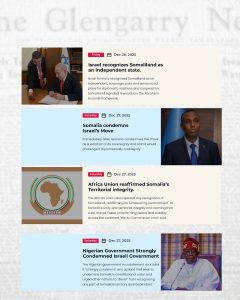
MOGADISHU, Somalia – What began late Friday as a unilateral declaration by Israeli Prime Minister Benjamin Netanyahu formally recognizing the Somaliland region as a sovereign state, has rapidly metastasized into one of the most significant diplomatic defeats for Tel Aviv in the Horn of Africa. By Monday morning, the Federal Republic of Somalia had secured a decisive diplomatic victory, effectively isolating the recognition attempt behind a firewall of global condemnation that stretches from Washington to Beijing, and from the African Union to the Arab League.
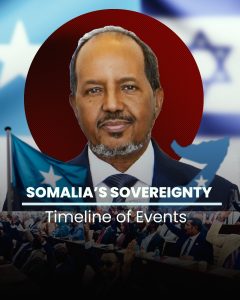
The crisis erupted on December 26, when the Israeli leadership announced the move, triggering an immediate and furious response from Mogadishu. The Federal Government of Somalia, led by President Hassan Sheikh Mohamud, characterized the action not merely as a diplomatic breach but as a “naked invasion” of the nation’s sovereignty. This fierce domestic rejection served as the catalyst for an unprecedented mobilization of international support, as the world’s major political and security organizations moved in lockstep to defend the territorial integrity of the Federal Republic.
A United Front of Global Organizations
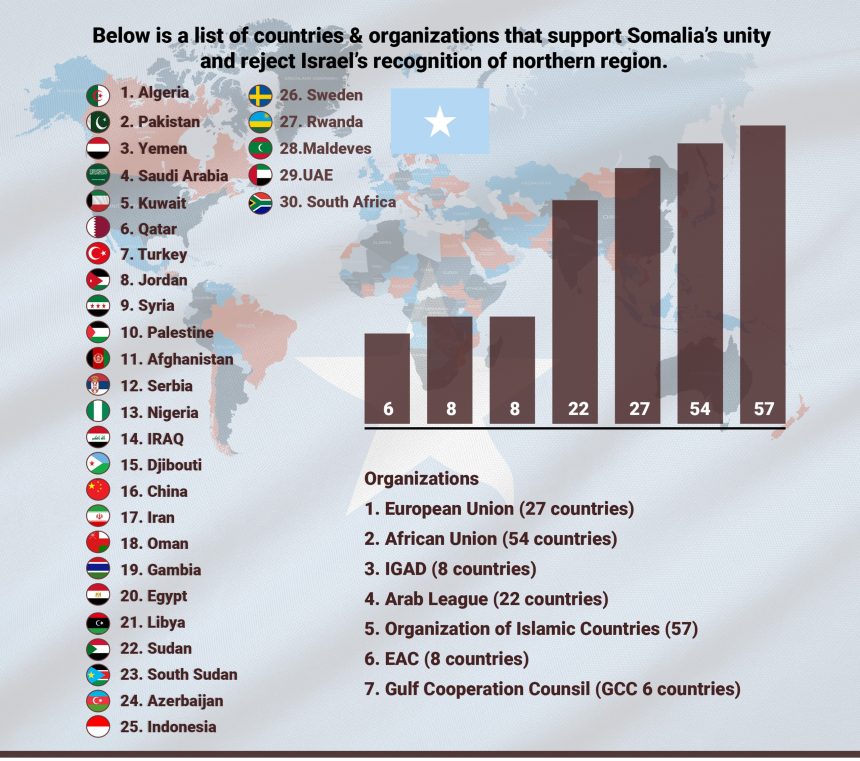
In a rare display of geopolitical consensus, every major regional and continental organization with a stake in African and Arab stability has rejected the Israeli move. The African Union (AU) led the charge, with Commission Chairperson H.E. Mahmoud Ali Youssouf warning that recognizing the breakaway region sets a “dangerous precedent” violating the Constitutive Act of the Union. His sentiments were mirrored by the European Union (EU), where member states like Sweden aligned their positions with Brussels to uphold the principles of Somalia’s unity.
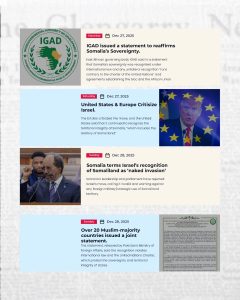
The condemnation from the Arab and Islamic worlds was equally absolute. The League of Arab States and the Organization of Islamic Cooperation (OIC) issued scathing rebukes, with Arab League Secretary-General Ahmed Aboul Gheit terming the move “provocative.” The Gulf Cooperation Council (GCC) Secretary General, Jasem Mohamed Albudaiwi, described the recognition as a “dangerous transgression” against international law. This unified stance was bolstered by the Intergovernmental Authority on Development (IGAD), which declared that any unilateral recognition violates the agreement establishing the bloc and threatens the fragile peace of the Horn of Africa.
Adding a critical legislative dimension to the backlash, the Arab Inter-Parliamentary Union (AIPU), headquartered in Beirut, convened to declare the Israeli move a direct threat to “Arab National Security.” In a statement issued by AIPU President Ibrahim Boughali, the body emphasized that the security of Somalia is inextricably linked to the broader stability of the Arab world, warning that external attempts to fragment an Arab state would face coordinated legislative opposition across the region.
World Powers Weigh In
The diplomatic isolation of the recognition attempt was sealed by the intervention of global superpowers. In a significant blow to the momentum of the deal, U.S. President Donald Trump publicly dismissed the idea of American participation. Speaking in an interview on Friday, Trump bluntly stated he would “Just say, ‘No’” to following Israel’s lead, questioning the strategic value of the region and affirming that Washington’s priority remains Middle East stability rather than opening new fronts in East Africa.
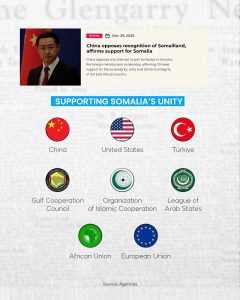
Simultaneously, the People’s Republic of China issued a statement of “grave concern” on Monday. Foreign Ministry Spokesperson Lin Jian defined Somaliland as an “inalienable part of Somalia,” warning external powers against using separatism to sow discord. Beijing’s intervention highlights the strategic stakes, as both Eastern and Western powers view the fragmentation of Somalia as a risk to global maritime security.
The Domestic and Regional Climax
The diplomatic crisis reached its crescendo on Sunday, December 28, when the Somali Federal Parliament convened a historic Extraordinary Joint Session. In a unanimous vote, lawmakers passed a resolution declaring the Israeli recognition “null and void” and devoid of any legal effect. Addressing the session, President Hassan Sheikh Mohamud delivered a stinging condemnation, describing the move as the “greatest violation” of Somali statehood in recent history and vowing that the nation would never accept the partitioning of its land.
This resolve was mirrored on the streets. Massive demonstrations erupted in Mogadishu and the northern city of Borama, where thousands of youth—dubbing themselves “Team Waraf”—marched with Palestinian and Somali flags. The protests in Awdal region were particularly significant, challenging the narrative of a unified northern desire for secession. Minister of Public Works H.E. Ayuub Ismail Yusuf, a native of the northern regions, amplified this sentiment, fiercely rejecting the “partnership” and calling for national unity.
Security Implications
The fallout has also taken on a dangerous security dimension. The Houthi group in Yemen issued a severe warning, threatening to treat any Israeli presence in the Somaliland region as a legitimate “military target.” This escalation shows the warnings issued by the OIC and the Arab League: that tampering with Somalia’s borders could ignite a broader conflict in the strategic Red Sea corridor.
As the week begins, the diplomatic landscape is clear. Despite the initial shock of the announcement, the Federal Republic of Somalia has successfully mobilized the African Union, the Arab League, the OIC, the EU, IGAD, the GCC, and the East African Community (EAC) into a single coalition. With the backing of both the U.S. and China, Mogadishu has effectively neutralized the diplomatic impact of the move, reaffirming that the world recognizes only one united Somalia.