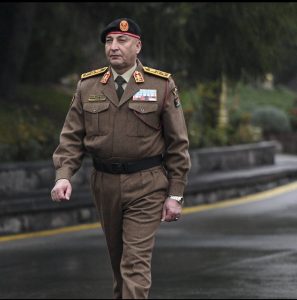
ANKARA, Turkey – The Chief of General Staff of the Libyan Army, Lieutenant General Muhammad Ali Ahmed Al-Haddad, was killed on Tuesday evening along with four other senior military officials when their private aircraft crashed in a rural district south of the Turkish capital. The disaster has claimed the lives of the entire high-ranking delegation, dealing a severe blow to the command structure of the Tripoli-based Government of National Unity (GNU) at a critical juncture in the nation’s security transition.
The tragic incident occurred shortly after the delegation had concluded a strategic one-day visit to Ankara, where they had engaged in high-level defense consultations with Turkish counterparts. The Dassault Falcon 50 business jet, carrying the General and his entourage, departed from Ankara’s Esenboga Airport at approximately 8:10 PM local time, bound for Mitiga International Airport in Tripoli. According to the Turkish Interior Ministry, air traffic control lost contact with the aircraft roughly 40 minutes into the flight after the crew reported a critical electrical malfunction and requested an immediate emergency landing.
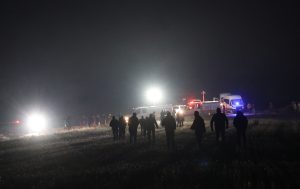
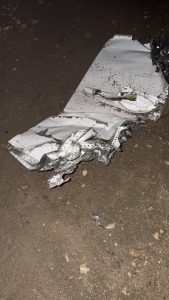
Turkish search and rescue teams, deployed rapidly to the last known coordinates, located the wreckage near the village of Kesikkavak in the Haymana district, about 70 kilometers south of Ankara. Authorities confirmed that there were no survivors among the eight people on board, which included three crew members.
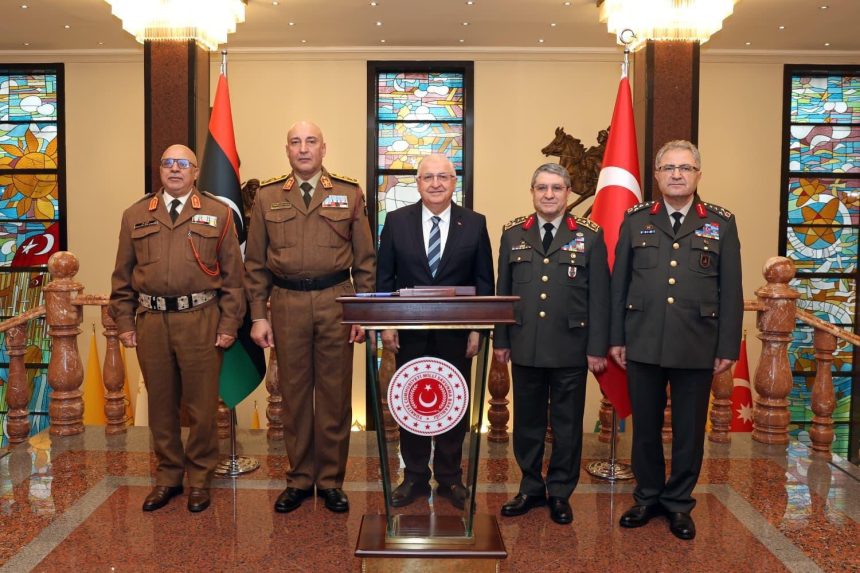
The crash has eliminated a significant portion of the Libyan military’s upper echelon in a single event. Alongside Lieutenant General Al-Haddad, the fatalities include General Al-Fitouri Ghraibil, the Commander of the Ground Forces; Brigadier General Mahmoud Al-Qatawi, the Director of the Military Manufacturing Authority; Mohammed Al-Asawi Diab, a senior advisor to the Chief of Staff; and Mohammed Omar Ahmed Mahjoub, a military photographer documenting the mission.
Libyan Prime Minister Abdul Hamid Dbeibah officially confirmed the deaths in a somber televised statement, declaring three days of national mourning beginning immediately. Flags across the North African nation have been lowered to half-mast as the government grapples with the sudden vacuum in its defense leadership. “This is a profound tragedy and a heavy loss for our nation and its military institution,” the Prime Minister stated, eulogizing Al-Haddad as a dedicated patriot who worked tirelessly to unify the country’s fragmented security apparatus.
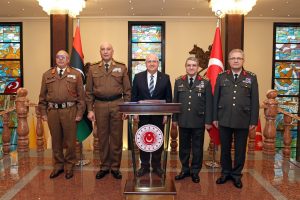
The timing of the disaster adds a layer of geopolitical sensitivity to the tragedy. The crash occurred just 24 hours after the Turkish Parliament voted to extend the mandate of Turkish military forces in Libya for an additional two years, reinforcing the deep strategic alliance between Ankara and the Tripoli government. General Al-Haddad had spent his final hours in meetings with Turkish Defense Minister Yasar Guler and Chief of General Staff General Selçuk Bayraktaroğlu, discussing the implementation of training agreements and the coordination of joint security initiatives.
Turkish Justice Minister Yilmaz Tunc announced that the Ankara Chief Public Prosecutor’s Office has launched a comprehensive investigation into the cause of the crash. Preliminary data suggests a catastrophic technical failure, as evidenced by the distress call regarding the electrical system, but investigators are methodically examining the debris field and flight data recorders to rule out all other possibilities. A specialized committee from Libya is scheduled to arrive in Ankara to participate in the joint inquiry and oversee the repatriation of the remains.
This aviation disaster leaves a complex void in Libya’s security landscape. Lieutenant General Al-Haddad was widely regarded as a stabilizing figure and a key interlocutor in the United Nations-brokered efforts to integrate the country’s rival military factions. His death, alongside the commanders of the ground forces and military manufacturing, necessitates an immediate and difficult reorganization of the Libyan Army’s command structure during a period of delicate political maneuvering.