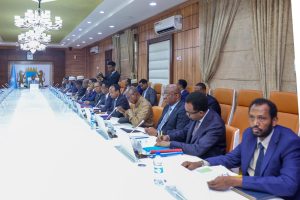
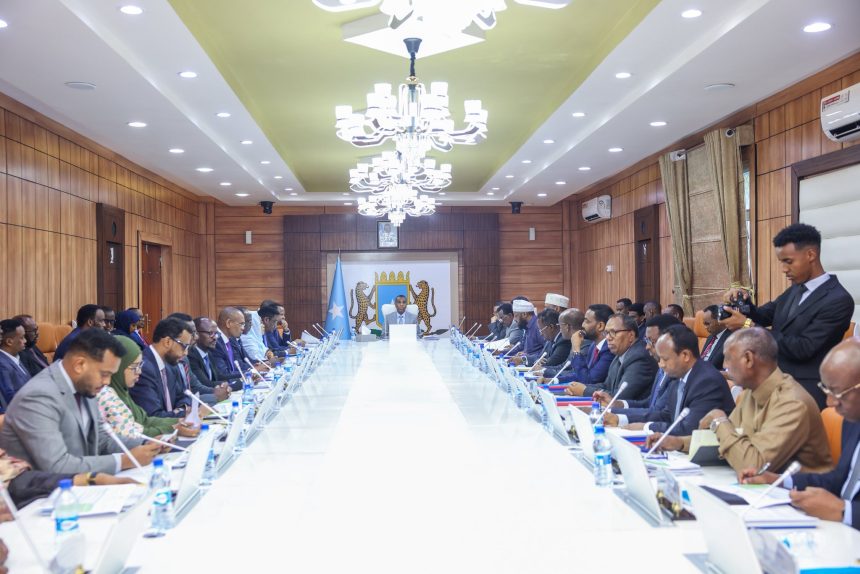
MOGADISHU, Somalia – The Council of Ministers of the Federal Government of Somalia held its weekly meeting today, chaired by Prime Minister H.E. Hamza Abdi Barre, passing a series of transformative legislative bills and international agreements critical to the nation’s legal and environmental framework.
In a landmark decision, the Cabinet approved the Somali Penal Code Bill. This comprehensive revision comes after extensive consultations with Islamic scholars, civil society organizations, and legal experts to ensure the new code aligns with Islamic Sharia law, the national Constitution, and international human rights standards. The modernization of the penal code represents a significant step forward in strengthening the rule of law and updating the country’s justice system.
Addressing the urgent challenges posed by climate change and environmental degradation, the Council also passed the Bill establishing the National Environmental Management Agency. This new body will be the first of its kind in the country’s history, tasked with regulating environmental protection and combating the severe deforestation and climate shocks affecting Somalia.
Expanding on international cooperation and maritime safety, the Ministers ratified three key agreements:
-
A Memorandum of Understanding (MoU) with Algeria: Focusing on cooperation in the petroleum, gas, and mining sectors.
-
The International Convention on Maritime Search and Rescue (SAR Convention 1979): Enhancing Somalia’s capacity to coordinate rescue operations at sea.
-
The Geneva Conventions Additional Protocols of 12 August 1949: Strengthening Somalia’s commitment to international humanitarian law.
The session also included briefings on national security progress and the ongoing preparations for elections.
Concluding the meeting, Prime Minister Hamza Abdi Barre issued a directive regarding internal stability. He instructed the Cabinet to actively support mediation and peacebuilding efforts to resolve inter-clan conflicts occurring in parts of the country, specifically assigning the Ministry of Interior with the primary responsibility for leading these reconciliation initiatives.