Deputy Speaker of Shura Council Meets First Vice-President of Hellenic Parliament in AthensFLASH: Major developments in regional trade agreements announced in Mogadishu...Sitrep: Security council meets to discuss maritime safety in the Gulf of Aden...Deputy Speaker of Shura Council Meets First Vice-President of Hellenic Parliament in AthensFLASH: Major developments in regional trade agreements announced in Mogadishu...Sitrep: Security council meets to discuss maritime safety in the Gulf of Aden...
COUNTERING THE DANGEROUS IDEOLOGY OF PM ABIY AHMED
By Osman9 min readvisibility12
COUNTERING THE DANGEROUS IDEOLOGY OF PM ABIY AHMED — SONNA
Prime Minister Abiy Ahmed of Ethiopia shattered the hope for peace and prosperity for the people in the Horn of Africa. After being renowned as a peacemaker and a winner of the Nobel Prize, he has been entangled in a conflict with the Amhara and Oromo ethnic groups. Concurrently, he expresses a desire for a renewed war against Eritrea. For the last six months, he consistently articulated that the land-locked Ethiopia needs sea access through diplomacy or force. His public discourse extols populism in disguise of the greatness of Ethiopia, often underscored by any means’ occupation of strategic ports at the Red Sea. Notably, the PM’s frequent proclamations, echoed by his generals stating, “We are preparing for a new war,” suggest a deliberate effort by the Abiy regime to ready its people for a looming conflict.
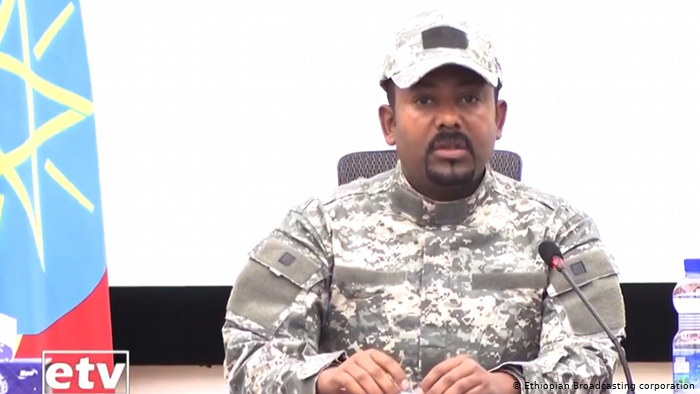
Prime Minister Abiy Ahmed
This rhetoric conveys a dangerous ideology and a conviction that victory over Somalia, Eritrea, and other Ethnic communities in Ethiopia is achievable and is vital to resolving Ethiopia’s complex crisis. As stated by Prof. Mohamed Hassan, Ethiopia’s socioeconomic and political conditions are under great stress. For instance, 70% of Amhara and Oromo lands are out of his hands; the economy is a shamble, unemployment and poverty are rising, and the Tegre crisis is unresolved. The prevailing ideology within the Abiy regime seems to be that a military confrontation is inevitable. Abiy continues the politics of exclusion and domination of one ethnic group, which is a political culture of Ethiopia that has repeatedly failed. He does not believe in a democratic Ethiopia. Thus, there is no doubt that Abiy’s ideology of Oromumma based on Oromo domination in Ethiopia and the Horn of Africa at large will meet the same failure.
According to his grand strategy, Abiy Ahmed initially set his sights on the strategic port of Assab in Eritrea, a seaport of significant historical importance for Ethiopia until Eritrea achieved independence in 1993. However, the military strength of Eritrea dissuaded him from a new military adventure against Eritrea, and he began to look for an accessible alternative. He thought the vulnerability and divisions among Somalis would enable him to reach his dreams by signing a MoU with Muse Bihi, desperate for recognition. Indeed, he miscalculated the strength of the Somali people and their nationalistic fervor. The dream of Abiy caused the bell to ring in Mogadishu about the potential Ethiopian plan to annex a corridor between Zeila and Lughaye in Somaliland. The undesignated area is said to be near Zeila, the historic town adjacent to Djibouti, located in the region of Awdal. It is the closest link to the Ethiopian border with Somaliland, ranging from 60 to 80 km. This region is primarily the habitat of the Gadabursi and Isse clans, settled across the Somaliland and Ethiopian border areas.
Abiy Ahmed and Muse Bihi signed a Memorandum of Understanding (MoU) that provides Ethiopia with a 20-kilometer corridor to the Red Sea, complete with the construction of a commercial port and a base for the Ethiopian navy. In exchange, Ethiopia will support Somaliland in getting recognition and giving shares from the Ethiopian airlines. The MoU addresses the dream of two peoples; for Ethiopia, it is a seaport, and Somaliland, it is a recognition. As a result, opposition to the two regimes has been silenced or forced to support the MoU. This MoU has become a focal point of regional tensions, raising concerns in the Red Sea basin countries like Eritrea, Djibouti, Sudan, Egypt, Saudi Arabia, and Yemen. The geopolitical ramifications extend beyond immediate borders, reverberating a ripple effect across the broader international community. The Horn of Africa coast is a connecting waterway of the Indian Ocean, the Red Sea, and the Mediterranean Sea linked through the Suez Canal and a hub for global trade. The dangerous implication was expressed by the international media outlets, which alerted the emergence of renewed conflict in the region and its potential impact on the world economy. The effects of such an MoU have sparked widespread discussions and debates, contributing to heightened uncertainty in the strategically vital Horn of Africa and the Red Sea basin.
In reaction to the MoU, the Somali parliament has enacted a law signed by President Hassan Sheikh, nullifying the MoU. Certainly, Abiy squandered the good faith of the Somalis and high expectations for regional peace and collaboration with Ethiopia, as well as the historic Somali-Ethiopian rapprochement since Abiy’s rise to power in 2018. This decisive move reflects the Somali Federal government’s unwavering stance against the agreement. Simultaneously, the Somali people within the Horn of Africa region and diaspora have denounced the MoU, emphasizing their steadfast support for the Somali Federal Government on this vital issue. This solid opposition to the MoU has manifested in various forms, including demonstrations, town hall meetings, group discussions, expressions of solidarity, and denouncement of the MoU.
Furthermore, the Somali government has embarked on a diplomatic move garnering support from key global players such as the USA, UK, China, Egypt, Saudi Arabia, Italy, Eritrea, and Djibouti. The Somali government’s proactive approach aims to fortify its international position to safeguard its territorial integrity against the adventurism of Abiy Ahmed’s regime. Moreover, the Somali diplomatic drive extends to subregional, regional, and international institutions, including the Intergovernmental Authority on Development (IGAD), African Union (AU), Arab League (AL), European Union (EU), Organization of Islamic Cooperation (OIC), and the United Nations (UN). These entities have rallied to support Somalia’s territorial unity and sovereignty, underlining the significance of international backing for the nation’s stance on this critical issue.
Abiy Ahmed dissipated the people’s yearning for peace and became a warmonger in the Horn of Africa. Instead of fostering unity, his actions have sparked internal conflict, igniting tensions among various ethnic groups in Ethiopia. Notably, his pursuit of military preparations for a potential conflict with Eritrea starkly contrasts the recognition bestowed upon him with the Nobel Peace Prize for resolving the Ethiopian-Eritrean conflict. Moreover, the recent signing of the MoU with Muse Bihi, the unpopular separatist Somaliland President, has further exacerbated the situation. It is essential to note that Muse Bihi, immersed in the internal political conflict and the loser of the war with SSC-Khatumo, is gambling for his re-election by entertaining his people with untenable recognition. This MoU has not only rekindled historical animosities between Somalia and Ethiopia but has also given rise to widespread anger and heightened nationalism among Somalis both within the Horn of Africa and across the globe. It also reinvigorated and offered a fertile environment for the extremist Al-Shabab, under tremendous stress from the Somali armed forces. Al-Shabaab declared their use of this MoU to mobilize recruits and extend their operation to Somaliland, which was safe previously. As Al-Shabaab claimed, Somaliland would be a target to wage Jihad against Abiy Ahmed’s expansionist impulse.
Who is Abiy Ahmed?
To understand the risky ideology of Abiy Ahmed that necessitates the collective actions of peace-loving people of the Horn of Africa and beyond, we will briefly explore Abiy Ahmed’s ideology. Abiy is deeply rooted in his faith as a devoted Pentecostal Christian, born to a Muslim father and a Christian mother. Pentecostalism is a Protestant Christian movement highlighting a direct personal encounter with God through the baptism with the Holy Spirit. This spiritual baptism is marked by receiving “the charismata,” supernatural gifts bestowed by the Holy Spirit, including speaking in tongues, prophecy, and healing. Thus, Abiy Ahmed’s unwavering commitment to Pentecostal Christian beliefs is evident through family participation in church activities. Abiy occasionally engaged in ministerial duties, sharing his Gospel knowledge through preaching and teaching at the Ethiopian Full Gospel Believers’ Church. According to his core belief, he prophesied and had a conviction that God tasked him to deliver his Oromo ethnicity from the historical oppression and marginalization of the orthodox Christians of Amhara and Tegre. As such, Abiy adheres to the Oromumma ideology to achieve his prophecy, as was revealed in confidential documents widely shared on most social media platforms.
If this document is authentic, there is no doubt that Abiy is a dangerous person threatening the whole population of the Horn of Africa. The documents’ operational strategy includes several crucial components. The final objective of this ideology is to establish a Kush Republic or Great Oromia, which will be achieved by diminishing the influence of Amhara, Tigray, and Eritrea in the first phase. This ambitious goal necessitates the instigation of wars between these ethnic communities and the systematic undermining of the Orthodox Church, which is the primary denomination of Amhara and Tigray, by sowing internal divisions. Moreover, the strategy entails securing Oromia’s dominance within Ethiopia’s security forces. The cornerstone of this strategy is gaining access to the Red Sea.
The second phase of this strategy is to unite Oromia in Ethiopia and Kenya and the Cushitic people, the Somalis, Afar, and others. Abiy’s approach reflects a vision intertwining his religious beliefs and Great Oromia aspirations. This does not mean the Oromo people are supporting him since many of their leaders are imprisoned by Abiy, and OLA-OLF declared their unequivocal support for Somalia’s territorial unity. According to the confidential document, Abiy disagrees with most Oromo aspirants for self-determination, such as the Oromo Liberation Front (OLF). He considers the root cause of Oromia’s challenges lies in Amhara and Tigray. In Abiy’s strategic vision, he thinks the Somalis are integral to forming a great Cushitic Republic. The signature of the MoU with Somaliland aligns with the fulfillment of this broader strategy. By including Somalis in this vision, Abiy aims to consolidate a powerful alliance of the Cushitic people. It reflects his belief that fostering collaboration and partnerships with certain regions while securing a strategic location at the Red Sea is crucial for Oromia’s ultimate prosperity and success. The signing of the MoU is thus positioned as a deliberate step toward realizing this comprehensive strategy.
Amidst this complex and evolving dangerous ideology of Abiy, the intellectuals of the Horn region, peace activists, civil society organizations, and diaspora communities should unite to prevent the potentially disastrous consequences of Abiy Ahmed’s strategy and policies. The strategy of igniting tensions among various ethnic communities threatens to sow seeds of desperation and hopelessness among our people. In response to this challenge, the collective voice of the Horn of Africa’s intelligentsia and wise individuals must rise with renewed strength. Now, more than ever, there is a pressing need for a unified stance that advocates for peace, prosperity, and brotherhood among all ethnic communities in the region. Staying silent in the face of this potential calamity is unacceptable. The intellectuals and the Horn of Africa’s thought leaders and influencers actively speak out against the destabilizing actions and policies threatening the region’s stability. Through a united front, the intelligentsia and wise individuals can contribute significantly to mitigating the impact of these policies and fostering an environment conducive to peace, cooperation, and shared prosperity among the diverse ethnic communities of the Horn of Africa.
On the other hand, the pressing situation in the Horn is volatile, and expansionist Abiy Ahmed’s regime demands immediate intervention from the IGAD and AU. Urgency is paramount due to the belligerent actions taken by Abiye Ahmed in seeking the ultimate annexation of parts of Somalia (ambiguously camouflaged as a 50-year lease) that the Somali state has unequivocally rejected. Moreover, the international community must actively engage in diplomatic efforts to promote dialogue between the Federal Somali Republic and Somaliland, prevent Ethiopia from interfering in Somali internal affairs, and work towards a peaceful resolution that respects the sovereignty, territorial integrity, and unity of all nations in the Horn of Africa.
By : Dr. Abdurahman BaadiyowEmail: [email protected]
———-
Dr. Abdurahman Baadiyow is a Professor of Modern Islamic History and a Senior Adviser for the Somali President on Peace and Reconciliation.