Articles
The Return of the White Star: Somali Airlines Resumes Operations After Three Decades

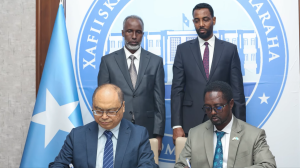
Mogadishu, Somalia – After over three decades of silence, a period marked by conflict and fragmentation, the iconic "White Star" of Somali Airlines is set to soar again, marking a profound moment in the nation's resurgence. On July 28, 2025, in a ceremony held at the Prime Minister's Office in the heart of Mogadishu, the Federal Government of Somalia officially confirmed the acquisition of two Airbus A320 aircraft, signaling the imminent re-launch of its national flag carrier. This historic undertaking is far more than just a commercial venture; it's a powerful emblem of Somalia's relentless journey towards stability, economic revitalization, and national pride, reflecting the commitment of the current administration. Under the leadership of President Hassan Sheikh Mohamud and Prime Minister Hamza Abdi Barre, Somalia has been steadfastly working to reclaim its lost glory, achieving milestone after remarkable milestone. From securing total debt relief and the lifting of the arms embargo to joining the East African Community (EAC), successfully liberating significant lands from terrorist control, and even printing new Somali Shilling currency, these achievements collectively paint a vivid picture of a republic steadfastly rebuilding and rising. The return of Somali Airlines is a shining prove to this progress, demonstrating a nation not only recovering but actively charting a course for a prosperous and connected future.

A Long-Awaited Return
Somali Airlines, once a proud symbol of the nation's connectivity and progress, ceased operations in 1991 with the onset of the civil war that plunged the country into prolonged conflict and state collapse. For a generation, the blue and white livery, adorned with the lone white star, existed only in memories and photographs. The void left by its absence was partially filled by private Somali-owned carriers and foreign airlines, but the aspiration for a national airline, a true representation of Somali sovereignty and capability, never faded. The Minister of Transport and Aviation, Mohamed Farah Nuuh, emphasized the national significance of this revival. "Today, we finalized a purchase agreement with Lima Holding Group for two Airbus A320 aircraft," he announced, emphasizing that these modern, short-to-medium-haul jets are merely the beginning. The government's strategy is a phased expansion, with plans to acquire additional aircraft, potentially including larger models for international routes, to ensure Somali Airlines can compete effectively in the global aviation landscape. The expectation is for the initial two aircraft to be operational within two months, setting the stage for a new chapter in Somali air travel.Economic and Social Ripples
The return of Somali Airlines is intrinsically linked to the broader agenda of the Somali government, led by President Hassan Sheikh Mohamud and Prime Minister Hamza Abdi Barre, which prioritizes economic development and state-building. For a country with significant diaspora communities across the globe, a national airline provides crucial direct connectivity, reducing reliance on often circuitous and expensive routes via other regional hubs. This enhanced connectivity is expected to have a multi-faceted impact:- Economic Catalyst: A national airline can significantly stimulate various sectors. It facilitates trade by providing efficient cargo transport, making Somali goods more competitive and accessible to international markets. It will boost tourism, attracting visitors eager to explore Somalia's rich cultural heritage, pristine coastlines, and unique landscapes. This influx of tourism directly supports local businesses, from hotels and restaurants to tour operators and handicraft producers.
- Job Creation: The aviation sector is a major employer, and the re-launch of Somali Airlines will create numerous opportunities for pilots, cabin crew, ground staff, maintenance technicians, and administrative personnel. The government has already indicated plans to recruit Somali pilots and aviation professionals trained abroad, harnessing the expertise of its diaspora. This direct employment, coupled with indirect job creation in related industries, will contribute significantly to reducing unemployment and fostering a skilled workforce.
- Reduced Costs and Increased Accessibility: The presence of a national carrier is expected to introduce greater competition in the Somali airspace, potentially leading to lower airfare costs for travelers. This makes air travel more accessible for ordinary citizens, enhancing domestic mobility and fostering greater internal integration.
A Foundation for Growth
The revival of Somali Airlines is not an isolated endeavor but part of a comprehensive national development strategy. The government's ambitious National Transformation Plan (NTP) 2025-2029, unveiled earlier this year, outlines a strategic roadmap for economic growth, governance reforms, social development, and climate resilience. A key pillar of this plan is infrastructure development, recognizing that robust infrastructure is fundamental to national progress. Crucially, the return of the airline coincides with significant investments in aviation infrastructure. Just weeks ago, in late June 2025, the foundation stone was laid for a new international airport in the Mahay area near Mogadishu. This mega-project, estimated to cost between $800 million and $1 billion, aims to relieve pressure on the existing Aden Adde International Airport and position Mogadishu as a critical air hub for East Africa. With an expected capacity of up to 8 million passengers annually in its first phase, and eventually 14 million, this new airport will provide the necessary modern facilities to support Somali Airlines' expansion and attract more international traffic. Furthermore, the Somali Civil Aviation Authority (SCAA) has made significant strides in reasserting federal control over Somalia's airspace, achieving full restoration of its sovereign airspace under Category 1 classification in February 2023. This milestone enables national carriers to resume formal operations under international aviation law, providing the regulatory framework essential for safe and compliant airline operations.
Challenges and the Road Ahead
While the optimism surrounding Somali Airlines' return is palpable, the journey ahead will not be without its challenges. The airline will face stiff competition from established regional and international carriers, requiring strategic route planning and competitive pricing. Building a robust operational and safety infrastructure from scratch, coupled with the high cost of aviation fuel, will demand significant investment and efficient management. Nevertheless, the symbolic value of Somali Airlines taking to the skies again cannot be overstated. It is a powerful affirmation of Somalia's resilience, its commitment to institutional building, and its growing capacity to manage its own affairs. As the Airbus A320s prepare for their inaugural flights, they carry the dreams of a nation determined to reclaim its place in the world. This is a moment of profound national pride, signaling that the Republic of Somalia is not merely recovering; it is truly coming back, soaring to new heights.Share