Local News
Somalia announces national exam results as girls take six of the top ten places
More than forty thousand students passed this year’s Grade 12 certificate examination, the Prime Minister undertook to meet the university costs of the three highest placed, and the student who came first credited his mother, who paid for his schooling out of what she earned.
MOGADISHU (SONNA): The Ministry of Education, Culture and Higher Education has announced the results of the Grade 12 national secondary school certificate examination for the 2025/2026 academic year, at a televised ceremony in Mogadishu.
The Ministry said 40,037 students passed the examination and 2,879 did not. The examination was held across all regions of the country, and the Ministry said it was administered smoothly and transparently.
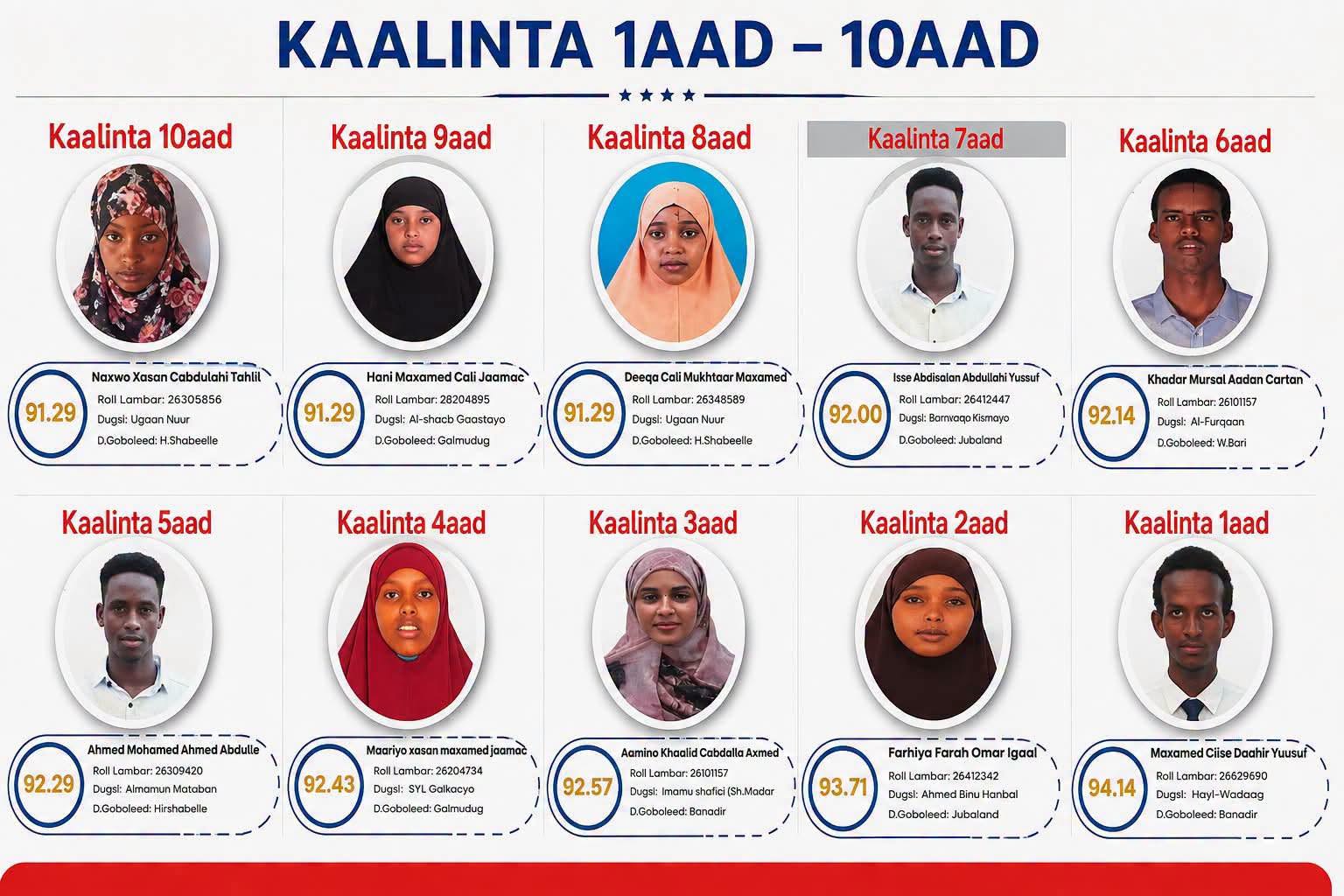
Mohamed Ise Dahir Yusuf of Hayl-Wadaag School in Banadir placed first nationally with 94.14 percent. Farhiya Farah Omar Igal of Ahmed Bin Hanbal School in Jubaland was second with 93.71, and Amino Khalid Abdalla Ahmed of Imam Shafici School in Banadir third with 92.57.
Girls took six of the ten highest places, including second, third and fourth. Mariyo Hassan Mohamed Jama of SYL School in Galkayo placed fourth with 92.43, and Deeqa Ali Mukhtar Mohamed, Hani Mohamed Ali Jama and Nahwo Hassan Abdullahi Tahlil filled the last three places on identical scores of 91.29.
That result follows the same pattern seen in the Banadir grade eight results announced ten days earlier, where girls took the top two places in the region and recorded a higher pass rate than boys. Across two examination cycles in the same month, girls have outperformed at both levels of the system.
The ten highest placed students come from schools in five federal member states and the capital. Among them is Khadar Mursal Adan Artan of Al-Furqaan School, who placed sixth with 92.14 and is from the North Eastern State, the most recently established of Somalia’s member states, which marked the first anniversary of its founding this month.
Prime Minister Hamza Abdi Barre telephoned the three highest placed students to congratulate them, commending their effort and their commitment through their schooling. He told them and the public that the federal government has guaranteed to meet all their education expenses when they enter university.
Speaking to reporters after the announcement, the student who came first said the result had been a dream and that it had come true. He said he had hoped for it, but that the will of God had come before his own wish, and thanked God first for answering his prayers. Asked what the moment meant to him, he said it was more than he could put into words.
He then thanked his mother, saying she had stood beside him from the beginning of his schooling until now, and thanked his father for the same support.
His mother, Safiyo Ma'allin Abdulle, said she had paid for his education out of what she earned from cleaning work. She said she had taken work where she could find it, with relatives helping when they were able, and that there had been hardships she could not begin to list. The Prime Minister telephoned her as well, she said, and she could not put her feeling into words.
Her son had always worked hard and had come first in his school before, she said, and she and his teachers had encouraged him throughout.
Asked what she would say to other parents, she spoke to those whose children had not passed. Persevere and be patient, she said, and do not lose heart. Of the families who received results today, 2,879 are in that position.
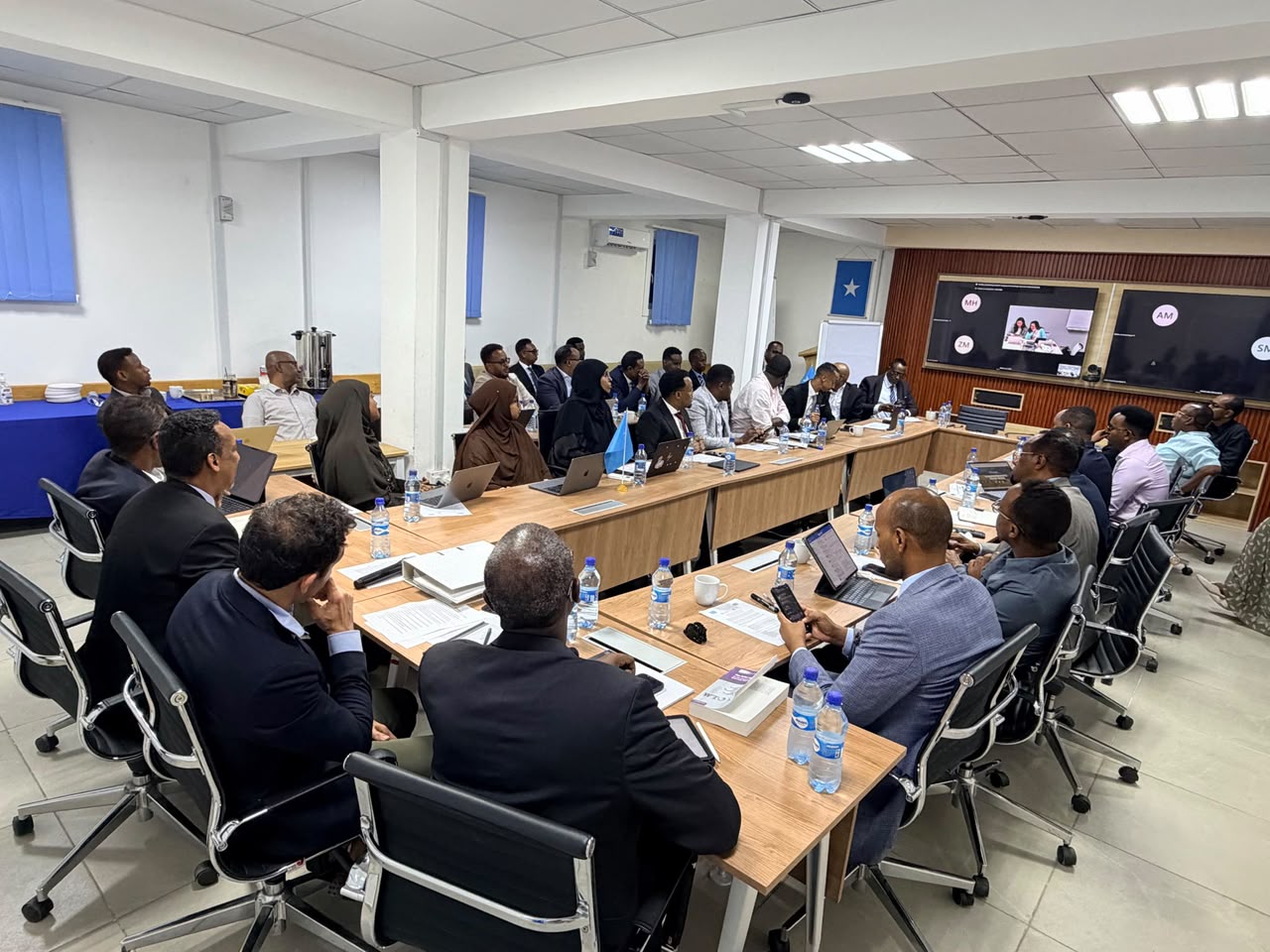
The results arrive at a point when the education system itself is being rebuilt around the students taking these examinations. Education ministers from the federal member states and the Banadir administration concluded a two day consultative conference in Mogadishu this week on coordination between federal and state institutions, at which delegates discussed extending the structure down to district level so that every district has an education office.
At the close of that conference, Education Minister Farah Sheikh Abdulkadir told officials not to arrive at schools and simply be handed a list of what is missing. The first thing an official’s eye should fall on, he said, is the state of the school itself, and a school with rubbish inside it and cracked unpainted walls is not something any excuse covers.
What the day produced is a national examination held in every region, forty thousand passes, a government commitment to fund three university educations, and a woman who cleaned for a living whose son came first in the country. The last of those was not announced from a platform, and it is the part of the day most likely to be remembered.