Local News
Somali Cabinet Approves Crisis Communications Protocol, Foreign Agreements and Revenue Authority Bill in Weekly Session
In a wide-ranging weekly meeting chaired by Prime Minister Hamza Abdi Barre, the Council of Ministers endorsed a national crisis communications framework, four international agreements, a bill to establish a national revenue authority, and a slate of senior diplomatic and institutional appointments.
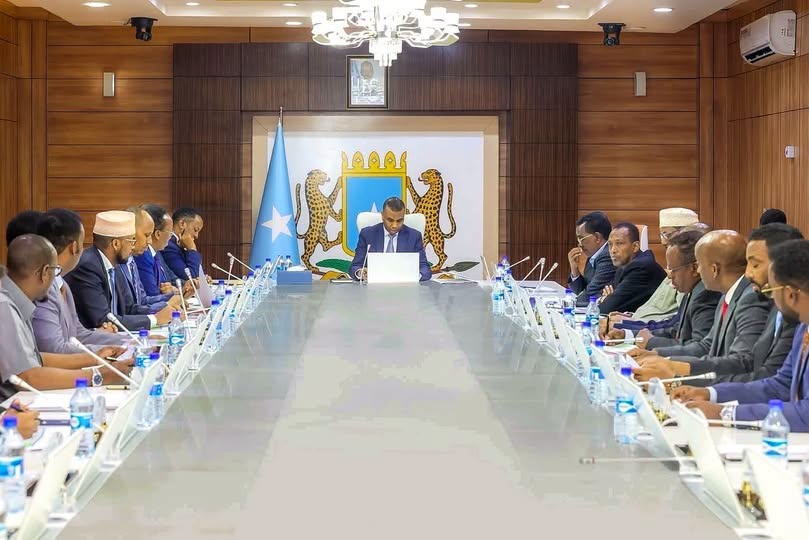
MOGADISHU (SONNA): The Council of Ministers of the Federal Government of Somalia held a busy weekly session chaired by the Prime Minister, Hon. Hamza Abdi Barre, approving a series of measures spanning national security communications, foreign policy, environmental cooperation, public financial management and senior government appointments.
The breadth of the agenda reflected a government moving on several fronts at once, from tightening how the state speaks to citizens during emergencies to deepening its partnerships abroad and strengthening the institutions that manage public money. Taken together, the decisions offer a snapshot of an administration working to consolidate its reform agenda across security, diplomacy and governance.
A national framework for crisis communications
The Council approved the Government Crisis Communication Protocol for Terrorism-Related Incidents, submitted by the Ministry of Information, Culture and Tourism. The Protocol establishes a national framework for coordinating and managing government communications during terrorism-related emergencies, defining the roles and responsibilities of state institutions in the management and dissemination of official information.
According to the Ministry, the framework is designed to ensure the public receives accurate, coordinated, verified and consistent information in a timely manner, to strengthen coordination across government agencies, and to reduce conflicting official messaging while helping to counter the spread of misinformation, disinformation and rumours during crises. The Minister of Information, Culture and Tourism, H.E. Abdulfatah Kasim Mohamud, thanked the Council for approving the Protocol and the government institutions that contributed to its development. In a country where the aftermath of an attack is often contested in real time across social media, a single, verified government voice is intended to reduce the confusion on which fear and false reporting feed.
Four international agreements endorsed
On the foreign policy front, the Council endorsed four agreements advanced by two ministries. The Ministry of Foreign Affairs and International Cooperation welcomed the approval of two Memoranda of Understanding it had submitted, one signed with the United Nations Development Programme and one with the Republic of Croatia.
The agreement with the United Nations Development Programme strengthens cooperation in institutional capacity building, international development cooperation, diaspora engagement, and legal and international treaty affairs. The agreement with Croatia establishes a formal mechanism for political consultations, a standard diplomatic instrument through which two states hold structured dialogue, aimed at advancing bilateral relations and diplomatic cooperation. The Ministry said both agreements strengthen Somalia's diplomatic role and the delivery of its foreign policy priorities, and thanked the Council for its continued support as the country works to deepen international cooperation in service of its national interests.
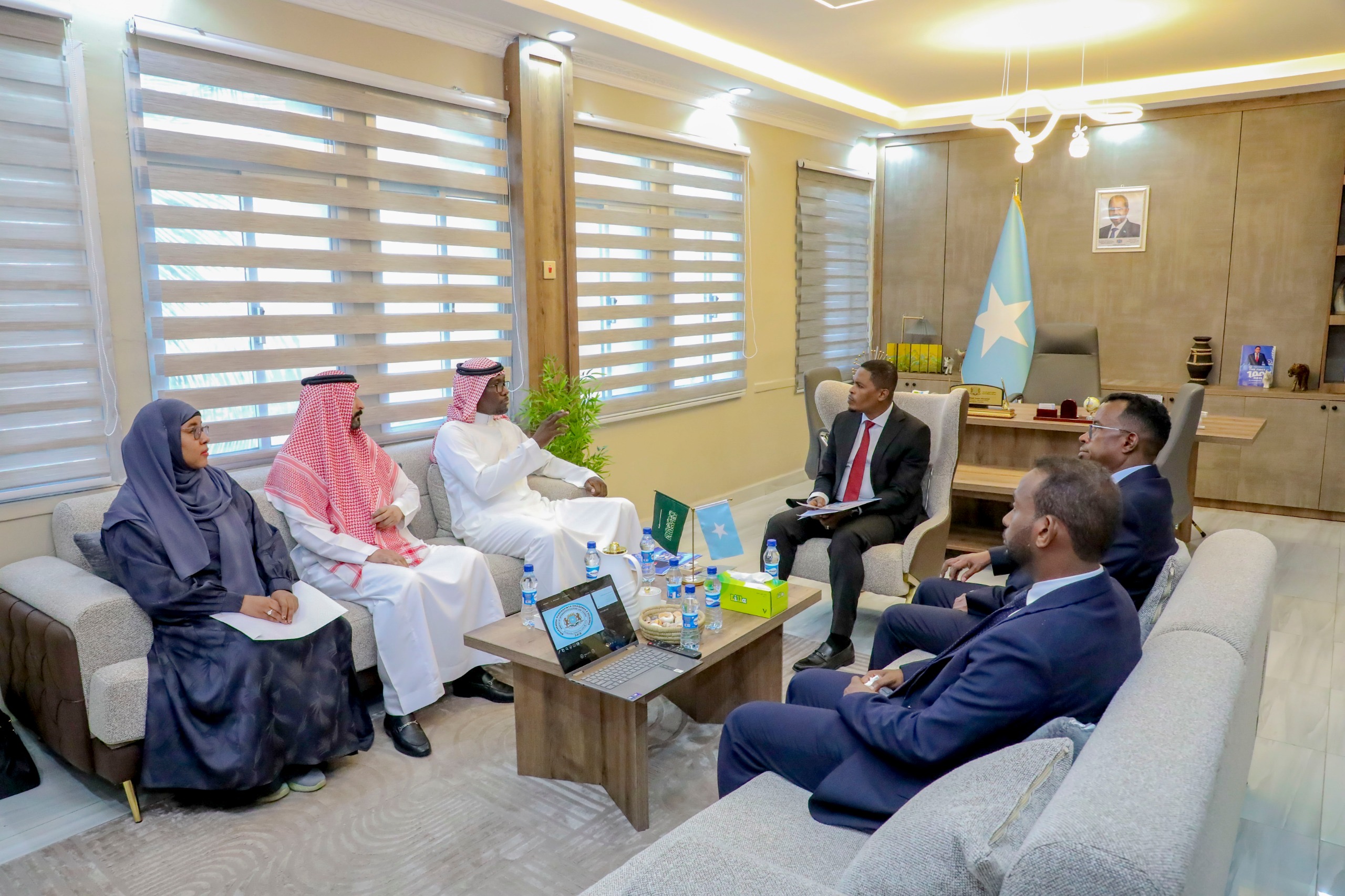
Separately, the Council approved a Memorandum of Understanding between the Federal Government of Somalia and the Kingdom of Saudi Arabia on environmental cooperation, an agreement previously signed by the environment ministries of the two countries. The MoU strengthens cooperation in environmental protection, climate change adaptation and the development of sustainable solutions, and provides for the exchange of expertise, joint research and institutional capacity building. It also encourages joint projects in land restoration and climate resilience, and opens opportunities for technical cooperation and green investment. For a country among the most exposed in the world to drought and climate shocks, formal environmental partnerships of this kind carry a significance beyond the diplomatic.
Audit briefing and a new revenue authority
The session also turned to the management of public finances. The Auditor General of the Federal Republic of Somalia, Ahmed Ise Gutale, presented a report to the Council on the audit activities of 2024 and 2025, its key findings, the areas requiring attention and the administrative measures needed. He briefed ministers on progress in widening the scope of auditing, the rising number of reports produced, and the submission of annual reports within the period required by law.
The Auditor General stressed the importance of accelerating the implementation of audit recommendations, strengthening the capacity of certified auditors, developing a unified procedure for managing handovers between government institutions, raising accountability in public projects, and tightening the vetting of contractors working on government work. The Prime Minister thanked the Auditor General for the report and underlined the importance of acting on its recommendations, strengthening public financial management, and translating audit findings into workable administrative measures to safeguard national assets, reinforce accountability and improve public services.
In a closely related step, the Council approved the National Revenue Authority Establishment Bill, a measure the Auditor General's Office had previously recommended. The Office welcomed the approval and thanked the Prime Minister and the Council for advancing the bill, which it said would strengthen revenue administration, financial transparency and accountability. The sequence, an oversight body recommending a reform and the Cabinet enacting it, is itself a small demonstration of the accountability architecture the government says it is trying to build, in which audit findings translate into institutional change rather than sitting unread.
Diplomatic and institutional appointments
The Council also approved a set of senior appointments. It endorsed the appointment of Abdifatah Mohamed Ibrahim as an ambassador of the Federal Republic of Somalia, and elevated Shafi Noor Alas Farah to the rank of ambassador. In the commercial sphere, the Council appointed Yasin Mahmoud Ibar as Chairman of the Somali Chamber of Commerce and Industry, the national body that represents the interests of the country's private sector.
A government consolidating on several fronts
The weekly session captured an administration advancing its agenda across a broad front rather than in any single domain. A crisis communications framework speaks to the government's continuing confrontation with insecurity and the information war that surrounds it. The foreign agreements, reaching from a United Nations development partner to a European state and a Gulf kingdom, reflect a widening diplomatic footprint. The revenue authority bill and the audit briefing point to the slower, less visible work of building fiscal institutions capable of managing public money credibly, work that underpins everything from debt relief to service delivery.
None of these measures is transformative on its own. Their significance lies in their accumulation, the steady assembly of the frameworks, partnerships and institutions through which a state governs. In endorsing them together in a single sitting, the Council of Ministers offered a measure of the pace at which the government intends to move, and of the range of fronts on which it means to move at once.