Local News
A Day That Built Trust: Somalia's Security Forces and a Generation of Graduates Find Common Ground at Daljirka Dahsoon
On the eve of Somalia's 66th Independence Day, the country's military and police forces turned a graduation celebration into a moment that this generation of young Somalis will not forget.
MOGADISHU, 26 June 2026 (SONNA) — On the day Somalia's Grade 12 students completed their national final examinations, the country's security forces did something that will likely stay with this generation long after their results are posted. They showed up, not in uniform as a symbol of authority, but as partners in one of the most personal milestones a young person can reach.
The scenes that unfolded across Mogadishu on Thursday were unlike anything the city's graduates had seen before. Somali National Army trucks moved through the capital's streets, transporting students directly from their examination centers to Daljirka Dahsoon Square. No one was left to find their own way. The military came to them.
At the square, bands from the Somali National Army, the Somalia Custodian Police, and the Somali Police Force performed live for the thousands of graduates who had gathered to celebrate. The music filled the open grounds as young men and women waved the national flag, cheered, and took in a moment that blurred the line between institution and community in a way that rarely happens in public life.
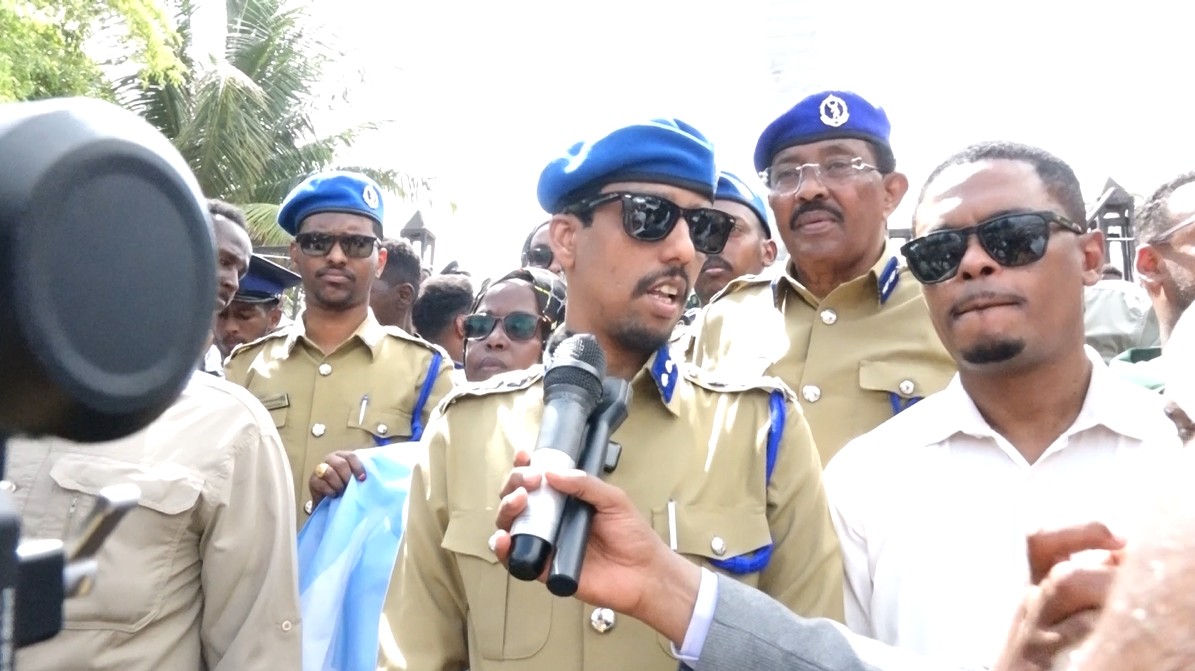
Somalia's National Police Chief Brigadier General Asad Osman Abdullahi addressed the occasion directly, congratulating the families of the graduates and paying tribute to the sacrifices Somali parents made to see their children reach this milestone. The Chief described the day as significant for Somalia on every level, citing the security of the capital, the confidence of the public in their institutions, and the eve of the country's 66th Independence Day as evidence of how far the nation has come. His words placed the graduation celebrations within a broader picture of national progress, drawing a line between a secured capital, a functioning examination system, and a public willing to fill the streets in celebration.
Banadir Regional Police Commander Senior Colonel Mahdi Omar Mumin was also present at the celebrations, congratulating students in person and wishing them results they can be proud of. He used the moment to speak to young people directly, calling on them to use social media responsibly and warning that content creators who post indecent material targeting Somali girls would not be tolerated. It was the kind of message that carries more weight when delivered in the middle of a celebration than it ever could from behind a podium.
What Thursday demonstrated, more than any policy statement could, is that trust between a population and its security forces is not built through declarations. It is built through presence, through shared moments, and through the simple act of turning up for people on the days that matter to them. Somalia's security institutions chose to be part of this generation's celebration of finishing school, and this generation of graduates will carry that memory forward.
For young Somalis who are still forming their understanding of what the state is and what it means to them, days like this one matter enormously. Seeing the military carry you to your celebration, hearing police and army bands play for you on the street, being congratulated by the country's top police officer on one of the biggest days of your young life, these are not small things. They are the foundation on which genuine patriotism is built, not the kind that is demanded, but the kind that grows naturally from feeling that your country and its institutions are on your side.
On the eve of Somalia's 66th Independence Day, that is not a minor footnote. It is the story of a country steadily rebuilding the relationship between its people and the institutions built to serve them.