Local News
Somali Cabinet Moves to Constitute Judicial Service Council and Approves First Culture and Arts Bill in Weekly Session
Meeting under Deputy Prime Minister Salah Ahmed Jama, the Council of Ministers approved the appointed members of the constitutional body that will govern the judiciary, endorsed the country's first culture and arts legislation, sealed an aviation agreement with Oman, embraced the African Youth Charter and named a new head of the Higher Education Council.
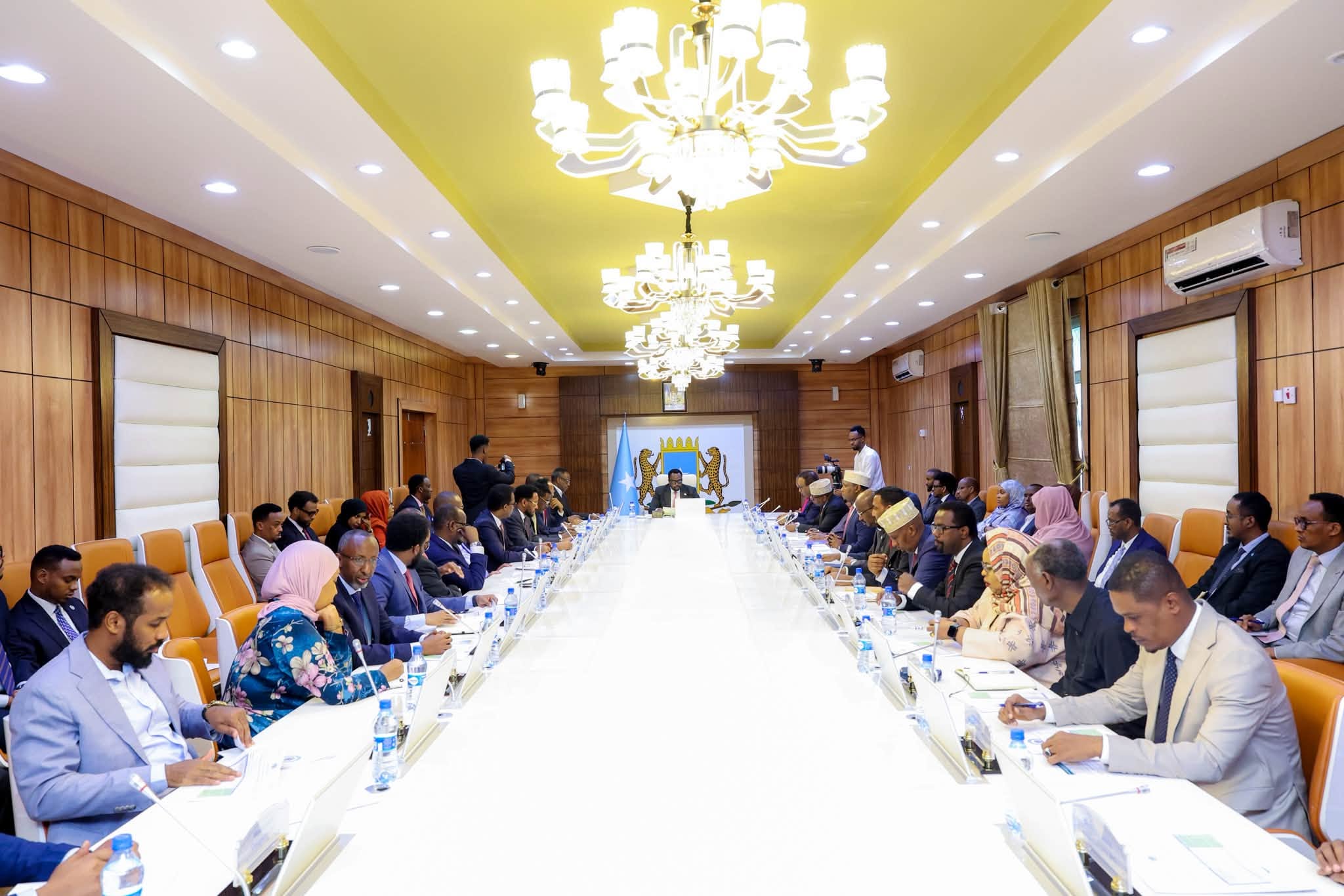
MOGADISHU (SONNA): The Council of Ministers of the Federal Government of Somalia held its weekly session under the chairmanship of the Deputy Prime Minister, Hon. Salah Ahmed Jama, taking decisions that reached from the constitutional architecture of the judiciary to the protection of Somali culture, the country's aviation ties with the Gulf, and the place of young people in public decision-making.
The centrepiece of the session was the approval, by majority vote, of the appointed members of the Judicial Service Council, the body responsible under the Constitution for the appointment, discipline and administration of the judiciary, a step the Minister of Justice and Constitutional Affairs described as one of immeasurable importance to the completion of Somalia's statehood.
Constituting the Judicial Service Council
Acting on the proposal of the Ministry of Justice and Constitutional Affairs, the Cabinet approved four appointed members of the Judicial Service Council, two senior lawyers and two legal experts who will serve five-year terms once the approval process is complete. The appointees are Mohamed-deeq Macallin Adan, Maryan Sheikh Osman, Abdirisak Mohamed Ismail and Abdiqadir Ali Macallin.
The Minister of Justice and Constitutional Affairs, Hon. Hassan Moallin Mahamud, thanked the Council for the approval and set out the body's design. The Council comprises fifteen members under the Constitution, he said, eleven of whom serve by virtue of office, among them the Chief Justice of the Supreme Court, the Chairperson of the Constitutional Court, the Attorney General, the Chairperson of the Independent Human Rights Commission and the chairpersons of the higher courts of the federal member states and the capital administration, with the four appointed members completing the membership. The appointees now proceed to both houses of the Federal Parliament for approval, after which the President will issue a decree constituting the Council.
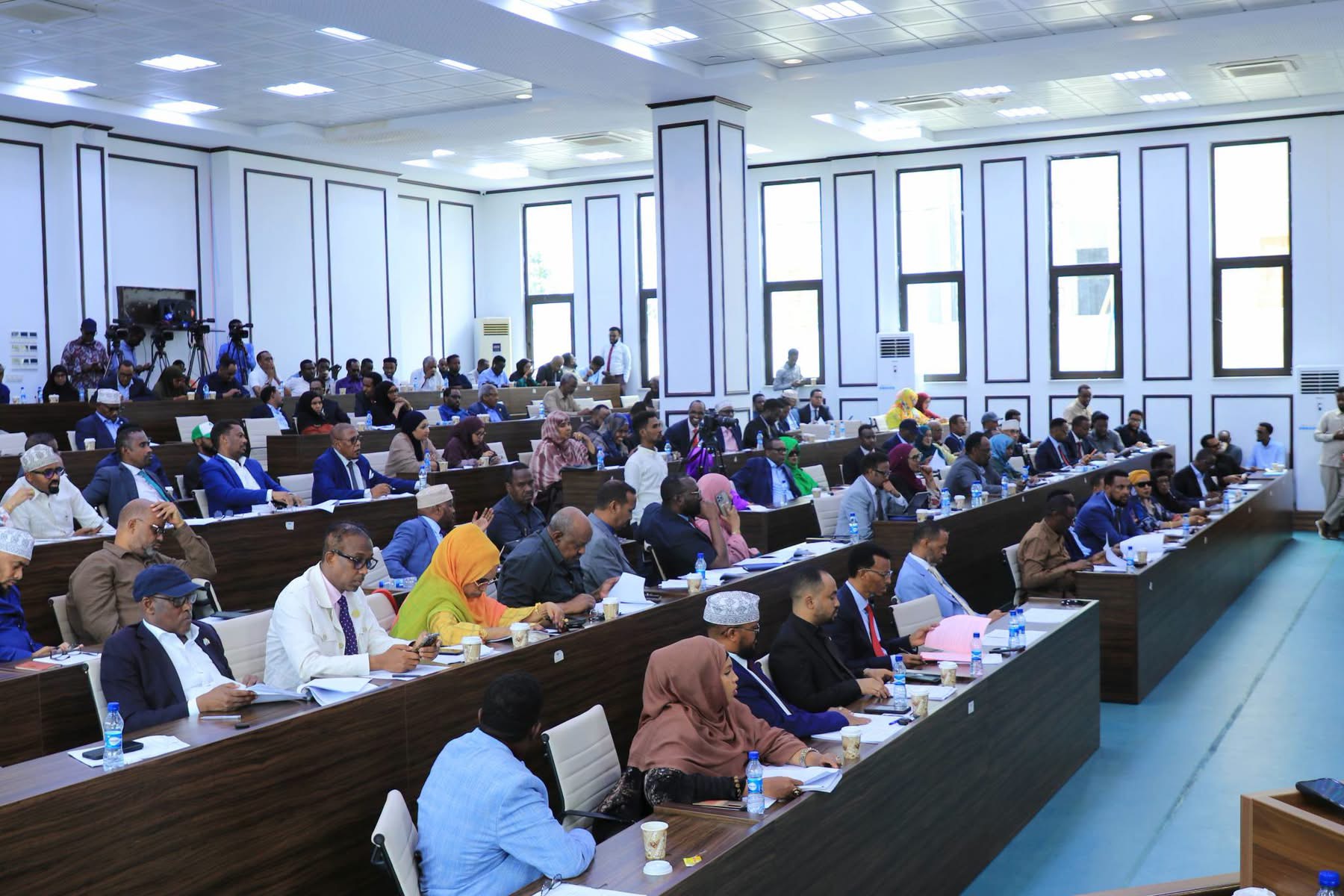
The Minister said the establishment of the body secures the independence of the judiciary from the executive and the legislature, completing the three branches of the state, and expressed his hope that Parliament would endorse the appointments when it convenes and that the members would discharge their duty to the nation. The Council's constitution has a significance beyond the judiciary itself. Its ex-officio membership embeds the newly established Independent Human Rights Commission within the governance of the courts, and its creation moves one of the central institutions of the constitutional order from text into operation.
First Culture and Arts Bill endorsed
The Cabinet also endorsed the Culture and Arts Bill, prepared by the Ministry of Information, Culture and Tourism, the first legislation of its kind in the country. The Minister of Information, Culture and Tourism, Hon. Abdulfatah Kasim Mohamud, thanked the Council for the approval, saying the bill is vital to protecting Somali culture and the arts, developing them, and passing them on to future generations.
The bill provides the legal foundation for the development of the country's culture and arts, the protection of the national heritage, the encouragement of creativity and literature, and the strengthening of culture's role in peace, social cohesion and the cultural identity of the Somali nation. Its approval came in the same week the nation mourned the national poet Abwaan Adan Tarabi Jama of the Waaberi generation, a timing that gave the legislation a quiet poignancy, the state moving to guard in law the inheritance his generation created.
Aviation agreement with Oman and the African Youth Charter
On the international front, the Council approved an agreement between the governments of Somalia and Oman focused on cooperation in air transport, adding a Gulf aviation partnership to the widening set of agreements the government has concluded in recent weeks. The Cabinet also endorsed the African Youth Charter, the continental instrument that strengthens the participation of young people in policy decisions and affirms the role of governments in the development of Africa's youth, a commitment of particular weight in a country whose population is among the youngest in the world.
New leadership for the Higher Education Council
The Council further relieved the chairman of the Higher Education Council of his duties and appointed Mahmoud Ahmed Jimale to the post, placing new leadership at the head of the body that oversees the country's higher education sector at a time of visible momentum in Somali universities, from new research centres to growing graduate cohorts entering the professions.
The constitutional order, piece by piece
The session's decisions share a common thread. A judicial governance body moving from constitutional text to living institution, a first law for the nation's culture, a continental charter for its youth, and new stewardship for its universities are each, in their different registers, acts of institutional completion. Week by week, the Cabinet's business is the steady assembly of the structures through which a state governs, and this week's sitting added pieces that will outlast any single administration, above all a council designed to guarantee that the judges of Somalia answer to the law alone.