Local News
Media Council of Somalia and Press Council of South Africa agree to cooperate
Talks in Johannesburg covered media self-regulation, the handling of complaints and professional standards, days after the Somali council was admitted to the continental network.
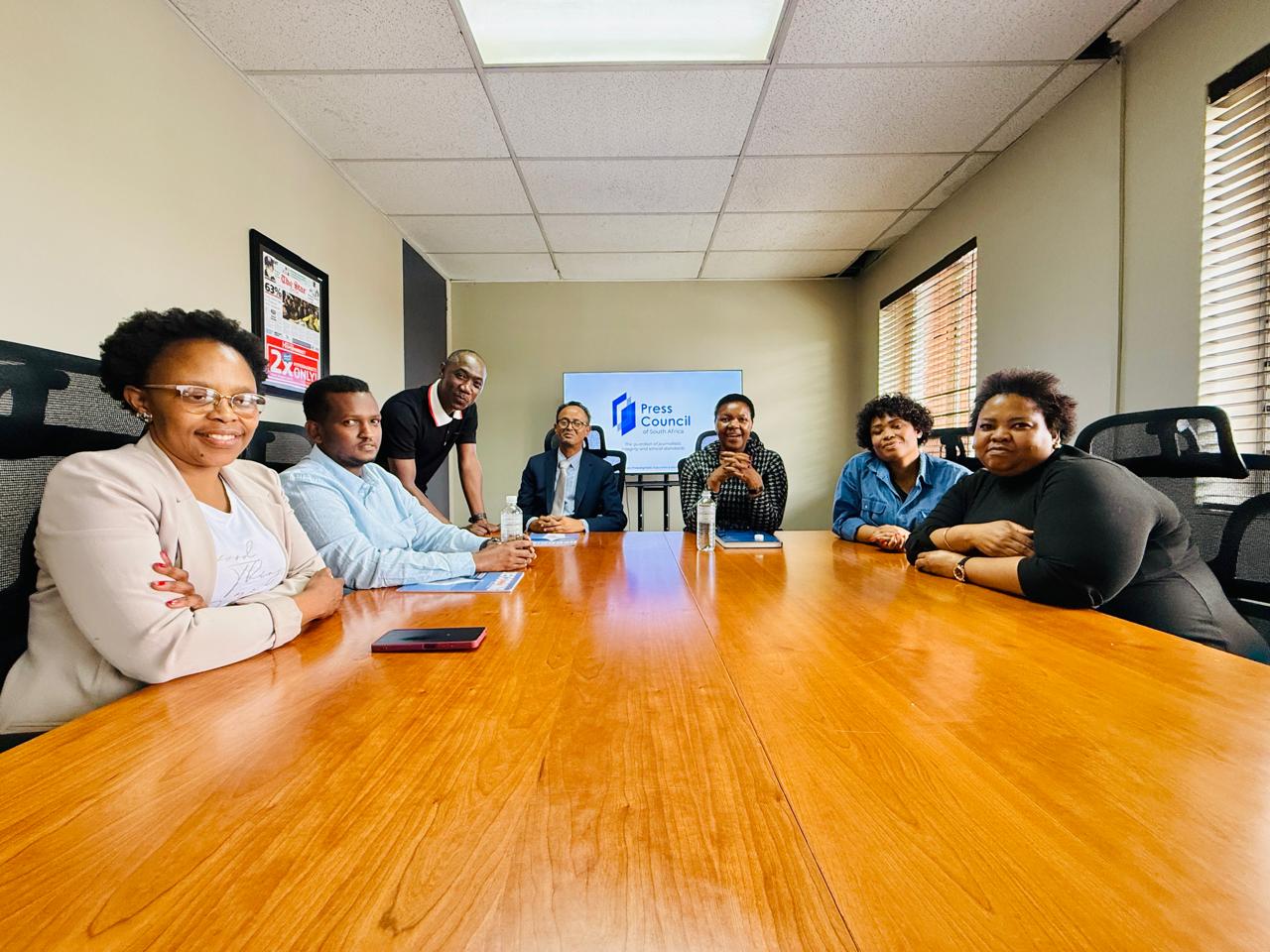
JOHANNESBURG (SONNA): The Media Council of Somalia and the Press Council of South Africa have agreed to cooperate formally on media development and the handling of complaints, following talks on Friday at the South African council’s offices in Craighall Park, Johannesburg.
The discussions covered collaboration on media development, best practice in handling complaints and disputes both within the media and against it, and wider questions of professional standards and accountability.
The Chairman of the Media Council of Somalia, Abdirahman Mohamed Aden, known as Koronto, thanked the Press Council of South Africa for hosting the engagement and for the agreement that the two councils would work together on the matters discussed and on joint work in the near term.
Dr Phathiswa Magopeni, Executive Director of the Press Council of South Africa, who received the Somali delegation, opened by congratulating the Media Council of Somalia on its admission as a full member of the Network of Independent Media Councils in Africa, decided at the network’s second Annual General Meeting held in Johannesburg earlier in the week. She said her council stood ready for full cooperation, with the two working together on press development, complaints handling and the follow-through on decisions taken at the meeting.
The Council’s Adviser, Abdiqani Abdullahi Ahmed, briefed the meeting on the legal basis on which the Somali council was established, the process of its formation and what it has achieved to date. Tsile Maswanganyi, Communications Manager at the Press Council of South Africa, presented the structure of the South African council, its complaints procedure and its work over the current year.
The council the Somali delegation was studying has a longer history than its present form suggests. The idea of a press council in South Africa emerged in the 1950s, a code of conduct and a press board of reference followed in the 1960s, and a council with a conciliator role was formed in 1981 under an apartheid government that was at the same time attempting to license journalists. The system now in place, of independent voluntary self-regulation with an ombudsman and the power to fine publications, dates from the 1990s.
It is chaired by a retired judge, Fritz Brand, with a separate Appeals Panel chaired by another, Bernard Ngoepe, a former Judge President of the North and South Gauteng High Courts. The Public Advocate is Thabo Leshilo, a former editor-in-chief of the Sowetan and the Sunday World with more than three decades in editorial leadership. The council administers a Press Code covering print and online media, extended in 2015 to social media and user-generated content.
A complaint must be lodged within twenty working days of publication, though late submissions may be accepted where a satisfactory explanation is given. A case manager collates the complaint and its supporting documents, the Public Advocate liaises with the publication and the complainant, and an amicable resolution is sought first. If that fails the matter goes to mediation and arbitration, and if a party remains dissatisfied, to appeal.
In the first quarter of this year the council received 55 complaints. Nine were resolved, twenty declined, two withdrawn and twenty four remain pending. The ombud panel adjudicated nine matters, and two appeal applications were lodged, neither advancing to a hearing. The twenty declined failed on one of three grounds: the complainant lacked standing, the complaint was submitted late, or no specific breach of the Press Code was identified.
The most instructive figure for any council building its own practice is where member media most often fall short. The commonest breaches fall under the section of the Code dealing with the gathering and reporting of news, specifically truthfulness, contextual presentation, and seeking the views of those a report concerns. Breaches of the clauses on conflict of interest, on privacy and dignity, and on headlines and captions occur less frequently.
That record is the substance of what cooperation offers. A council that publishes how many complaints it received, how many it declined and on what grounds, and which clauses of its own code are most often breached, has built something a younger institution can study rather than invent. The Press Council of South Africa also lists countering disinformation, misinformation and malinformation within its mandate, and contributed submissions to South Africa’s competition inquiry into artificial intelligence and digital platforms last year.
The Media Council of Somalia was established in 2024 and operates under the country’s media law. In May this year it became an Ordinary Member of the World Association of Press Councils, and this week it was admitted as a full member of the Network of Independent Media Councils in Africa, the only new member accepted at the assembly.