Local News
Building Stronger Police Services: Training for Better Protection and More Public Trust
Mogadishu, (SONNA) — From strengthening institutional readiness to better equipping instructors, the cooperation between the African Union Support and Stabilisation Mission in Somalia (AUSSOM) and the Somali Police Force (SPF) continues to deliver tangible support to Somalia’s security and stabilisation efforts.
The partnership was prominently demonstrated through a series of initiatives implemented between March and August 2026, with sustained financial assistance from the Government of Japan. It reflected a shared commitment to strengthening Somali-led security institutions and supporting a community-oriented police service.
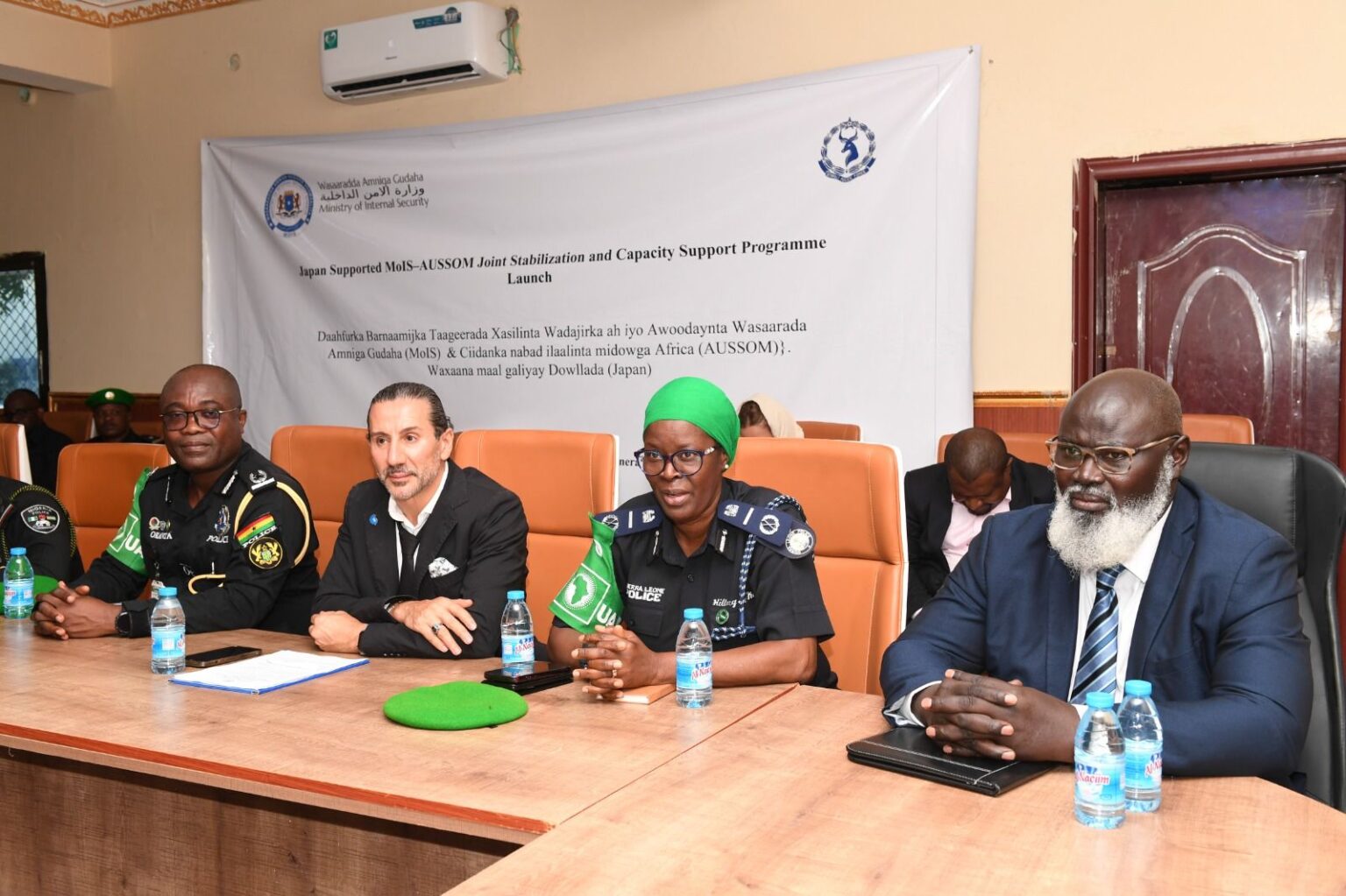
On 30 March 2026, the Federal Government of Somalia (FGS) and AUSSOM launched the Joint Stabilisation and Capacity Support Programme in Mogadishu. Funded by the Government of Japan, the programme is designed to strengthen institutional readiness, enhance capacity building and support infrastructure development for the SPF and the Ministry of Internal Security (MoIS).
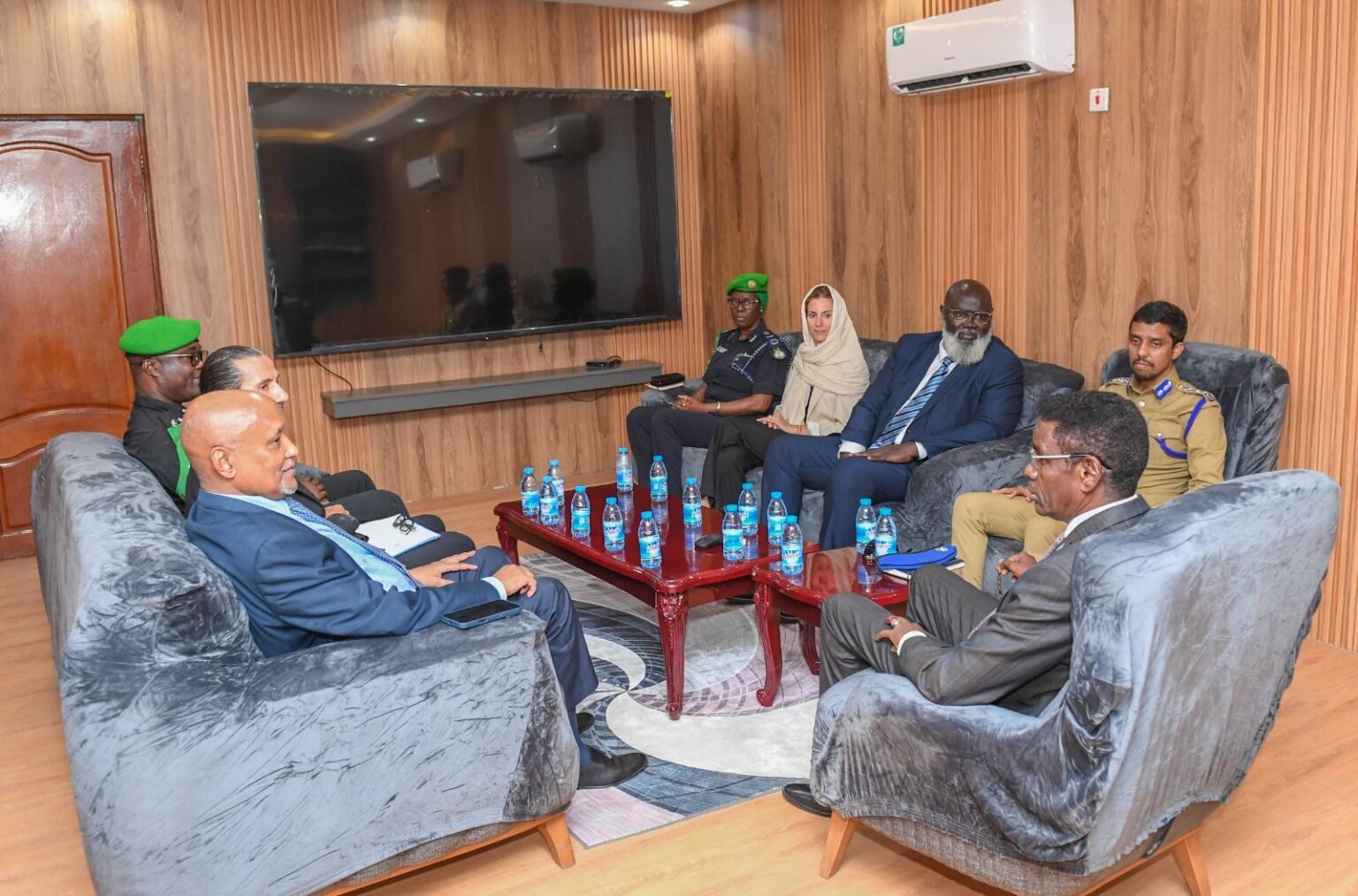
The ceremony was led by the Minister of Internal Security, H.E. Abdullahi Sheikh Ismail, alongside the SRCC and Head of AUSSOM, Amb. El Hadji Ibrahima Diene, the National Security Advisor, Amb. Awes Hagi Yusuf Ahmed, the SPF Commissioner, Brig. Gen. Asad Osman Abdullahi, the AUSSOM Police Commissioner, AIGP Hillary Sao Kanu, and UNSOS Officer-in-Charge, Mr. Fabio Mevoli.
Focus on Training of Trainers
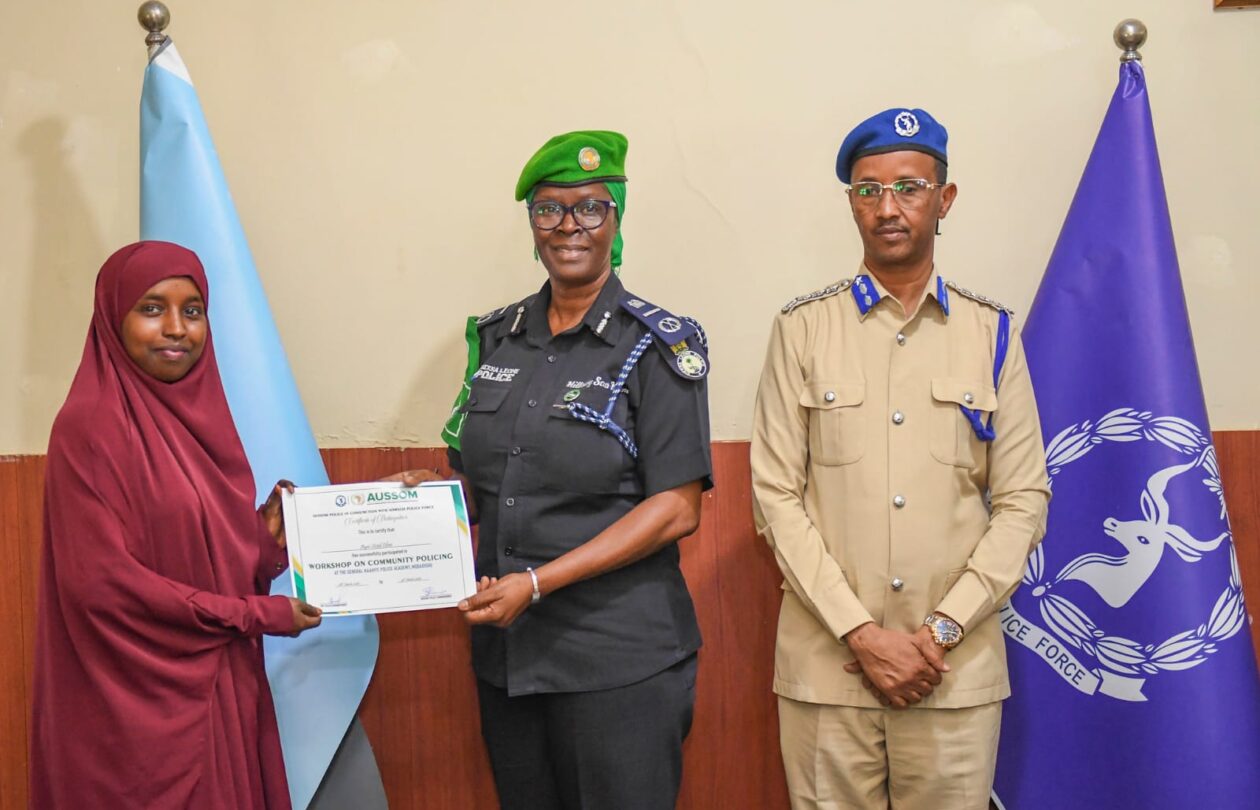
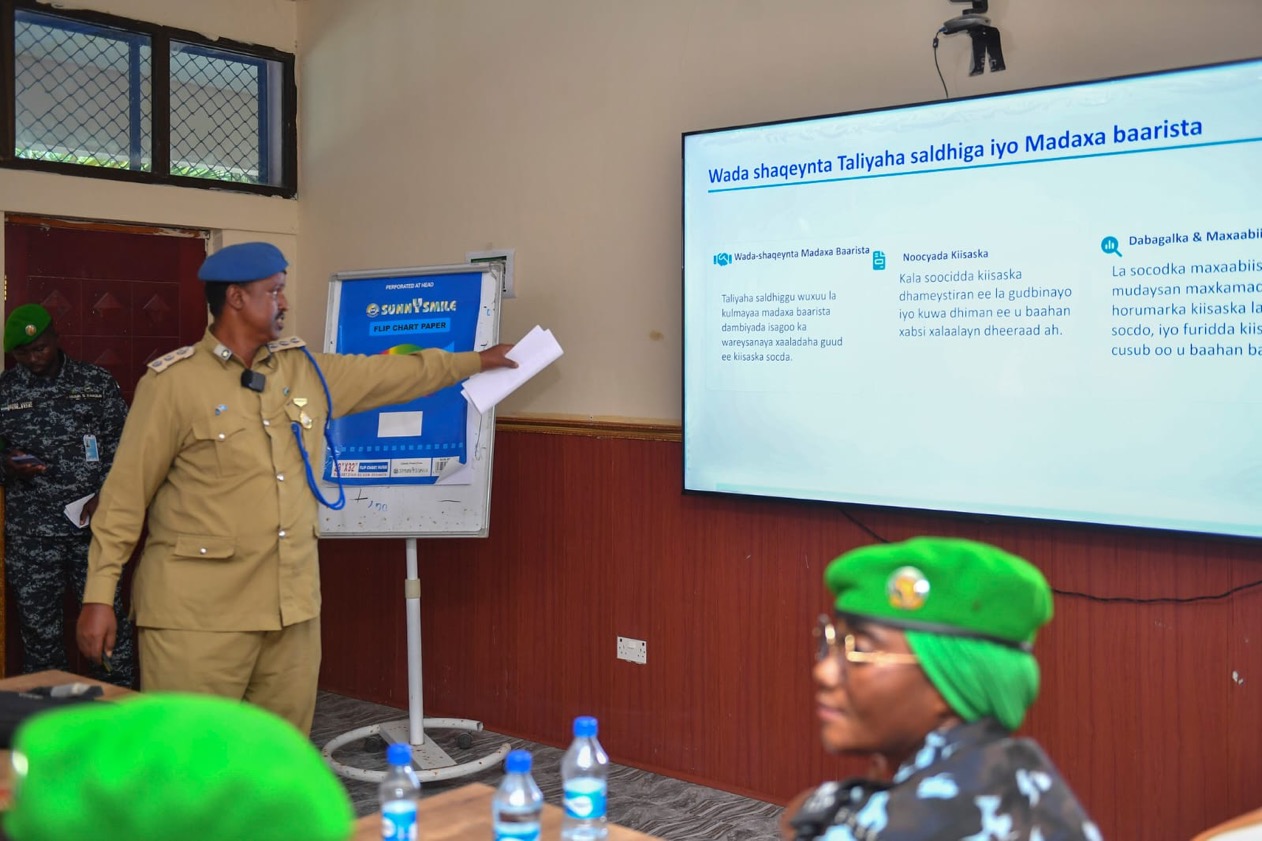
The programme underscored the importance of sustained international partnership in enabling Somalia’s security institutions to progressively assume greater responsibility for the country’s peace and stability. It was translated into further practical actions with a series of 10-day Training of Trainers (ToT) for around 100 SPF instructors on Human Rights in Policing as well as on Police Station Management and Protection of Civilians.
Organised at the General Kahiye Police Academy, the courses aimed to strengthen the teaching skills, operational readiness and capability of police instructors. By focusing on trainers, the initiative aimed not only to build individual capacity but also to establish a multiplier effect, enabling knowledge and skills to be transferred to police personnel across Somalia.
The training supports the standardisation and long-term improvement of police training, with the potential to extend its impact across regional and district police structures. It placed particular emphasis on protecting the rights and dignity of the population.
Cpl. Bosteyo Isse described the programme as a turning point in her career, highlighting the knowledge she gained on juvenile arrests, detention processing and reporting abuses within police station management structures.
Maj. Adan Muse Jama similarly emphasised the practical relevance of the training, particularly in police station management, monitoring, coaching and protecting the rights of detainees while ensuring fair and professional service to all members of the public.
These skills are critical to strengthening public confidence in policing and ensuring that security institutions operate in accordance with the rule of law, human rights and principles of accountability.
A partnership built for lasting impact
The collaboration between AUSSOM, SPF and the Government of Japan represents more than a series of training activities. It is an investment in Somalia’s national capacity, accountable policing and community security, which are key foundations for sustainable peace and stabilisation.
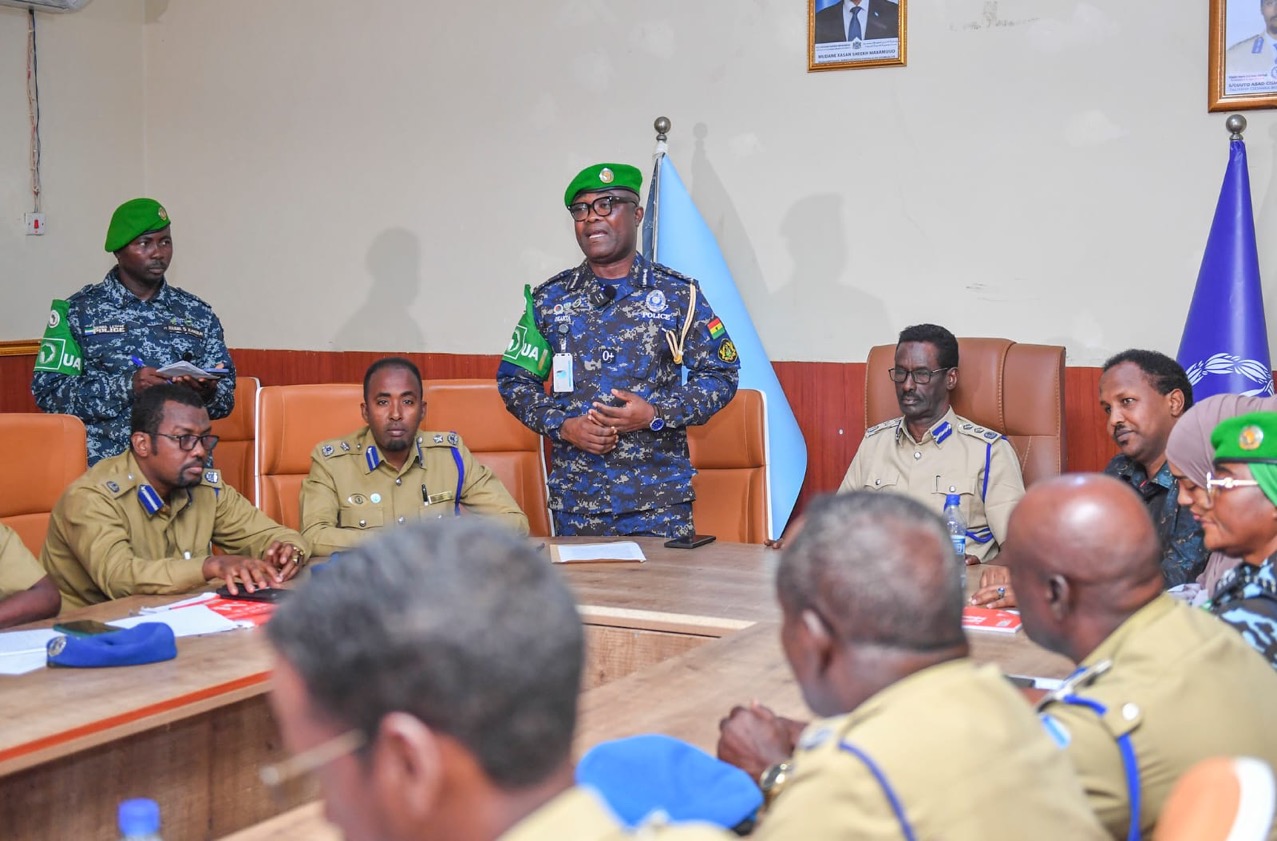
The Deputy Commander of the General Kahiye Police Academy, Col. Mire Ahmed Matan, recognised the importance of the support at a critical juncture in Somalia’s peacebuilding and stabilisation efforts.
The initiatives demonstrate that effective security sector support is not limited to equipment or short-term interventions. Sustainable security requires investment in people, institutions, professional standards and the ability of national structures to train and mentor their own personnel following Somali national priorities.
Source: AUSSOM